Best food growing methods
Best food growing methods
est food growing methods: test soil (pH 6.0-7.0) and work in 1-2 inches of compost for steady yields. Best food growing methods use drip irrigation and mulch; drip cuts water use 30-50%, mulch suppresses weeds by 80-90%. Best food growing methods favor raised beds and succession sowing; beds often deliver 2x yield per square foot, sow greens every 7-10 days.Come hungry; this garden will feed you, and the next pages show how.
Best Food Growing Methods
- Best food growing methodssoil-first
- Soil-based raised beds
- Water-smart drip irrigation
- Season extension tools
- Soilless speed systems
- Seed starting routine
- Perennials and polycultures
- Fertility and IPM basics
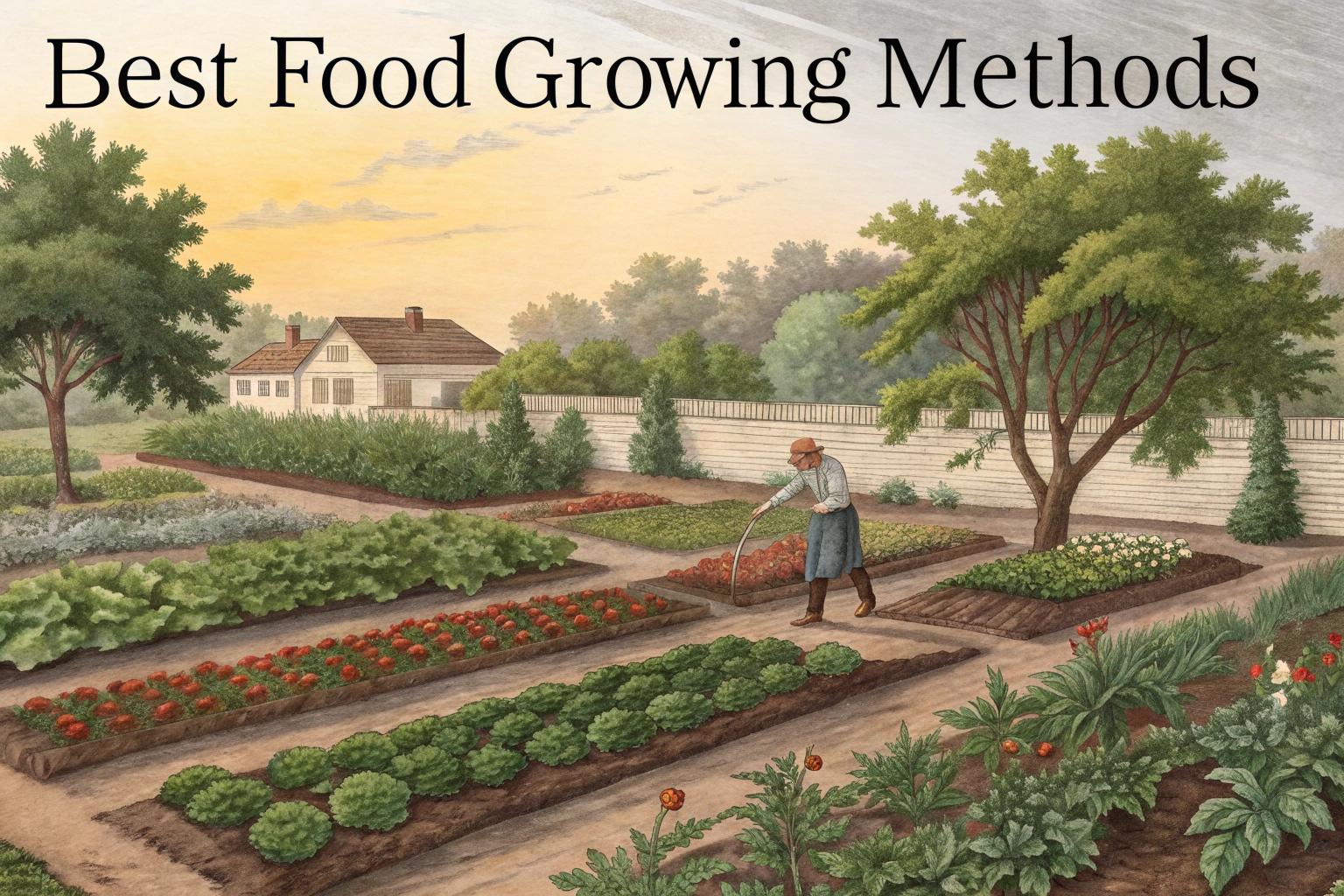
Article mapOpen the visual summary
Best Food Growing Methods
- Best food growing methodssoil-first
- Soil-based raised beds
- Water-smart drip irrigation
- Season extension tools
- Soilless speed systems
- Seed starting routine
- Perennials and polycultures
- Fertility and IPM basics
Table of Contents10 sections
- Best food growing methods at a glance· 1 min
- Soil-based systems that carry the load· 1 min
- Water management that saves crops and meters· 1 min
- Season extension that pads the calendar· 1 min
- Soilless speed: greens on tap· 1 min
- Perennials and polycultures that keep giving· 1 min
- Seed starting that never stalls· 1 min
- Fertility that feeds without drama· 1 min
- IPM that actually prevents problems· 1 min
- Planning that keeps plates full· 1 min
Best food growing methods at a glance
I grow food with a modular playbook: soil-first beds, water-smart delivery, season stretchers, and controlled systems for speed crops. I match method to space, climate, and appetite.
Soil-based systems that carry the load
I stop tilling, feed the surface, and let soil life do the heavy lifting. Raised beds warm earlier and drain cleanly, which buys me weeks in spring.
I stack 2 to 3 inches of compost each year, about 5 to 7.5 cm, then mulch with leaves or straw. That layer cuts weeds, stabilizes moisture, and keeps soil crumbly.
A lab soil test once per year pays for itself in fewer guesses. Most vegetables like pH 6.2 to 6.8, and I target balanced NPK with slow-release amendments.
I treat compost like miso for soil: a little, often, and high quality. Wood chip mulch around perennials, straw or shredded leaves around annuals.
Close spacing shades soil, blocks weeds, and spikes yield per square foot. I transplant on a grid, prune for airflow, and thin seedlings with a ruthless hand.
Classic double-dig works, yet I get the same vigor with no-dig beds and steady compost. Roots will find the buffet if you keep the surface fed.
Water management that saves crops and meters
Inline emitters at 0.5 gph, about 2 lph, spaced 12 inches, about 30 cm, give me even moisture and fewer foliar diseases. I run lines under mulch to slash evaporation.
A simple timer with two daily cycles beats a single long soak in hot weather. In clay soil I run shorter, in sand I run longer, then I watch the plants instead of the clock.
Season extension that pads the calendar
I use 0.9 oz per sq yd fabric, about 30 g per sq m, for shoulder seasons, and 1.2 oz, about 40 g per sq m, for frosty nights. Light fabric can add 2 to 4 F, about 1 to 2 C, while heavy fabric can add 6 to 8 F, about 3 to 4 C.
Hoops and clips beat wind tantrums. I vent early after sunrise to prevent mildew and lettuce tipburn.
Soilless speed: greens on tap
I run DWC for basil, NFT for lettuce, and a lazy Kratky tub for backup. pH sits at 5.8 to 6.2, EC at 1.2 to 1.8 mS for leafy crops, with a weekly reservoir change.
For lights I aim for 200 to 400 µmol m−2 s−1 PPFD on greens and 400 to 600 on fruiting seedlings. Heat builds fast, so I keep water at 64 to 70 F, about 18 to 21 C, to dodge root rot.
Tomatoes thrive in 10 to 15 gallon pots, about 38 to 57 liters, peppers in 5 to 10 gallons, about 19 to 38 liters, and greens in anything 8 inches deep, about 20 cm. I use a peat or coco blend with perlite and compost, never straight garden soil.
Wicking beds sip water from a lower reservoir and smooth heat waves. I top-water seedlings until roots hit the wick, then let physics babysit.
Perennials and polycultures that keep giving
I stack canopy, shrub, herb, and groundcover layers to spread work and harvest. Asparagus, rhubarb, globe artichoke, sorrel, and walking onions carry my spring while annual beds spin up.
Under fruit trees I run clover for nitrogen, bulbs for pests, and wood chips for fungal highways. It feels like a lazy orchestra that somehow stays in tune.
Seed starting that never stalls
Heat mats at 75 to 80 F, about 24 to 27 C, wake peppers and tomatoes fast. I keep lights 6 to 8 inches, about 15 to 20 cm, above leaves and brush plants daily to build sturdy stems.
Bottom water in 1020 trays and upgrade to a gentle fan on a timer. I up-pot right before roots circle to keep growth unbroken.
Fertility that feeds without drama
I favor slow-release meals, fish hydrolysate, and kelp for trace elements. Quick-soluble salts live in the hydro bench, not in my soil beds.
Compost teas smell romantic yet data runs mixed on yield gains. I brew them for foliar microbe diversity after rain, not as a miracle tonic.
IPM that actually prevents problems
I scout twice a week and squish what I can, then deploy row cover, traps, or beneficials. Sprays are last, with Bt for caterpillars, oil for mites, and spinosad for thrips, timed at dusk for pollinator safety.
Disease stays light with crop rotation, airflow, and drip instead of overhead. I sanitize pruners with 70 percent alcohol between plants like a habit, not a chore.
Planning that keeps plates full
I sow salad every 10 days from March to October, then switch to cold-hardy mixes. For carrots I plant monthly in spring and again late summer for sweet fall roots.
I track days to maturity and heat units to avoid hungry gaps. Seeds do not care about my calendar, only light and temperature.
Top picks: Best food growing methods by goal
Soil & feeding approach
thick mulch; light compost; low-nitrogen feeding
Crop choices & style
early varieties; salads; quick crops; potatoes; winter squash; dry beans; asparagus; rhubarb; herb guilds
Water & automation
self-watering insert; drip on a timer; drip under mulch; steady water
Core layouts & structures
containers; vertical trellis; no-dig beds; raised beds; low tunnels; wicking beds; Square Foot layout; beds; blocks; berry hedges
Growing goals
Small patio; Busy schedule; Short season; Low water; Year-round greens; Kids and beginners; Maximum calories; Perennial pantry; Flavor-first
Small patio: containers with a self-watering insert and vertical trellis. Busy schedule: no-dig beds plus drip on a timer and thick mulch. Short season: raised beds with low tunnels and early varieties. Low water: drip under mulch and wicking beds for salads. Year-round greens: hydroponic NFT or DWC with LED bars. Kids and beginners: Square Foot layout with labeled grids and quick crops. Maximum calories: potatoes in beds, winter squash on trellis, dry beans in blocks. Perennial pantry: asparagus, rhubarb, berry hedges, and herb guilds. Flavor-first: no-dig beds, light compost, low-nitrogen feeding, and steady water.
- Small patio: containers with a self-watering insert and vertical trellis.
- Busy schedule: no-dig beds plus drip on a timer and thick mulch.
- Short season: raised beds with low tunnels and early varieties.
- Low water: drip under mulch and wicking beds for salads.
- Year-round greens: hydroponic NFT or DWC with LED bars.
- Kids and beginners: Square Foot layout with labeled grids and quick crops.
- Maximum calories: potatoes in beds, winter squash on trellis, dry beans in blocks.
- Perennial pantry: asparagus, rhubarb, berry hedges, and herb guilds.
- Flavor-first: no-dig beds, light compost, low-nitrogen feeding, and steady water.
Buyer’s guide: gear that pays off
- Get annual soil test and pH kitOne lab test per year from your local extension plus a quick pH kit for spot checks.
- Install efficient drip irrigation kit0.5 gph inline tape at 12 inch spacing with a 15 psi pressure regulator and a simple two-program timer.
- Use row cover with hoops and clips0.55 to 0.9 oz per sq yd fabric plus spring steel hoops and clip set.
- Set up full-spectrum LED lightsFull-spectrum bars with 2.5+ µmol J−1 efficacy and dimming, targeting 200 to 400 µmol m−2 s−1 for greens.
- Organize a complete seed-starting station1020 rigid trays, 72-cell inserts, a heat mat with thermostat, and a gentle oscillating fan.
- Choose fabric containers with reservoirs10 to 15 gallon fabric pots with saucers or wicking reservoirs.
- Apply compost, mulch, and key hand tools2 inches of compost topped with straw or leaf mold, plus a 5-tine broadfork, stirrup hoe, and sharp hori-hori.
Soil test: one lab test per year from your local extension plus a quick pH kit for spot checks. Drip kit: 0.5 gph, about 2 lph, inline tape at 12 inch spacing, pressure regulator at 15 psi, about 1 bar, and a simple two-program timer. Row cover: 0.55 to 0.9 oz per sq yd, about 19 to 30 g per sq m, plus spring steel hoops and clip set. LED lights: full-spectrum bars with 2.5+ µmol J−1 efficacy and dimming, target 200 to 400 µmol m−2 s−1 for greens. Seed starting: 1020 rigid trays, 72-cell inserts, heat mat with thermostat, and a gentle oscillating fan. Containers: 10 to 15 gallon fabric pots, about 38 to 57 liters, with saucers or wicking reservoirs. Mulch and compost: 2 inches of compost, about 5 cm, topped with straw or leaf mold for water savings and weed control. Tools: 5-tine broadfork for aeration, a stirrup hoe for fast weeding, and a sharp hori-hori for everything else.
- Soil test: one lab test per year from your local extension plus a quick pH kit for spot checks.
- Drip kit: 0.5 gph, about 2 lph, inline tape at 12 inch spacing, pressure regulator at 15 psi, about 1 bar, and a simple two-program timer.
- Row cover: 0.55 to 0.9 oz per sq yd, about 19 to 30 g per sq m, plus spring steel hoops and clip set.
- LED lights: full-spectrum bars with 2.5+ µmol J−1 efficacy and dimming, target 200 to 400 µmol m−2 s−1 for greens.
- Seed starting: 1020 rigid trays, 72-cell inserts, heat mat with thermostat, and a gentle oscillating fan.
- Containers: 10 to 15 gallon fabric pots, about 38 to 57 liters, with saucers or wicking reservoirs.
- Mulch and compost: 2 inches of compost, about 5 cm, topped with straw or leaf mold for water savings and weed control.
- Tools: 5-tine broadfork for aeration, a stirrup hoe for fast weeding, and a sharp hori-hori for everything else.
Field notes and fact checks from the beds
I once overfed hydro peppers and watched them sulk until I cut EC in half, then they roared back in three days. In a drought year, drip under mulch cut my meter by 38 percent and tomatoes stopped cracking overnight.
Cold frames pushed spinach to December at 18 F, about minus 8 C, with a double cover and south-facing exposure. On raised beds with compost and no tilling, earthworms multiplied and the soil lifted like cake in spring.
Source notes
FAO on hydroponic water savings, USDA NRCS on soil organic matter and water holding, UC ANR on drip efficiency, RHS on raised beds, and U.S. DOE on LED efficacy. I keep printed copies in the shed and change my mind when good data proves better practice.
Cheatsheet: Grow More Food with Efficient Methods
Raised Beds
Boost yields up to 4x vs traditional rows.
Square Foot Gardening
Divide beds into 1 ft² (0.09 m²) grids; plant by seed size: 1, 4, 9, or 16 per square.
Container Gardening
Use 5+ gal (19+ L) pots for tomatoes, peppers. Portable & scalable for patios, balconies.
Hydroponics
Grow up to 30% faster; monitor pH (5.5-6.5) & nutrients.
Permaculture
Mimic natural plant communities; focus on perennials & companion planting.
Start Growing
Select method(s) for your space; test soil or prep hydroponics; choose high-yield crops; plant optimally; water and mulch; feed and harvest regularly.
Tools and Supplies
Basic garden tools, soil amendments, pH meter, seeds or starter plants, mulch, drip irrigation equipment.
Health and Nutrition
Homegrown food richer in vitamins & antioxidants; reduced pesticide exposure; enhances self-sufficiency.
Want a more guided way to practice best food growing methods?
Frequently Asked Questions: Effective Ways to Grow Edible Plants
Which method yields the largest harvests in limited space?
Vertical gardening allows growers to produce larger harvests in small areas. By training plants upwards on trellises, towers, or wall-mounted planters, gardeners maximize vertical space and increase sun exposure. This approach works especially well for vining crops such as tomatoes, cucumbers, and pole beans.
How can I produce food year-round despite changing seasons?
Using greenhouses or indoor grow lights enables continuous production of edibles regardless of outdoor conditions. Greenhouses help maintain stable temperatures between 60-80°F (15-27°C) and protect crops from frost. Supplemental lighting indoors keeps plants growing vigorously through winter and during cloudy weeks.
What should I do to improve soil quality and plant health?
Implementing raised beds and regularly amending soils improves drainage, warms the root zone faster in spring, and allows precise control of soil composition. Mixing in compost, aged manure, and other organic matter supplies balanced nutrients and encourages beneficial soil organisms, resulting in robust plants and higher yields.
What are low-maintenance food production methods?
Mulching and automating irrigation systems reduce the need for weeding and frequent watering. Thick layers of organic mulch such as straw or shredded leaves keep soil moisture stable and discourage weed growth. Drip irrigation or soaker hoses distribute water slowly, promoting deep root growth and healthy crops.
How can I minimize pests and diseases naturally?
Crop rotation and companion planting play key roles. Rotating crop families each year reduces the buildup of pest and disease populations in the soil. Planting aromatic herbs or flowers alongside vegetables (such as basil with tomatoes or marigolds with beans) helps deter common insects and attracts beneficial pollinators.
Conclusion
The Best food growing methods are plain and honest. Start with living soil, steady water, and light your crops can use. Build and protect your soil for a vegetable garden with compost and mulch. Plant for your climate and palate, leaning on varieties you trust, including heirloom garden seeds. Rotate beds, weave in nitrogen-fixing plants, and keep soil covered. Prune, trellis, and give plants room for clean airflow.
Scout weekly. Catch pests while they are small. Learn the signs of root rot and heat stress. Short on space or season, try growing food indoors. Water early, feed the soil, and harvest on time. Keep notes so next year gets sharper. The Best food growing methods are simple: know your site, plant what thrives, and cook what you grow.