Best Plants for Bedroom: Cultivate Calm for Deeper Sleep
Best-plants-for-bedroom
oost air quality, lower stress, and support restful sleep by choosing the best-plants-for-bedroom. NASA studies show that certain houseplants trap toxins and pump out fresh oxygen, making your bedroom a true sanctuary. If you want easy care and real results, keep reading for the best-plants-for-bedroom that will transform your sleep space and soothe your senses.
Table of Contents6 sections
Section 1
Specific bedroom plant choices
Spider plant, snake plant, and a hoya on the curtain rod gave my calmest setup: three points of green and no drama. Peace lily raises humidity a notch. Jasmine sambac and Lavender (Lavandula angustifolia) offer twilight perfume and linalool. ZZ plant handles neglect, low light, and dry heat. Bromeliads like Guzmania tolerate dry apartments with bright color pop without heavy fragrance.
Placement, fragrance, and plant count
I aim for one fragrant plant per 10 to 15 m² or 100 to 160 ft² and place it 1 to 2 m or 3 to 6 ft from the pillow. That spacing matters. How many plants create a calm effect. I feel the shift at three well-placed pots near my reading chair and window because the sightline holds green without clutter.
Soil, watering, and pests
I run a coarse, airy mix for most tropicals: 40 percent peat-free base, 30 percent fine bark, 20 percent perlite, 10 percent pumice. Succulents get a gritty blend with 50 percent mineral content. To avoid fungus gnats, let the top layer dry, bottom-water, and use BTI dunk crumbs as needed. Self-watering planters with a capillary wick are my nightly insurance against overwatering.
Light, temperature, and humidity
Most bedrooms sit in the low-light class, around 50 to 150 foot-candles or 500 to 1500 lux. Target 40 to 50 percent RH for breathing comfort. Most bedroom plants like 18 to 24 C or 65 to 75 F with a 2 to 4 C or 3 to 7 F night dip. I run a silent fan on low to prevent stagnant corners and leaf-spotting.
Ventilation, cleaning, air basics
Care for air with ventilation and cleaning. Use ventilation, source control, and cleaning first. Open a vent or crack a window for a soft drift. EPA Indoor Air Quality basics and VOC guidance.
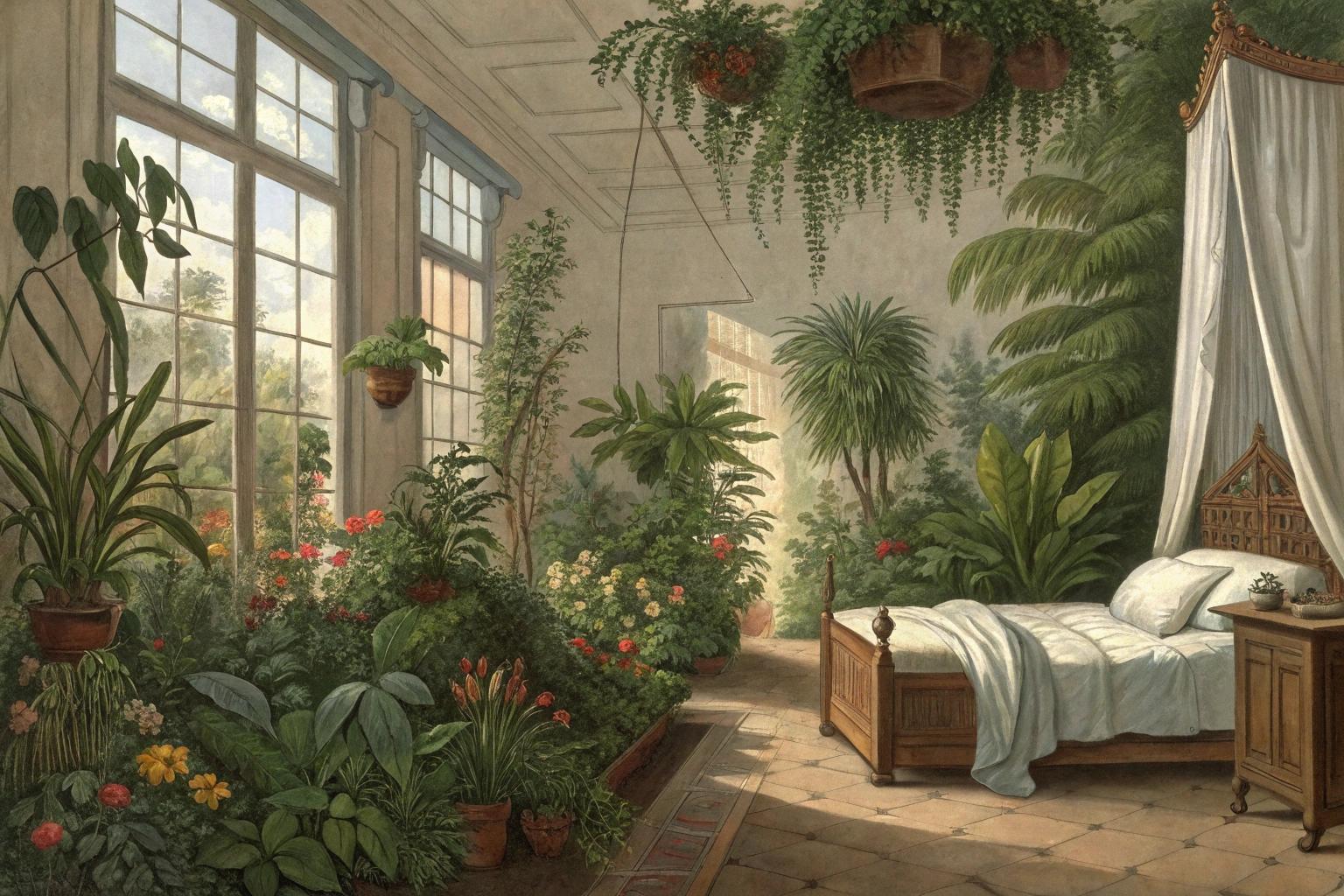
I chase sleep like a rare orchid, and plants help me set the room to hush. Here is the best-plants-for-bedroom toolkit that actually earns its potting mix.
Plants modulate humidity, scatter harsh light, and cue your brain through scent and ritual. The science on air cleaning is mixed, but the mood shift is real in lived spaces.
Translation for growers: care for air with ventilation and cleaning, then use plants to tune humidity, light, and fragrance. That stack makes a bedroom feel like a quiet understory.
Most bedrooms sit in the low-light class, around 50 to 150 foot-candles or 500 to 1500 lux. I place shade-tolerant plants 0.6 to 1.5 m from an east window or 1 to 2 m from a bright south window.
For the fussy bloomers, I add a small LED at 3000 to 4000 K delivering 100 to 200 PPFD for 8 to 12 hours. Clip it high and off to the side to avoid glare at night.
I keep a peace lily near a radiator to buffer dry winter heat, and I park a hoya six feet away so its scent finds me but never shouts. That spacing matters.
Lavender’s linalool and linalyl acetate read as safety signals to a jumpy nervous system. Jasmine carries indoles that smell plush at low levels and cloying if crowded in a small room.
I aim for one fragrant plant per 10 to 15 m² or 100 to 160 ft² and place it 1 to 2 m or 3 to 6 ft from the pillow. Open a vent or crack a window for a soft drift, not a wall of scent.
I run a coarse, airy mix for most tropicals: 40 percent peat-free base, 30 percent fine bark, 20 percent perlite, 10 percent pumice. Succulents get a gritty blend with 50 percent mineral content.
Target 40 to 50 percent RH for breathing comfort. A simple pebble tray under a peace lily or palm lifts the microclimate without turning the room swampy.
To avoid fungus gnats, let the top layer dry, bottom-water, and use BTI dunk crumbs as needed. Self-watering planters with a capillary wick are my nightly insurance against overwatering.
Most bedroom plants like 18 to 24 C or 65 to 75 F with a 2 to 4 C or 3 to 7 F night dip. I run a silent fan on low to prevent stagnant corners and leaf-spotting.
If HVAC dries the room, group plants to share transpiration. Keep leaves dust-free so stomata can breathe and your LED output is not wasted.
Monday: dust leaves with a barely damp cloth while the kettle warms. Thursday: check moisture by heft, water two pots, skip three.
First weekend monthly: prune, rotate a quarter turn, empty saucers, reset the hygrometer. Quarterly: leach salts in the tub and refresh the top 2 cm or 1 inch of mix.
Do plants steal oxygen at night. Respiration runs all day and night, yet the effect in a bedroom is trivial compared with room volume and air exchange.
How many plants create a calm effect. I feel the shift at three well-placed pots near my reading chair and window because the sightline holds green without clutter.
Can plants improve air quality alone. Use ventilation, source control, and cleaning first, then add plants for humidity and psychological comfort.
I once moved a gardenia into my bedroom and slept like a stone for two nights, then woke stuffy by day four. Fragrance is a spice, so I rotate it in for weekends and bench it the rest of the week.
My calmest setup was laughably simple: a spider plant to the left, a snake plant by the closet, and a hoya on the curtain rod. Three points of green and no drama.
Confirm pet toxicity with a trusted database before buying. Wear gloves when pruning plants that exude sap, and avoid heavy pollen indoors if you react seasonally.
- Sansevieria (Dracaena trifasciata): CAM metabolism, tough leaves, tolerates 40 to 300 foot-candles. I water every 3 to 5 weeks in winter and keep it 18 to 27 C or 65 to 80 F.
- Peace lily (Spathiphyllum): Gentle transpiration raises humidity a notch, which calms dry sinuses. Give medium light and allow the top 2 to 3 cm or 1 inch of soil to dry.
- Spider plant (Chlorophytum comosum): Forgiving, quietly purifies vibes if not the whole room. Bright indirect light keeps variegation crisp.
- Hoya carnosa: Waxy leaves, night-fragrant umbels in bright light. Let it dry deeply and pot tight for blooms.
- Jasmine sambac: Small vine with twilight perfume that reads like lullaby. Needs bright window or supplemental light and consistent moisture.
- Lavender (Lavandula angustifolia): Sun-hungry but stellar near a south window; dry, gritty mix, and a cool night dip to 15 C or 59 F helps. Pinch often for compact growth.
- ZZ plant (Zamioculcas zamiifolia): Handles neglect, low light, and dry heat. Water sparingly and keep out of pet access.
- Pothos (Epipremnum aureum): Cascades, softens edges, thrives at 75 to 200 foot-candles. I bottom-water to dodge fungus gnats.
- Areca palm (Dypsis lutescens): Feathery fronds, light humidifying effect. Bright indirect light and steady moisture, never soggy.
- Chamomile, potted: Seasonal, apple-honey scent that winds the mind down. Cooler room and full sun earn you blooms.
- Calathea and Maranta: Leaf movement at dusk feels like a living clock. Use filtered water to avoid crispy margins.
- Pilea peperomioides: Upright discs, easy offsets for sharing. Bright shade, light potting mix.
- Peperomia species: Thick leaves, tidy growth on nightstands. Water lightly and give moderate light.
- Spider plant: Non-toxic, but cats snack on it like salad, so hang the basket.
- Hoya and Fittonia: Safe picks with contrasting textures. Watch Fittonia for wilt theatrics and water before the flop.
- Ficus benjamina: Latex sap and leaf drop can irritate sensitive noses. It hates drafts too.
- English ivy: Allergen potential and spider mites if air is dry. Great outdoors, fussy inside.
- Overgrown Monstera: Beautiful, yet too much leaf mass for tiny rooms. It hogs light and airspace.
- Pot size: Start at 12 to 20 cm or 5 to 8 inches to control scale and watering rhythm. Go wider, not deeper, for shallow-rooted species.
- Choose cultivars: Dracaena trifasciata Laurentii for variegation, Spathiphyllum Domino for speckled leaves, Hoya Krimson Queen for cream margins.
- Check health: Look for new growth, firm petioles, and clean undersides. Skip plants with webbing or sour soil smell.
- Lights: A clamp LED with dimmer lets you tune photoperiod to your sleep. Warm-white at 3000 K feels cozy and still grows foliage.
- Humidity: Peace lily can raise local RH 2 to 5 percent in a small room cluster under typical conditions.
- Light: North windows in winter often deliver 50 to 100 foot-candles at 1 m or 3 ft. East windows jump to 200 to 400 right after sunrise in clear weather.
- Water: Most tropicals thrive with 5 to 10 percent leachate when watering to flush salts. Succulents prefer zero leachate and long drybacks.
- Bromeliads like Guzmania: CAM physiology, tolerate dry apartments, bright color pop without heavy fragrance.
- Philodendron hederaceum: Heartleaf trails without hogging space. Easy in low to medium light.
- Aglaonema: Stoic foliage for dim corners; choose the greener cultivars for lower light.
- EPA Indoor Air Quality basics and VOC guidance
- NASA Clean Air Study, Wolverton et al., 1989
- Waring and Cummings, Journal of Exposure Science and Environmental Epidemiology, 2019 analysis of biofiltration in buildings
- Goel, Kim, Lao, and Etwaroo, Wesleyan University, 2005 lavender and sleep study
- Royal Horticultural Society guidance on houseplant care and wellbeing
Cheatsheet: Bedroom Plants for Restful Sleep
Lavender Benefits for Sleep
Eases tension, enhances sleep quality. Avoid overwatering. Keep near a window.
Snake Plant Oxygen Boosting
Releases oxygen at night. Thrives in low light, tolerates drought conditions.
Peace Lily Care Techniques
Purifies air and raises humidity. Needs moderate light and weekly watering.
Placing Jasmine for Calming Scent
Reduces anxiety with soothing scent. Place by a sunny windowsill for best results.
Aloe Vera Maintenance
Cleans air with low upkeep. Requires bright light and infrequent watering.
Optimal Pothos Positioning
Freshens air, low maintenance. Prefers indirect light and dry soil between waterings.
Air Quality Improvement
NASA study shows houseplants can cut indoor toxins by 87% over 24 hours.
Humidity and Air Benefits
Improves respiratory health by increasing humidity and removing toxins.
Placement for Growth and Airflow
Position 2-6 ft (0.6-1.8 m) from bed for optimal airflow.
Rotating Plants for Even Growth
Rotate pots monthly to ensure balanced plant growth.
Soil and Watering Basics
Check soil weekly; water only if the top inch is dry to prevent overwatering.
Temperature and Draft Avoidance
Maintain 60-75°F (16-24°C) and avoid drafts to promote healthy plant growth.
Want a more guided way to practice best-plants-for-bedroom?
Frequently Asked Questions About Bedroom-Friendly Plants
Which indoor plants enhance air quality effectively?
Aloe Vera, Snake Plant (Sansevieria), Spider Plant (Chlorophytum comosum), and Peace Lily (Spathiphyllum) actively remove common indoor pollutants. These selections filter toxins like formaldehyde and benzene, contributing significantly to fresher bedroom air quality.
Are there bedroom plants that release oxygen at night?
Yes. Certain plants such as the Snake Plant (Sansevieria trifasciata), Aloe Vera, and Orchids perform CAM photosynthesis. Unlike most plants, they absorb carbon dioxide and release oxygen specifically during nighttime, improving air conditions as you sleep.
What lighting conditions do ideal bedroom plants require?
While requirements vary, indirect, moderate to low light works well for most indoor bedroom plants such as Pothos (Epipremnum aureum), Peace Lily, and Snake Plant. Avoid placing these plants in direct sunlight to prevent leaf scorching.
Do certain plants help in promoting restful sleep?
Yes. Plants like Lavender (Lavandula angustifolia) and Jasmine (Jasminum spp.) produce calming fragrances scientifically linked to relaxation and improved sleep quality. Placing these plants near your bed encourages a more relaxed bedtime atmosphere.
How often should you water plants kept in the bedroom?
Water frequency depends upon the plant species. Aloe Vera and Snake Plants prefer dry conditions and require watering only every 2-3 weeks, while Peace Lily and Spider Plant thrive with slightly moist soil, requiring weekly watering. Always check soil dryness by touch before watering.
Are any bedroom-suitable plants toxic to pets?
Yes. Some popular bedroom-friendly plants like Peace Lily and Aloe Vera are considered toxic to pets if ingested. Choose pet-safe alternatives like Spider Plants, Boston Ferns (Nephrolepis exaltata), or Areca Palms (Dypsis lutescens) for homes with pets.
Do plants alter bedroom humidity?
Certain plants such as Peace Lily, Boston Ferns, and Spider Plants can moderately increase humidity levels through transpiration. They naturally release moisture into surrounding air, which can provide relief in dry environments, particularly during colder months or when using heating systems.
Does room temperature affect plant choice for bedrooms?
Yes, temperature preferences vary among indoor plants. Most bedroom plants thrive between 60-75°F (16-24°C). Plants like Snake Plant and Aloe Vera tolerate slightly cooler temperatures down to 55°F (13°C), whereas tropical varieties like Peace Lily prefer warmer, consistent climates.
Conclusion
Choosing the best-plants-for-bedroom is simple: stick with varieties that clean the air, offer a gentle scent, and thrive with minimal fuss. Snake plant, peace lily, lavender, and pothos each bring their own rhythm to a quiet space, helping you breathe easier and rest deeper. Let these green companions claim a spot on your nightstand or windowsill. You’ll notice the shift: a softer mood, a calmer mind, and sleep that feels a little more generous. For more ideas to suit your style, check out the inspiration at taim.io/blog.


