The Simple Hand Trowel: The Essential Tool for Garden Success
Hand trowel
rab your hand trowel, dig deep, and plant confidently. The trusty hand trowel loosens compacted soil, delicately transplants seedlings, and swiftly uproots unwelcome weeds. Simple, versatile, and easy on the wrists, a quality hand trowel turns gardening chores into genuine pleasure. Here's why every serious gardener swears by this humble tool.
Why The Hand Trowel Matters
- Hand trowel benefits
- Loosens compacted soil
- Transplants delicate seedlings
- Swiftly uproots weeds
- Easy on the wrists
- Solves problems faster
- Measures planting depth
- Teases tangled roots
Article mapOpen the visual summary
Why The Hand Trowel Matters
- Hand trowel benefits
- Loosens compacted soil
- Transplants delicate seedlings
- Swiftly uproots weeds
- Easy on the wrists
- Solves problems faster
- Measures planting depth
- Teases tangled roots
Table of Contents1 sections
- Section 1· 8 min
Section 1
Care, maintenance, and troubleshooting
Rinse after each session, then dry and wipe the blade with a light oil; camellia oil on metal and a thin coat of boiled linseed on wood; sharpen the edge a few strokes at about 20 degrees with a mill file; disinfect with 70 percent isopropyl alcohol, then dry; store out of sun and rain; RHS advice on hand tool maintenance; NIOSH guidance on handle diameter; soil sticking to the blade: choose polished stainless and rub with a wax candle or carnauba; bent necks: stop prying rocks with a light trowel; upgrade to a full-tang or one-piece steel model; stiff brush, rag, small bottle of camellia oil; mill file and fine diamond card; alcohol wipes; bucket of sand with a spoon of oil.
Handle, ergonomics, and weight
Subtle offset that keeps your wrist neutral; curved or pistol grips; if your wrist cocks to the side while levering, change the handle style or blade offset; ash and beech; composite grips; FSC-certified ash; a trowel that fits your hand prevents fatigue and blisters; weight should sit near the neck; handle: diameter near 1.5 in, 3.8 cm, with a grippy finish; try with gloves and bare hands; 6 to 12 oz, 170 to 340 g feels right for most hands; lightweight handle with a slight angle to reduce wrist strain; handle hot spots or blisters: sand sharp edges, add a tennis overgrip, or choose a larger diameter.
Blade and build selection
Deep scoop; narrow transplant blade; serrated edge; micro-serrated edge; long, tapered blade, 6 to 7 in length, 15 to 18 cm; blade 2.5 to 4 in wide, 6 to 7 in long, 6 to 10 cm by 15 to 18 cm; stainless steel; carbon steel; full tang; stout ferrule; clean welds; no flex at the neck under hand pressure; one-piece stainless; welded or forged handle; measured blade; laser-etched inches and centimeters; graduations in inches and centimeters on the blade.
Task-specific planting needs
Set beds; planted bulbs; tidy transplants; score the hole; avoid glazing the sides; measure depth with the blade; drop grit at the base; fluff soil back; tamp lightly while keeping air pockets; slicing divisions and planting; fast for seed depth consistency; big divisions; cut first and scoop second; make all holes to depth before unpotting a single plant; uneven planting depth.
Soil and planting conditions
Heavy clay; sandy or loamy beds; raised beds and potting; beds laced with roots; bulbs; containers; compacted ground; wet spring beds; sticky soils; rocky soils; trays; deep pots; crowded borders; perennial beds.
I keep a Hand trowel by the back door because it solves problems faster than any power tool in the shed. It slips into soil, measures depth, teases roots, and saves wrists on long days.
I have set beds, planted bulbs in cold November light, and carved perfect pockets in clay with the same tool. The trowel turns intention into holes at the right depth and width, which is where plant health begins.
Blade profile dictates behavior: a deep scoop moves potting mix cleanly, a narrow transplant blade cuts tight slots between roots, and a serrated edge saws fibrous crowns. The neck and tang transfer force; a full tang that runs into the handle resists prying and twisting.
Look for a secure ferrule at the handle joint and a subtle offset that keeps your wrist neutral as you push. Graduations in inches and centimeters on the blade speed up consistent planting.
Stainless steel resists rust and sheds sticky soil, which helps in wet spring beds. Carbon steel bites into hardpan and keeps a keener edge, though it needs oil to avoid oxidation.
On handles, ash and beech feel alive and dampen vibration, while composite grips shrug off weather and detergents. FSC-certified ash gives me durability with a lighter carry on long days.
A trowel that fits your hand prevents fatigue and blisters. Weight should sit near the neck so the tool feels nimble, not nose-heavy.
Curved or pistol grips can help keep a straight wrist in deep digging. If your wrist cocks to the side while levering, change the handle style or blade offset.
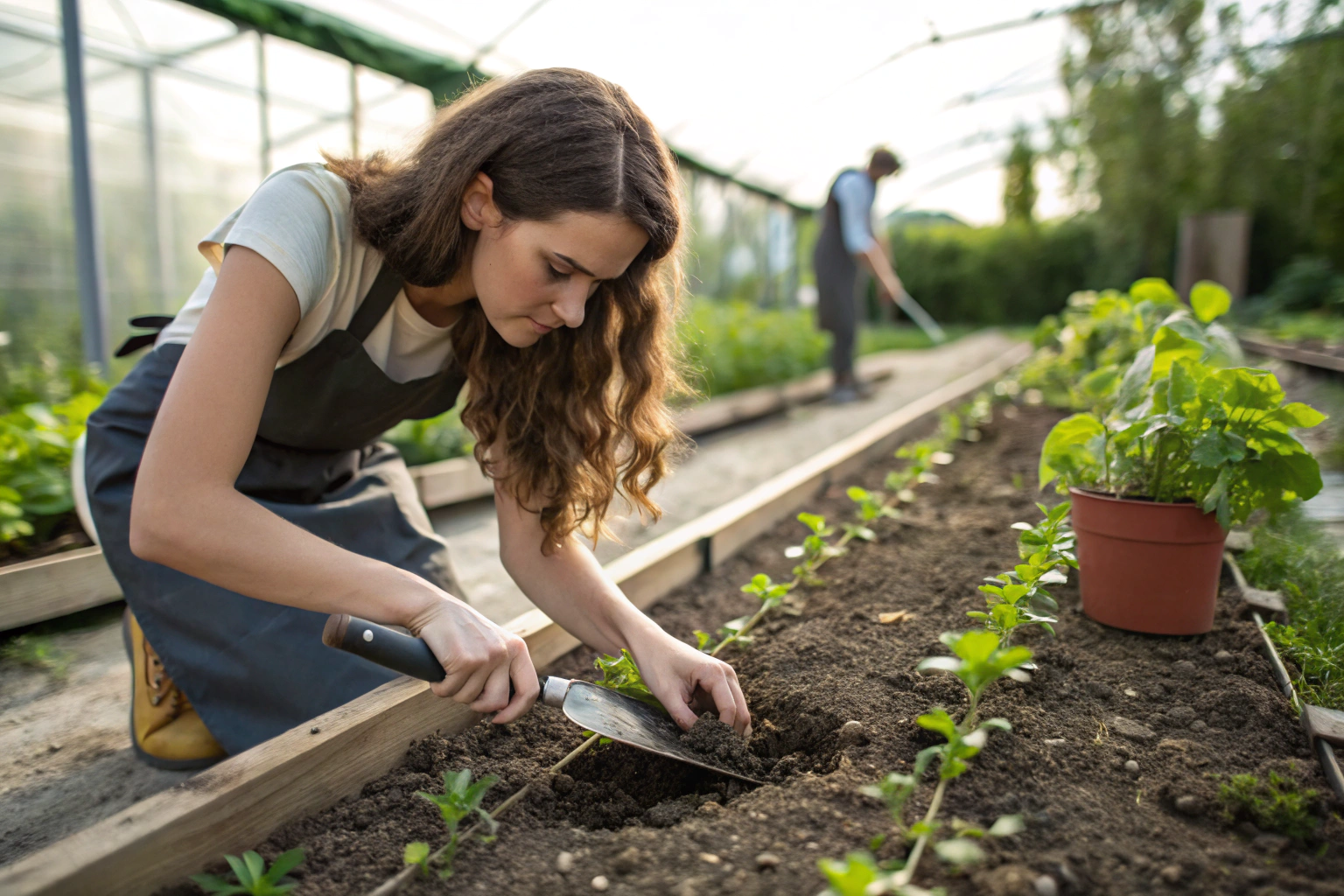
I slice a V-cut, lever a flap, set the plant, then fold soil back like a pastry lid for tidy transplants with intact soil structure. In compacted ground I use short chops to score the hole, then pry in tiny bites to avoid glazing the sides.
For bulbs, I measure depth with the blade, drop grit at the base, place the bulb, and fluff soil back to avoid a sump of water. In containers, I use the trowel spine to tamp lightly while keeping air pockets around roots.
Rinse after each session, then dry and wipe the blade with a light oil; I use camellia oil on metal and a thin coat of boiled linseed on wood. Sharpen the edge a few strokes at about 20 degrees with a mill file to keep bite without turning it into a knife.
Disinfect before moving between sick plants with 70 percent isopropyl alcohol, then dry. Store out of sun and rain to protect wood and temper.
The trowel is scalpel and spoon, so cut first and scoop second to protect soil aggregates. I plant faster by staging compost, then making all holes to depth before unpotting a single plant.
Work when soil is friable, not sopping; a hand squeeze that barely holds together is perfect. If I leave a slick surface in clay, I scratch it with the trowel tip to break that pan so roots push through.
Archaeologists swear by their trowels because precision reveals truth; gardeners need the same to give roots a fair start. On a good day the blade whispers through soil and you feel a living system settle in behind it.
RHS advice on hand tool maintenance keeps rust and disease at bay, and their endorsements often align with long-term durability in the field. NIOSH guidance on handle diameter informs my grip choices for long sessions without fatigue.
- Heavy clay: narrow, stiff carbon steel blade with a strong neck.
- Sandy or loamy beds: wide stainless scoop for volume without drag.
- Raised beds and potting: deep scoop with high sides to carry mix.
- Transplanting seedlings: narrow blade with clear depth marks at 3, 4, and 6 in, 7.5, 10, and 15 cm.
- Beds laced with roots: serrated or micro-serrated edge to slice rhizomes.
- Bulbs: long, tapered blade, 6 to 7 in length, 15 to 18 cm, for clean holes and easy backfill.
- Blade: 2.5 to 4 in wide, 6 to 7 in long, 6 to 10 cm by 15 to 18 cm for all-around work.
- Steel: stainless for low maintenance and sticky soils, carbon for bite and sharpening.
- Build: full tang, stout ferrule, clean welds, no flex at the neck under hand pressure.
- Handle: diameter near 1.5 in, 3.8 cm, with a grippy finish; try with gloves and bare hands.
- Weight: enough heft to cut, light enough to use all day; 6 to 12 oz, 170 to 340 g feels right for most hands.
- Price: budget 10 to 15 USD or 9 to 14 EUR, mid 20 to 35 USD or 18 to 32 EUR, premium 40 to 90 USD or 37 to 83 EUR.
- Warranty: lifetime or repairable parts show the maker stands behind the tool.
- Hori-hori or soil knife: trowel-knife hybrid with a measured blade for slicing divisions and planting; heavier in hand, deadly efficient.
- Dibber: fast for seed depth consistency in trays, then the hand trowel opens the pocket for larger plugs.
- Planting spade with a narrow head: steps in for big divisions where a trowel would over-lever your wrist.
- Soil sticking to the blade: choose polished stainless and rub with a wax candle or carnauba before work.
- Handle hot spots or blisters: sand sharp edges, add a tennis overgrip, or choose a larger diameter.
- Bent necks: stop prying rocks with a light trowel; upgrade to a full-tang or one-piece steel model.
- Uneven planting depth: use blades with graduations or mark yours at 2, 4, and 6 in, 5, 10, and 15 cm.
- Stiff brush, rag, small bottle of camellia oil.
- Mill file and fine diamond card for touch-ups.
- Alcohol wipes for quick disinfection between plants.
- Bucket of sand with a spoon of oil for a fast dip and shine after gritty work.
- 1
Classic stainless scoop trowel
smooth polish slides in wet beds, often with laser-etched inches and centimeters. Brands with RHS endorsements have earned their keep in my plots. - 2
Narrow transplanting trowel
long, slim carbon steel blade for precision in crowded borders. Dutch and German heritage makers excel at this style. - 3
All-steel digger
one-piece stainless with a welded or forged handle for rocky soils. The Wilcox-style digger punches through gravel and refuses to bend. - 4
Ergo composite trowel
lightweight handle with a slight angle to reduce wrist strain in deep pots. The Fiskars-style Xact line balances weight and stiffness well. - 5
Serrated multipurpose trowel
sawtooth edge that slices roots and opens bags. Handy in perennial beds where roots knit like rope.
Cheatsheet: Master Fast Planting with a Hand Trowel
Essential Tools and Supplies
Hand trowel (stainless steel or carbon steel), gardening gloves, small bucket, watering can, compost, fertilizer, seeds or seedlings.
Optimal Uses for a Hand Trowel
Transplant seedlings safely, target weeds without soil disruption, mix in compost or fertilizers, dig precise planting holes.
Step-by-Step Planting Guide
Grip handle firmly; angle blade correctly; dig holes 2-3× root ball width; plant seeds/seedlings; backfill and water thoroughly.
Pro Tips for Efficient Gardening
Avoid wrist strain: work parallel to beds; disinfect blade after use; sharpen monthly; use measurement marks for depth accuracy.
Health Benefits of Regular Gardening
Grow nutrient-rich greens in small plots; harvest significant produce per season; reduce stress and increase vitamin D through daily gardening.
Want a more guided way to practice hand trowel?
Frequently Asked Questions About Your Hand Trowel
How do I choose a hand trowel that fits my gardening style?
Select a hand trowel as you'd choose your favorite chef's knife: by grip, balance, and purpose. Consider blade shape: wide and rounded for scooping compost, narrow and pointed for transplanting seedlings or piercing compact soil. Hold it in your hand and feel the heft; comfort decides the hours you’ll spend digging in the dirt.
What's the proper way to maintain a hand trowel for longevity?
Respect the steel. After each planting spree, rinse your hand trowel clean, wiping away dirt to prevent rust. Dry it thoroughly, then lavish it occasionally with an oil rub: linseed or mineral oil to maintain the integrity of the metal. Store out of moisture's grasp, and your trusted tool will reward you season after season.
Can a quality hand trowel handle rocky or compacted soil?
The best-crafted hand trowels slice through rocky earth like a chef's blade through ripe tomatoes. Smooth and purposeful. Choose forged steel for unyielding toughness, a sharp pointed tip for puncturing dense earth, and a solid handle that withstands seasonal wear.
Are ergonomic handles worth considering in a hand trowel?
Gardening asks a lot of your hands. An ergonomic handle on your trusted hand trowel gives your wrist and fingers a fighting chance during long afternoons. Angled or softly contoured grips reduce strain and fatigue, making them indispensable companions for extended gardening rituals.
Should I sharpen my hand trowel, and how often?
Absolutely. A sharp hand trowel respects the soil, plants, and your effort in equal measure. Seasonal sharpening, once or twice a year, keeps edges crisp and functional. A simple sharpening stone or metal file restores the blade’s edge, slicing through roots and soil clods efficiently and cleanly.
Conclusion
The Hand trowel earns its keep every day. It digs, sets seedlings, lifts weeds, folds in compost, and settles roots without drama. Choose the right blade narrow for tight spots, a deeper scoop for potting. A solid handle gives control and saves your wrist.
Care is simple: sharpen lightly, rinse off grit, dry and oil. Work your soil when it crumbles, not when it smears. For bigger bites, reach for a spade; for breaking crust and teasing roots, a hand cultivator pulls its weight. Keep the Hand trowel close and planting gets faster, lines cleaner.


