Water Conservation: A Holistic Approach to Sustainable Gardening
Water Conservation
ater conservation starts at your garden gate: mulch generously, water early, and choose native plants to slash use by up to 50%. Smart irrigation alone can trim outdoor watering by another 30%, making water conservation an easy habit worth cultivating. Explore a holistic approach to sustainable gardening that nurtures growth, attracts wildlife, and keeps your garden thriving without wasting a drop.
Table of Contents6 sections
Why Water Conservation Matters in Your Garden
Living in California, I've learned firsthand the value of water conservation. A blistering summer (think 100°F (38°C) heat) once made quick work of my thirsty roses, and left me questioning traditional watering methods.
The good news? With mindful strategies, any garden can flourish beautifully with less water.
Choosing the Right Plants: Making Thoughtful Selections
Before planting, pause and assess local conditions. Native plants adapted to your climate spend less water while thriving effortlessly.
I swapped thirsty hydrangeas for drought-tolerant beauties like yarrow and Mexican feather grass: the results spoke loudly and clearly.
Xeriscaping combines water-conscious design with region-specific plants. My southern California wildflower meadow hardly needed supplemental watering after the first season.
- Succulents(like Agave and Sedum)create striking focal points and barely sip water.
- Grasses such as Blue Oat Grass add movement and texture, thriving in both heat (over 90°F/32°C) and modestly watered conditions.
Soil Health: The Key to Efficient Water Use
Healthy soil makes the difference. Compost and organic matter increase the soil's water-holding capacity, preventing runoff and evaporation.
Two autumns ago, I enriched my veggie beds with hearty mushroom compost; watering became less frequent, and the soil felt spongier to the touch.
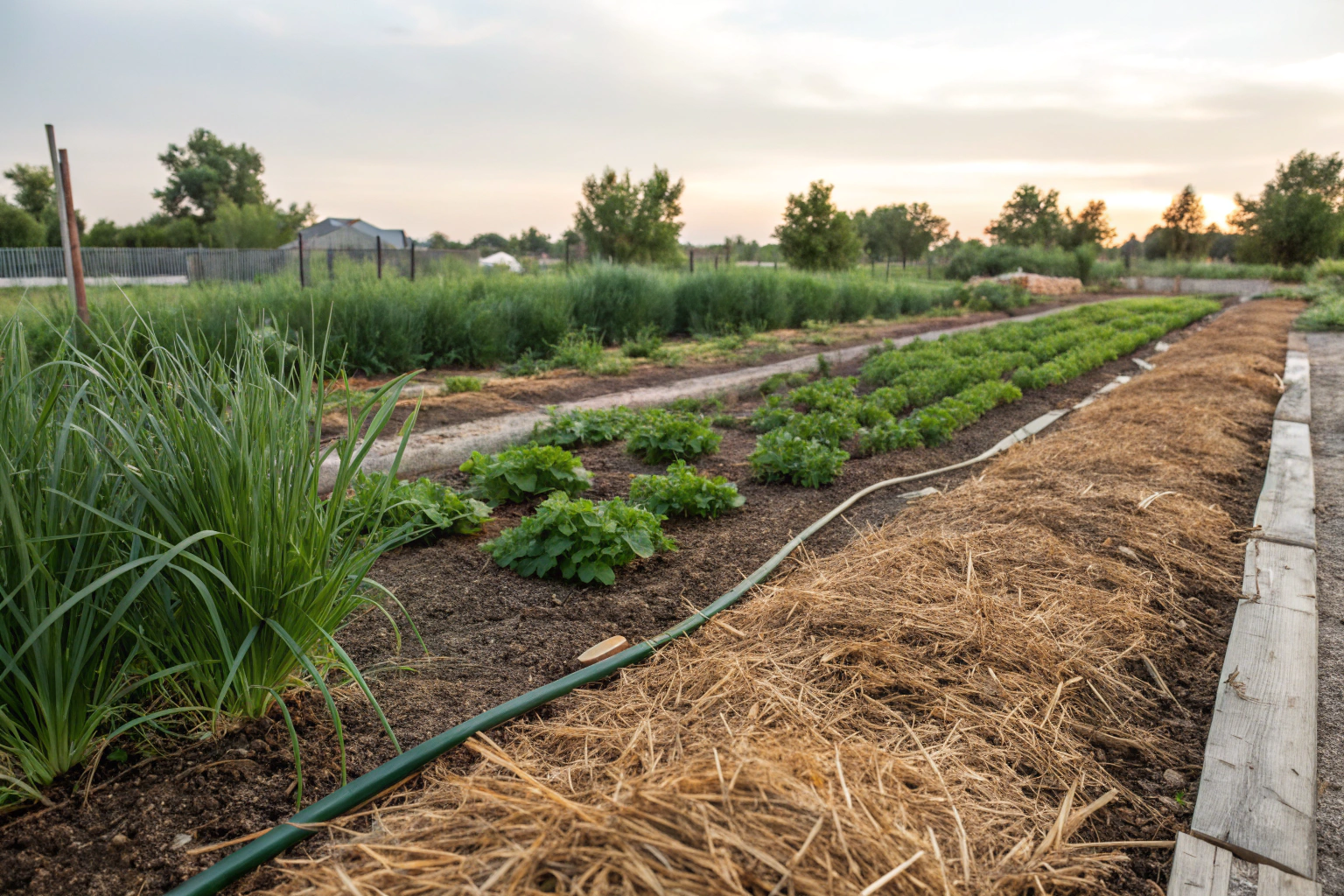
I learned quickly that a generous mulch layer (three inches (7.6 cm))is your soil's best friend. Pine straw, leaves, or wood chips trap moisture, slow evaporation, and control weeds simultaneously.
Plus, mulch breaks down slowly over time, contributing nutrients back into the soil: a self-sustaining bonus.
Water Smarter, Not Harder
Watering at peak sun? Rookie mistake. One I've admittedly made myself. Early mornings or late evenings ensure maximum absorption with less waste through evaporation.
Drip irrigation changed how I garden. Each drop goes directly where needed. It's efficient, affordable, and saves buckets of water over sprinkler systems.
Last rainy season (rare but glorious in sunny LA), I installed rain barrels beneath my gutter downspouts. Surprisingly easy and inexpensive, collection provided clean, beneficial rainwater for my tomatoes: pure gardening bliss.
Design Thoughtfully: Grouping Plants by Thirst Levels
Plant choices aren’t enough on their own. Arranging by similar water needs makes targeted watering simpler and reduces unnecessary waste.
I created "watering zones" in my yard(making watering sessions quicker, easier, and more sustainable).
Small Changes, Big Impact
Adopting these holistic approaches significantly slashed my water usage. My water bill shrank noticeably, yet my garden thrived brighter than before.
With thoughtful planning and ongoing care, water conservation can feel effortless(even second nature)in any garden.
Cheatsheet: Efficient Water Use for Thriving Gardens
Climate-Appropriate Plant Selection
Choose drought-tolerant natives to cut water usage by 60%.
Optimal Watering Techniques
Implement deep watering early in the morning to strengthen roots and save up to 50%.
Moisture Retention Strategies
Apply mulch 2-3 inches deep to reduce evaporation and suppress weeds.
Garden Design for Water Efficiency
Use trees or shade cloth to manage soil temperature and hedge barriers to reduce wind-driven moisture loss.
Water Collection and Reuse
Install rain barrels to harvest roof water, collecting up to 1,300 gallons annually.
Leak and Efficiency Monitoring
Repair leaks immediately and use soil moisture sensors for precision irrigation.
Tools and Supplies
Prepare drip irrigation kits, mulch, rain barrels, and soil amendments for effective conservation.
Self-Sufficiency and Plant Health
Efficient watering reduces stress, enhancing plant nutrition and flavor.
Want a more guided way to practice water conservation?
Frequently Asked Questions on Water Conservation for Sustainable Gardening
How frequently should you water plants to conserve water effectively?
Water plants deeply yet infrequently, allowing roots to reach down and strengthen. Let the soil dry slightly between waterings to stimulate resilience and curb overuse. This technique, known as deep watering, fortifies plant health while reducing your garden's thirst.
What's the smartest way to monitor garden moisture without gadgets?
Trust your senses. Sink your finger knuckle-deep into the soil; if it feels moist below the surface, wait. If earth crumbles dryly, it's time to drink. Observing your plants' leaves, drooping subtly or losing vibrancy, also whispers their need for hydration clearly.
Does mulching help conserve water in gardens?
Absolutely. Organic mulch forms a protective blanket atop your soil, reducing evaporation and keeping moisture where plants crave it most. Mulch also tempers soil temperature fluctuations, creating conditions of balanced hydration, fertility, and vitality.
Can selecting certain plants help reduce water use in gardening?
Indeed. Choosing native plants and drought-tolerant species minimizes water dependence dramatically. Plants adapted to local climates dance gracefully to nature's rhythms, thriving on rainfall alone once established, and rewarding you by slashing water consumption.
What irrigation methods make gardens thrive without wasting water?
Drip irrigation methods dispense water precisely, targeting plant roots directly rather than scattering water wastefully. Paired with careful timing: early morning or evening watering, these methods optimize hydration, eliminating excess and ensuring each drop is cherished.
Can rainwater collection meaningfully reduce garden water use?
Rainwater harvesting is gardening wisdom distilled. Placing well-positioned barrels to capture the sky's bounty during rainfall creates a reservoir of pure hydration. Utilizing collected rainwater lessens reliance on municipal sources and strengthens the bond between gardener and environment.
Conclusion
Water conservation is less about sacrifice and more about working with nature’s rhythms. Mulch deeply, plant smart, and learn when your soil truly needs a drink. Simple tools like a sturdy watering can or a reliable garden hose can make all the difference when used mindfully. Consider ground cover plants to keep soil cool and reduce evaporation. Every drop counts, and every small habit adds up. Water conservation isn’t a trend: it’s the backbone of sustainable gardening. Treat water like the precious resource it is, and your garden will thank you with resilience and abundance, season after season.


