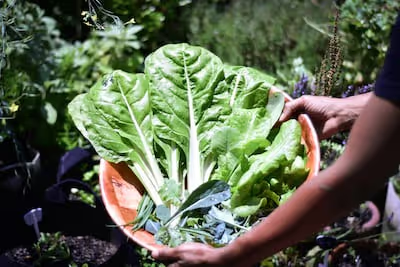
Zone 4 Planting Guide: Flourishing in the Winter Garden
Zone 4 planting guide
his Zone 4 planting guide reveals hardy plants that laugh at subzero temps and offers planting techniques that help gardens thrive even during fierce winters. Learn how short-season vegetables and tough perennial blooms turn icy conditions into dazzling growing opportunities. Use our Zone 4 planting guide to transform winter's chill into gardening magic and read on for tips that ensure your garden flourishes.
Put this guide to use
Explain one idea. Give one example.
After reading one section on Zone 4 planting guide, close it. How would you explain the idea to a beginner in one sentence?
Check your thinking
Add one concrete example. Reopen the section and check both the explanation and the example. If a step is missing, revise that part and try again.
Continue in Taim.io. Try it without an account.
Zone 4 Winter Planting Map
- Zone 4 winter gardeningcontext
- Extreme cold conditions
- Hardy winter plants
- Short-season vegetables
- Tough perennial blooms
- Microclimates and timing
- Protection over bravado
- Transform chill to magic
Article mapOpen the visual summary
Zone 4 Winter Planting Map
- Zone 4 winter gardeningcontext
- Extreme cold conditions
- Hardy winter plants
- Short-season vegetables
- Tough perennial blooms
- Microclimates and timing
- Protection over bravado
- Transform chill to magic
Table of Contents1 sections
- Section 1· 8 min
Section 1
Zone 4 means extreme minimums of -30 to -20 F (-34 to -29 C), yet winter can still feed you and look striking. I lean on microclimates, timing, and protection instead of bravado.
The USDA map measures coldest nights, not wind, snow load, or freeze-thaw cycles that lift roots like bottle caps. I map my yard each December: icy hollows, south walls that thaw first, and drifts that insulate beds for months.
Cold behaves like water and flows downhill, so I keep tender perennials up-slope and use fences for snow fencing to drop a protective drift where I want it.
I plan around the Persephone period, the stretch under 10 hours of daylight when growth stalls even if plants do not freeze. In my latitude that runs roughly early November to early February, so I seed to hit full size before it starts and harvest slowly after.
Vernalization drives bulbs and many biennials, so I plant garlic when soil cools to about 50 F (10 C) and I settle it 3 to 4 inches (7.5 to 10 cm) deep with 6 inch spacing for big heads in July.
I stop gambling and plant what shrugs at cold under simple cover. Here is the short list that has fed me for years.
I think in layers because each layer buys a few degrees and a few weeks, which adds up.
Late July to mid August: seed carrots, beets, kale, scallions, and parsley so they size up before short days. I thin aggressively so roots can bulk before the sun drops.
Late August to mid September: seed spinach, mâche, claytonia, and cilantro under fabric, then add poly to hoops by mid October. I water once, then let condensation do the rest.
October: mulch strawberries and garlic after two or three hard frosts, then set vole guards on every fruit tree trunk. I pre-cut vent holes in poly so I can pop them open on 35 F (2 C) sunny days.
November to February: harvest on sunny afternoons when leaves thaw. I prune orchards in late winter after the worst lows have passed.
Most winter losses in my beds come from wind and thaw cycles, not the coldest hour before dawn. I water evergreens and new plantings deeply just before the ground locks up so tissues do not dry out in January winds.
Snow is insulation and irrigation in one, so I move it onto beds with a shovel after each storm. I avoid black plastic in winter since it sheds snow and exposes crowns to radiative cooling at night.
Food is good, but structure carries the garden past December. I plant Cornus sericea for red stems, Physocarpus for peeling bark, and a few small conifers like Korean fir that hold snow like sculpture.
Witch hazel and late-blooming viburnums offer scent on thaws, and I force forsythia and serviceberry branches indoors from mid February for morale.
Winter rye survives, so I seed it by early September if I want spring biomass and living roots. Oats winterkill around 10 to 20 F (-12 to -6 C), which leaves a tidy mat I can plant into early.
In beds I need in April, I use oats plus peas rather than rye since rye roots can delay spring soil warming.
Hardware cloth around trunks, 18 to 24 inches high and 2 inches off the bark, stops girdling by voles and rabbits. I learned that after losing a young Honeycrisp in a single snowpack winter.
Burlap windbreaks on the west side of evergreens reduce desiccation more than any spray I have tried. I stake the fabric before the ground freezes, or I regret it later.
Zone 4 last frost often lands mid May to early June, so I count back under lights: peppers 8 to 10 weeks, tomatoes 6 to 8, brassicas 4 to 6, onions 10 to 12. I up-pot once to keep roots dense and sturdy.
Grow lights set 4 to 6 inches (10 to 15 cm) above seedlings with 14 to 16 hours on-time keep plants compact. I aim for 65 F (18 C) nights and 72 F (22 C) days indoors for stocky starts.
I lost a perfect bed of spinach to a January thaw followed by a flash freeze because I left bare soil. Now I leave a 2 inch leaf mulch between rows and pull it back only on sunny harvest days.
I once sealed a tunnel tight for a storm and cooked a row of mâche at 90 F (32 C) on the next sunny day. Now I pre-cut vent slits and carry clothespins in my pocket.
Tulips and daffodils settle best when soil cools to 50 F (10 C); I plant deeper in exposed sites to blunt frost heave. Shrubs and trees transplant well in early fall, then I water until freeze-up and mulch wide, not deep against the trunk.
I skip nitrogen-rich fertilizers after mid August and focus on potassium and phosphorus so tissues harden before real cold hits. Spring feeding restarts once buds swell.
How thick should greenhouse panels be in Zone 4. I like 8 mm twinwall at minimum for snow country, or 16 mm where ice storms visit often.
Which frost blanket weight should I buy. If you want one roll, get 1.0 to 1.25 oz and double it on the rare Arctic nights.
Do I need soil heat. Cables help in benches and propagation trays, but for in-ground winter spinach I stack fabric and vent right, which is cheaper and simpler.
I paint cold frame interiors matte white to bounce light and prevent leggy growth in December. I also set black water jugs inside frames since a gallon warmed by weak sun still blunts a radiative cooling night.
On the cold side of my yard I plant Siberian iris and Karl Foerster grass to catch and drop snow over the carrot bed. That drift acts like a quilt until March.
- Spinach: 'Giant Winter', 'Bloomsdale', 'Regiment'.
- Mâche and claytonia for crisp salads in February.
- Kale: 'Winterbor', 'Red Russian' for leaf harvest under fabric.
- Scallions, leeks, and chives for steady alliums.
- Carrots: 'Napoli', 'Mokum' sown late summer, then left in-bed under 8 inches of straw.
- Parsley and cilantro seeded late August, then held under a tunnel.
- Herbs that shrug: thyme, sage, oregano with a thick mulch cap.
- Mulch: shredded leaves or straw at 3 to 6 inches (7.5 to 15 cm) stops frost heave and buffers roots.
- Floating row cover: 0.5 oz fabric adds about 2 to 4 F (1 to 2 C), 1.0 to 1.5 oz adds 4 to 8 F (2 to 4 C).
- Low tunnels: hoops plus poly film add roughly 4 to 7 F (2 to 4 C) on still nights and far more on sunny days if vented.
- Cold frames: a hinged lid with twinwall polycarbonate or old windows captures solar gain and tames wind.
- Small greenhouse: 8 mm twinwall polycarbonate holds heat better than single film and sheds snow reliably.
- Frost fabric: 1.0 to 1.5 oz for deep winter beds; 0.5 oz for fall insect pressure and mild nights.
- Hoops: 9 or 10 gauge wire for temporary spans, or 1/2 inch EMT conduit bent to 4 foot radius for snow load.
- Poly film: UV-stabilized 6 mil with anti-drip for tunnels that will outlast spring gales.
- Cold frames: frames with twinwall lids and side vents so you can bleed off heat at noon without cooking spinach.
- Thermometer and min-max logger: the cheapest decision-making tool I own for vent timing and fabric stacking.
- Mulch: clean straw for edibles, chopped leaves for perennials, wood chips for paths to trap heat and add traction.
- Tree guards: metal mesh, not plastic spirals, to stop gnawing under snow.
- Salad bed: spinach 'Regiment', mâche 'Vit', claytonia 'Minutina' companion.
- Soup bed: kale 'Winterbor', leeks 'Bandit', carrots 'Napoli'.
- Allium bed: hardneck garlic 'Music' or 'German Extra Hardy' for reliable scapes and big bulbs.
- Herb edge: thyme 'German Winter', sage 'Berggarten', chives that shrug off April slush.
- Seed winter greens by late August to mid September, then cover in October.
- Plant garlic when soil hits 50 F (10 C), set it deep, mulch after frost.
- Stack protection: mulch, fabric, then hoops, and vent on any sunny day above freezing.
- Guard trunks from voles with metal mesh before snow flies.
- Water evergreens deeply before freeze-up, then leave them alone until spring.
- Log night lows inside covers for two weeks, then adjust fabric weight rather than guess.
- USDA Plant Hardiness Zone Map and explanatory notes.
- University of Minnesota Extension: winter mulching, garlic planting, and strawberry protection.
- New Hampshire and Massachusetts Extension: row cover performance and low tunnel management.
- SARE and Midwest Cover Crops Council: rye, oats, and timing for cold regions.
- Eliot Coleman: the 10-hour day concept and unheated winter harvest methods.
Cheatsheet: Zone 4 Winter Garden Survival
Top Winter Crops
Kale: Survives to -10°F/-23°C; Spinach: Handles -5°F/-20°C; Claytonia: Crisp to -30°F/-34°C.
Planting & Soil Preparation
Plant cold-hardy crops by mid-August. Top-dress with compost before sowing.
Protection Techniques
Use row covers or low tunnels; add cold frames or mini-hoop houses for extra cold.
Harvesting Strategies
Harvest during midday warmth; use forks for frozen roots; store carrots and parsnips under mulch.
Essential Tools
Row cover fabric (min 0.9 oz/yd²); Cold frame kits; Mulch (straw, leaves); Thermometer for monitoring.
Health Benefits
Winter greens provide 2x more vitamin C than summer crops; supports immunity.
Key Statistics
Zone 4 minimums: -30°F to -20°F (-34°C to -29°C). Cold frames extend season by 6-8 weeks.
Explain one idea. Give one example.
Frequently Asked Questions about Zone 4 Planting Guide
How can I determine the best planting times for vegetables in Zone 4?
Track your last frost dates in spring and first frost dates in autumn. These frost benchmarks set the rhythm for planting hardy vegetables like kale, spinach, onions, and root crops. Consult local frost calendars and garden-specific planting schedules to stay aligned with your region's cycle.
What flowering perennials flourish easily in Zone 4 conditions?
Select tough, cold-hardy bloomers such as Russian Sage, Echinacea (Purple Coneflower), and Siberian Iris. These species tolerate cold snaps and harsh winters, rewarding gardeners with vibrant flowers season after season.
How do I protect young fruit trees from harsh Zone 4 winters?
Insulate your trees' bases with mulch layers or organic materials like straw. Shield trunks against harsh winds and sunscald using lightweight tree wraps or protective covers. Consistent winter prepping primes fruit trees to bounce back vigorously when temperatures warm.
Can ornamental grasses thrive year-round in Zone 4 territory?
Absolutely. Ornamental grasses like Blue Oat Grass, Feather Reed Grass, and Switchgrass withstand bitter cold and snowfall. Leave grasses standing throughout the winter months, they provide striking visual interest and shelter wildlife until spring pruning revitalizes their growth.
What vegetables can I successfully plant in autumn for an early spring harvest?
Hardy crops such as garlic, shallots, and overwintering spinach are perfectly suited for fall planting. Set bulbs and leafy greens firmly into well-prepped beds before freezing weather hits. They'll remain dormant until spring, waking energetically at the first sign of warmth.
Which shrubs provide solid winter interest and tolerate Zone 4 cold?
Opt for hardy shrubs like Dogwood ('Arctic Fire' or 'Red Twig'), Winterberry Holly, and Dwarf Alberta Spruce. These plants deliver visual drama, color, and texture even under a blanket of snow: ideal for keeping gardens lively when temperatures plummet.
Any special maintenance tips for growing roses in Zone 4?
Choose cold-hardy rose varieties, and mulch diligently to guard roots against freeze-thaw cycles. After the ground freezes, mound compost or leaf insulation at the base, covering stems lightly. Come spring, prune away damaged cane tips to invigorate robust new growth.
Conclusion
The real heart of a Zone 4 planting guide is grit: knowing your frost dates, choosing cold-hardy varieties, and refusing to let winter dictate the terms. Mulch like you mean it, protect roots, and don’t overlook the power of nutrient-dense vegetables that shrug off a chill. Season extension tools: cloches, row covers, and cold frames, can mean the difference between a limp harvest and a table worth bragging about. Rotate crops, feed the soil, and trust the rhythm of the cold. In Zone 4, every green sprout is a small rebellion against the freeze. This isn’t just gardening. It’s survival with style. For more on plants that thrive in your region, check out this guide to North American climate zones. Keep at it, and winter will start to look less like an enemy and more like a worthy opponent.