Air-Purifying Plants for Workspaces and Home Offices
Air purifying plants
ick air purifying plants shown to reduce VOCs: spider plant, pothos, peace lily, snake plant for desks. Set 2-3 air purifying plants within arm’s reach to help maintain 40-60% humidity and cut dust on your desk. Place air purifying plants in bright, indirect light, water when the top inch of soil dries, and wipe leaves monthly. Keep reading for a no-fuss guide to air purifying plants that actually earn space on your desk.
Table of Contents1 sections
- Section 1· 7 min
Section 1
- Ventilation rate, measured as ACH
- Filtration with HEPA or MERV 13
- Air purifying plants work as sidekick
- MERV 13 filters and compact HEPA unit
- Air purifying plants round off the dryness
- This combo beats stale coffee smell
I have tested pots under fluorescents, LEDs, and sad north windows, and I keep circling back to a simple truth. Plants help, vents and filters do the heavy lifting.
The famous NASA study showed dramatic pollutant removal in sealed chambers, which reads like sci‑fi until you see the fine print. Real rooms breathe, so scale your expectations and enjoy the benefits without the hype.
Stomata open, gases move in, and leaves hand the mess to the root zone where microbes metabolize volatile organic compounds like benzene, toluene, and formaldehyde. Transpiration nudges humidity upward, which can calm dry eyes and itchy sinuses during long laptop stints.
Ventilation rate, measured as ACH, and filtration with HEPA or MERV 13 usually dominate pollutant removal. Air purifying plants work as a steady sidekick, not the star.
East windows give gentle photons that keep foliage tight and leaves saturated with color. I put plants near, not in, HVAC flows so leaves move slightly and dry fast after watering.
Most office stars like 40 to 50 percent RH, which feels civilized for humans too. Trays with pebbles help a little, though a small humidifier does it right.
I rinse foliage in a sink every month, then wipe with a drop of soap in a liter of water. Clean leaves mean clear stomata and fewer mites.
Soilless mixes with bark and pumice keep air pockets open, which limits sour smells and root rot. A pinch of horticultural charcoal buffers odors in conference rooms that fear compost.
LECA in self‑watering pots buys consistency and clean desktops. I keep nutrient EC near 1.0 to 1.5 mS cm, pH 5.8 to 6.3, and flush monthly to prevent salt crusts.
Yellow sticky cards catch fungus gnats fast, and BTi crumbs in water stop larvae. I use 70 percent isopropyl on cotton swabs for mealybugs and scale, then quarantine the diva.
Skip systemic insecticides in shared offices unless policy and signage are crystal clear. People eat lunch at these desks.
Ficus sap can irritate skin, peace lily pollen can tickle noses, and ferns shed spores that bother some folks. I clip peace lily blooms early and use gloves with latex milkers like Ficus.
ASPCA notes pothos, philodendron, and aglaonema as toxic if munched. Spider plant, parlor palm, and bird’s nest fern are better around pets.
I have seen real freshness with one medium plant per 25 to 40 square feet, plus a HEPA purifier and cracked window if AQI is good. The vibe improves first, then the nose follows.
NASA’s Wolverton group reported up to 87 percent reduction of certain VOCs in 24 hours, but that was a sealed chamber. I treat that number as a lab ceiling, not a room promise.
MERV 13 filters on HVAC and a compact HEPA unit give real CADR while air purifying plants round off the dryness. I air out the room when outdoor PM2.5 drops below 12 µg m³, AQI 50, and watch CO2 to time breaks.
This combo beats stale coffee smell and softens that fluorescent edge. Plants become co‑workers that never send calendar invites.
NASA, B. C. Wolverton et al., 1989, Interior Landscape Plants for Indoor Air Pollution Abatement. U.S. EPA, Indoor Air Quality basics and pollutant ranges.
Cummings and Waring, 2019, Journal of Exposure Science and Environmental Epidemiology, “Plant‐based biofiltration predicted to be ineffective for meaningful VOC removal in typical buildings.” University of Exeter, 2014, plants increased office productivity by about 15 percent.
- Light: aim for 100 to 300 PPFD or 500 to 2,000 lux on the desk for shade lovers, measured at leaf height. A south window behind a sheer often hits the sweet spot.
- Pots: breathable nursery pots slip into a ceramic cachepot for clean lines, or go self‑watering if you travel. LECA in a reservoir keeps desktops tidy and roots oxygenated.
- Soil: I mix 40 percent high quality peat or coco, 30 percent perlite or pumice, 20 percent bark, and 10 percent composted material. Chunky texture keeps roots from sulking.
- Size: a single 8 to 10 inch pot carries far more leaf area than two little four inch starters. Leaf area drives any air effect.
- Sources: buy locally for acclimated stock or choose growers that ship insulated boxes in winter. Quarantine two weeks to catch mites and mealybugs before the office meets them.
- Pets: check ASPCA toxicity lists and keep calcium oxalate species away from chewers. Peace of mind beats ER visits for cats.
- My desk at an east window reads 1,500 to 2,000 lux at midday, enough for pothos, ZZ, and snake plants.
- A 20 to 30 W, 4,000 K LED clip light at 12 inches, 30 cm, can deliver 100 to 200 PPFD for 10 to 12 hours without cooking a monitor.
- Buy from growers that list cultivar, pot size, and light needs, and request heat packs if shipping below 35 F, 2 C.
- Inspect roots, leaf undersides, and growth tips, and ask for a phytosanitary certificate on imports.
- Planters: self‑watering with a cotton wick, ceramic cachepots with pads, or recycled plastic are all fine. Size up only 2 to 5 cm, 1 to 2 inches, from the current pot.
- Lights: a clamp LED, 20 to 30 W, with a timer is enough for most shade plants within 12 inches, 30 cm. Look for 4,000 to 5,000 K and a high CRI for nicer leaf color.
- Accessories: a reliable hygrometer, BTi granules, neem or insecticidal soap, and a microfiber cloth. A cheap lux app sets expectations before you buy the wrong fern.
- Weekly: finger test the top 2 cm, 1 inch, rotate plants a quarter turn, and empty saucers. Quick glance beats moisture meters once you learn your pots.
- Monthly: fertilize at 1 quarter strength or EC 1.0 to 1.5 mS cm during active growth, rinse leaves, and flush pots with clear water.
- Quarterly: repot if roots circle tight, trim leggy vines, and sanitize shears with 70 percent isopropyl. Swap tired soil from office snacks with fresh mix.
- Snake plant Sansevieria trifasciata: tolerates 50 to 150 PPFD and weekend neglect, CAM metabolism means night CO2 uptake. Water every 3 to 4 weeks, keep at 65 to 85 F, 18 to 29 C, and keep from pets that chew.
- ZZ plant Zamioculcas zamiifolia: glossy leaves shrug off dry offices and low light. Let the mix dry deep, 68 to 80 F, 20 to 27 C, and avoid if pets nibble since it is toxic when ingested.
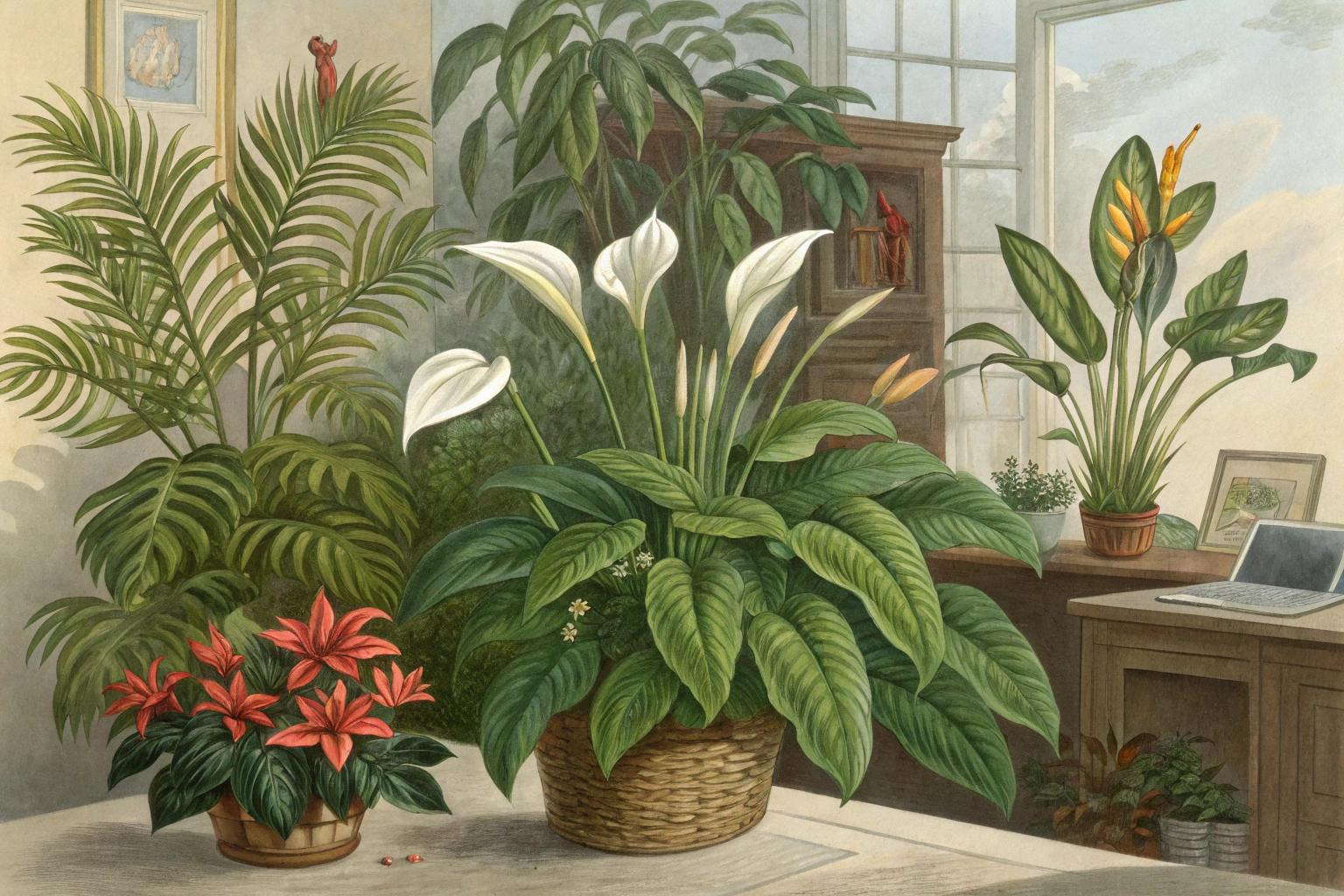
- Peace lily Spathiphyllum: famous from NASA’s list and good with formaldehyde in lab tests. Give medium light for blooms, water when it just begins to pout, and bag the pollen if coworkers sneeze.
- Golden pothos Epipremnum aureum: trails, roots in water, roots in dreams, forgiving to a fault. Bright indirect light keeps leaves broad, and one trim makes five new plants.
- Spider plant Chlorophytum comosum: pet safe, produces baby plantlets on cue. Medium light, evenly moist, and a monthly rinse keeps leaf tips from browning.
- Parlor palm Chamaedorea elegans: feathery fronds soften hard lines and bump humidity. Watch for mites, give 150 to 300 PPFD, and keep at 65 to 80 F, 18 to 27 C.
- Areca palm Dypsis lutescens: leaf area champ that humifies like a silent kettle. Needs bright indirect light, consistent water, and is pet safe.
- Rubber plant Ficus elastica: big leaves, big presence, big sap. Bright light prevents leggy growth, wear gloves if you cut since latex can irritate skin.
- Chinese evergreen Aglaonema: thrives in offices that feel like Tuesday forever. Low to medium light, warm temps, and keep away from pets due to calcium oxalate.
- Boston fern Nephrolepis exaltata: lush and old school, loves 50 to 60 percent RH. Keep cool to moderate temps and avoid dry heat or it sheds like confetti.
- English ivy Hedera helix: trails neatly from shelves and hits VOCs in chamber studies. Needs bright light indoors, treat early for mites, and avoid for pet spaces.
- Bird’s nest fern Asplenium nidus: sculptural fronds catch dust that swiffers miss. Medium light, keep water off the crown, and it is pet safe.
Cheatsheet: Easy Desk Plants that Clean the Air
Best Plant Picks
Snake Plant (Sansevieria) - Removes toxins, tolerates low light
Care Basics
Light: Medium indirect for most; let soil dry before watering (7-14 days)
Clean Air Impact
NASA's research indicates plants can remove up to 87% air toxins in 24 hours
Tools You Need
Planter pots with drainage, organic potting mix, watering can, gentle fertilizer
Fast Start Steps
Select plant based on light needs, prepare pots, place and maintain regularly
Pet Safety
Choose spider plant and Boston fern for spaces shared with pets
Wellness Tips
Green views reduce stress and eye fatigue, boost productivity by 15%
Want a more guided way to practice air purifying plants?
Frequently Asked Questions: Plants That Clean the Air for Workspaces
Which houseplants remove toxins most effectively in an office environment?
Peace lily, snake plant, and spider plant handle volatile organic compounds like formaldehyde and benzene, which often build up in enclosed spaces. Their dense foliage and root systems help break down these airborne toxins.
How much light do air-purifying plants require indoors?
Many of these varieties thrive in indirect or filtered sunlight. For example, the snake plant and pothos tolerate low-light corners, while the rubber plant prefers brighter spots. Place them within approximately three to eight feet (about one to two and a half meters) from a window that receives several hours of daylight.
How frequently should I water these kinds of plants in an indoor setting?
Allow the top inch (about 2.5 centimeters) of soil to dry before watering again. Overwatering can lead to root rot. Most air-purifying favorites like pothos and peace lilies need water once a week. Adjust timing if your office runs heating or air conditioning, which can dry soil more quickly.
What temperature and humidity conditions do these plants prefer?
Ideal temperatures fall between 65°F and 80°F (18°C to 27°C). If the workspace feels comfortable for you, it usually suits these varieties. Many of them, like ferns and peace lilies, thrive in medium to high humidity. If air feels dry, use a small humidifier or mist the foliage with water every few days.
Will these houseplants help reduce workplace allergies?
Many air-purifying plants release moisture and catch airborne particles, which can lower dust and allergens in enclosed offices. Choose low-pollen species like bamboo palm or snake plant to minimize allergy risk.
How many plants do I need for noticeable air improvement in a small office?
Use one medium-sized plant for every 100 square feet (about 9 square meters) of workspace. Larger offices or high-traffic areas benefit from grouping several varieties for greater coverage and visual interest.
Can pets stay safe around air-cleansing houseplants?
Some common air-purifying varieties, such as peace lily and pothos, can cause mild toxicity if pets chew on them. Opt for pet-safe options like spider plant, Boston fern, or bamboo palm for shared living and working spaces.
Conclusion
Your workspace breathes better with air purifying plants. Go with reliable standbys like snake plant, pothos, peace lily, or spider plant. Give them honest light, water by touch, and wipe the leaves. Clean leaves filter more and look sharper. Group plants where you sit; calm comes standard.
Set the room up right: aim for steady light, airflow, and watering. Learn how to repot a plant so roots are never jammed. Tune temperature and relative humidity for fewer brown tips. A simple gardening gadgets pick, like a moisture meter, saves guesswork. Rotate pots monthly. Refresh soil each spring. Keep it simple, keep it alive, and those air purifying plants will do steady work. No fluff. Just green that earns its keep.