Flea Beetles: Proven Strategies to Protect Your Garden Now
Flea beetles
lea beetles chew tiny holes in seedlings and can wreck your young veggies fast. Get ahead of these hungry jumpers by scouting your beds and spotting flea beetles before they multiply. A little vigilance and the right strategy let you outsmart flea beetles and save your crop.Stick around for tips on blocking their advances and reclaiming your garden from these pesky leaf-punchers.
Strategies Against Flea Beetles
- Flea beetles in seedlingstiny holes
- Damage and impact
- Scouting and vigilance
- Physical barriers
- Sprays and productscompare
- Organic versus conventional
- Control mindset
Article mapOpen the visual summary
Strategies Against Flea Beetles
- Flea beetles in seedlingstiny holes
- Damage and impact
- Scouting and vigilance
- Physical barriers
- Sprays and productscompare
- Organic versus conventional
- Control mindset
Table of Contents5 sections
Flea Beetles: Tiny Pests, Big Appetite
- 1
Spot pinprick leaf damage
Look for small, round holes, “shot-holing”, scattered across leaves, especially on young plants and seedlings.
- 2
Identify the tiny jumpers
Adults are minuscule, jumping beetles under 1/8 inch, glossy black, bronze, or metallic blue.
- 3
Watch early spring activity
They overwinter in soil and emerge once soil temps warm above 50°F (10°C), attacking seedlings first.
- 4
Check for seedling decline
Seedlings may be stunted, wilted, or dead, while mature plants can often outgrow moderate damage.
- 5
Know their favorite crops
They target brassicas, nightshades, and others like arugula, kale, eggplant, tomato, potato, corn, beans, and spinach.
Picture this: Swiss chard leaves riddled with pinprick holes, like miniature shotgun blasts. Early spring, I once watched my arugula vanish faster than a free beer on a Friday. The culprit? Flea beetles.
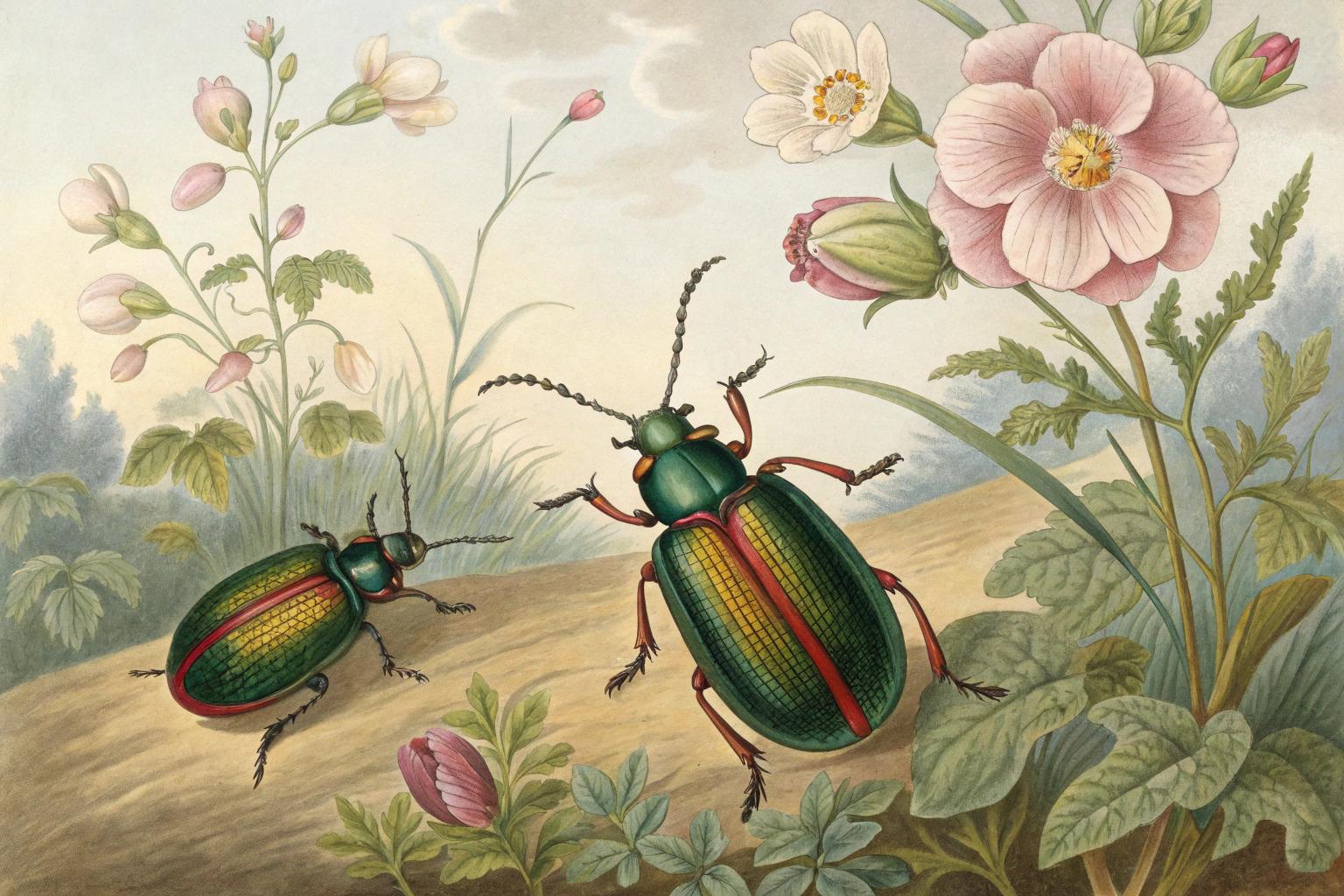
These minuscule, jumping beetles belong to the Chrysomelidae family. Adults rarely top 1/8 inch (3 mm), but their trademark leap could shame a grasshopper. Their armor: glossy black, bronze or metallic blue.
They overwinter in soil and plant debris. Once soil temps warm above 50°F (10°C), they're out, ready to feast. Cornell’s Integrated Pest Management Program pegs them as “one of the earliest and most damaging spring insect pests” (source: Cornell IPM).
I’ve seen seedlings pummeled so badly by flea beetles that only skeletons remain. Look for:
Eggs and larvae lurk below the surface, so you rarely see them, but the adults broadcast their mayhem above ground.
Seedlings face the harshest fate. Mature plants can often outgrow moderate damage.
Top Strategies to Outwit Flea Beetles
Floating row covers, like Agribon, provide a physical barrier. Install immediately after seeding. Remove only for pollination. Fasten edges tight: flea beetles slip through gaps smaller than their own ego.
Get clever: sow main crops after temperatures rise past flea beetle peak, or use trap crops like radish or Chinese mustard. Sacrifice these to lure beetles, then destroy them. It’s a bit like baiting a mousetrap with peanut butter, but the stakes are higher.
Rotate crops every year. Remove garden debris and till in fall to expose overwintering adults. Mulch heavily: adult beetles struggle to find their target if soil is covered and moist.
Release beneficial nematodes (Steinernema spp.) to target larvae in soil. Encourage native predators: ground beetles, lacewings, and birds, by planting diverse borders.
- Neem oil: Disrupts feeding, but apply with care, overuse burns foliage and disrupts pollinators.
- Pyrethrin: Derived from chrysanthemums. Potent, but degrades quickly in sunlight. Use sparingly and in the evening.
- Kaolin clay: Forms a fine dust barrier beetles hate. Needs frequent reapplication after rain.
Best Products for Flea Beetle Control
Look for tiny, shiny beetles jetting away as you approach plants. Damaged leaves display countless pinholes.
No. They feast solely on plant tissue, thankfully.
Absolutely. The flavor’s unchanged. Just wash thoroughly. I once served a holey arugula salad to a chef who called it “rustic charm.”
Spring and early summer, as new seedlings emerge. Hot, sunny days bring them out in droves.
- 1
Floating row cover fabric (e
g., Agribon-19): Lightweight, breathable, reusable for several seasons. - 2
Neem Oil Concentrate
Useful for spot-spraying new infestations. - 3
PyGanic Pyrethrin Spray
OMRI Listed, effective as a knockdown but hard on bees. - 4
Kaolin Clay (Surround WP)
Shields leaves but requires diligence in reapplying. - 5
Sticky traps
Yellow or blue cards help monitor populations, but aren’t a silver bullet.
Comparison: Organic vs Conventional Flea Beetle Control
Our garden club once ran a side-by-side trial: OMRI sprays plus covers prevented 95% of visible damage with less labor than conventional sprays, but required near-daily vigilance after storms.
- Organic: Relies on exclusion (row covers), crop rotation, and OMRI-approved sprays. Safer for pollinators and soil health.
- Conventional: Often uses systemic insecticides like imidacloprid. Highly effective, but can harm beneficials and increase resistance.
Final Thoughts: Control, Don’t Annihilate
I’ve learned to respect flea beetles as a rite of passage. If you spot a few, don’t panic. Monitor, intervene early, and focus on seedling defense. Nothing feels quite as satisfying as harvesting a flawless bok choy where flea beetles bounced, then failed.
Cheatsheet: Outsmarting Flea Beetle Damage
Recognizing Flea Beetle Damage
Look for pinholes in leaves, especially young plants. Shiny beetles often jump when disturbed.
Prevention Tactics
Use row covers, rotate crops, and plant early for stronger starts. Mulch with straw or wood chips to limit movement.
Quick Response Strategies
Hand-pick beetles early morning, apply diatomaceous earth after dew dries, and use neem oil weekly.
Required Tools and Products
Row covers, diatomaceous earth, neem oil, hand trowel, gloves, organic mulch, sticky traps.
Boosting Plant Health and Resilience
Water deeply to avoid stress, apply fish emulsion or seaweed feed, and plant trap crops like radish.
Health & Self-Sufficiency Impact
Unchecked, yields can decrease by up to 80%. Prevention leads to more nutrient-dense produce and less chemical use.
Want a more guided way to practice flea beetles?
Frequently Asked Questions About Managing Flea Beetles
How can I identify their feeding damage?
Look for tiny, round holes in the leaves of your plants, often giving foliage a shotgun-like appearance. Young seedlings suffer the most, sometimes losing large portions of their leaf surface. Certain species create iridescent trails as they feed on brassicas, eggplants, and other vulnerable crops.
What weather conditions favor their activity?
Flea beetle populations thrive in warm, dry weather. Most activity occurs when daytime temperatures reach above 65°F (18°C). Cool, wet conditions can reduce movement and feeding, but a stretch of warm, sunny days quickly boosts their numbers.
Which vegetable crops face the highest risk?
Plants in the brassica family such as arugula, radish, broccoli, kale, and cabbage attract frequent attacks. Nightshades like tomato, eggplant, and potato also attract certain species. Young transplants and recently sown seedlings face the greatest risk during the first few weeks of growth.
How do row covers protect young plants?
Applying a lightweight floating row cover forms a barrier that physically blocks flea beetles from reaching your crops. This technique works best when you install the cover directly after sowing or transplanting, and when the edges have a tight seal against the soil.
Which cultural practices suppress outbreaks?
Rotate susceptible crops each season, clear away debris after harvest, and cultivate the soil in late autumn to destroy overwintering adults. Avoid planting new crops near areas where last year’s infestations occurred. Encourage natural predators by maintaining diverse plantings and minimizing chemical use.
Can trap crops reduce overall damage?
Planting highly attractive species, such as radish, as a trap crop can draw beetles away from your main vegetable beds. Once the trap crop holds significant numbers, remove and destroy infested plant matter or treat only those sections, helping to lower pressure on primary crops.
Do organic sprays offer effective results?
Products containing neem oil or pyrethrin can reduce beetle numbers, especially when timed for early mornings or late afternoons. Reapply after rainfall or overhead irrigation. Always follow manufacturer recommendations and focus sprays on young plants and areas with visible feeding.
Conclusion
Flea beetles show up early, hungry and quick, punching holes in your young plants before you’ve had your morning coffee. They’re stubborn, but not invincible. Keep your soil healthy, rotate your crops, and use row covers right from the start. If you want to grow crops with fewer pesticides, timing and vigilance matter more than any spray. Don’t let up on weeding and mulching. Water deeply, not just a sprinkle, roots need a reason to dig down. If you’re losing plants and can’t figure out why, check out why vegetable plants keep dying. Flea beetles are part of the deal when you grow your own food, but with a watchful eye and a few old-school tricks, you’ll keep their damage in check and your harvest strong.


