Understanding Soil Microbiomes: The Hidden Network Beneath Your Plants
Soil microbiome gardening
tart soil microbiome gardening: add 2-3 inches of compost, keep mulch on, and water for steady moisture. In soil microbiome gardening, avoid tilling; intact aggregates boost water holding and root access while microbes cycle nutrients. Practice soil microbiome gardening with diverse roots and mycorrhizae; a teaspoon of healthy soil teems with billions of organisms. This hidden network feeds, defends, and structures your beds, cook for it, and your plants repay you with flavor and vigor.
Table of Contents1 sections
- Section 1· 7 min
Section 1
I treat soil like a living city because it behaves like one. Neighbors trade, scavengers clean, and the quiet workers build the roads your roots use.
Soil microbiome gardening starts with that mental shift. Feed the city and your plants stop acting needy.
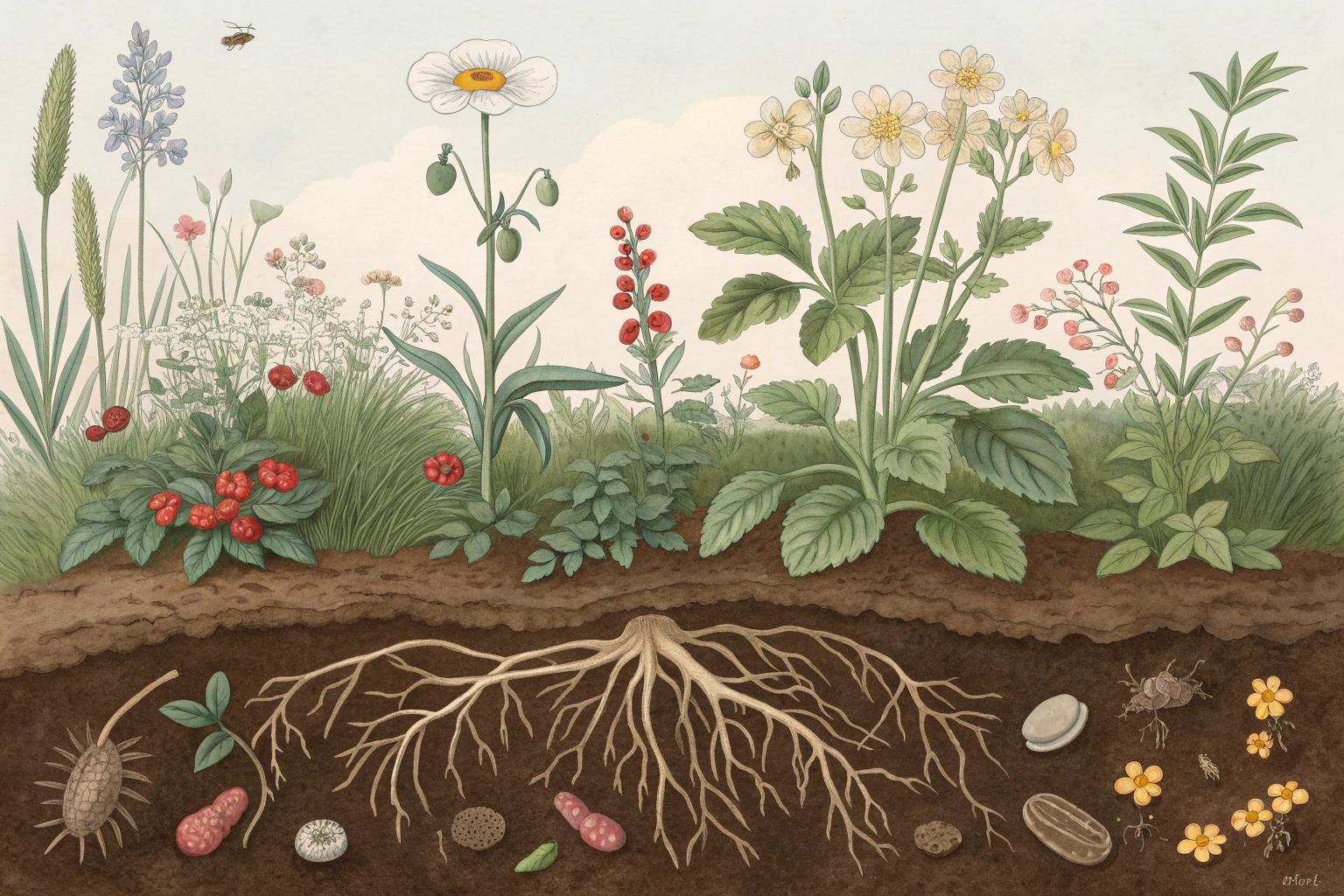
Microbiome means the full guild of bacteria, fungi, archaea, protozoa, and their predators like nematodes. The hot spot is the rhizosphere, the thin zone hugging roots where plants ooze sugars to hire help.
Arbuscular mycorrhizal fungi stitch roots to the mineral bank. Certain bacteria solubilize phosphorus, fix nitrogen, and craft plant hormones.
I have pulled up onions with roots wearing white fungal sleeves. That is mycorrhizae doing logistics better than any fertilizer.
They cycle nutrients by chewing carbon-rich residues and releasing plant-available forms. They build structure by gluing crumbs into stable aggregates that resist crusting and compaction.
Many also outcompete pathogens on root surfaces. Some trigger plant immune priming so leaves respond faster under attack.
That line rattled me the first time I read it. I started mulching the same day.
Exudates: sugars, amino acids, and acids excreted by roots to recruit microbes. It is strategic bribery.
Glomalin: a sticky glycoprotein from certain mycorrhizal fungi that strengthens soil crumbs. USDA researchers flagged its role in aggregation.
Biological soil crust: thin algae or fungal films on bare soil. It signals imbalance and low cover in vegetable beds.
Pinch a moist handful and drop it. If it shatters into dust, you need carbon and cover.
Sniff the soil. Forest and mushrooms mean air is flowing, while sour and rotten mean you fed it wrong or drowned it.
Soil organic matter around 5 percent in loams tends to punch above its weight. Under 2 percent usually runs hungry and compacted.
Ideal soil temp for active microbes lives between 60 to 85 F, roughly 15 to 30 C. Activity droops outside that band.
Vegetables thrive in slightly bacterial-leaning soils shaped by green residues and compost. Orchards and shrubs glow in fungal-leaning soils shaped by wood chips and leaf mold.
I push beds toward fungal when growing onions, garlic, and berries. I tip them toward bacterial for lettuce and brassicas.
I brew compost extract for 20 to 30 minutes with gentle aeration, then apply same day. It rinses organisms off compost without big bloom risks.
If brewing aerated compost tea, I stick to 12 to 24 hours at 65 to 75 F or 18 to 24 C with vigorous aeration. I skip sugar and use a pinch of fish or humic acids to avoid runaway bacteria and off smells.
Spray in the evening on leaves and soil. Any sour odor means dump it on the compost pile, not the salad bed.
Biochar holds water and hosts microbes, but it needs a check-in meal first. I charge it in compost tea or diluted fish and kelp for a week.
Blend at 5 to 10 percent by volume into beds. I see better summer resilience and steadier moisture.
I use inoculants as primers, not crutches. Compost and living roots do the heavy lifting after that.
Pair any biology test with a standard soil test. Fix pH into the 6.2 to 6.8 range for vegetables to keep the consortium humming.
I took a tired 4 by 10 foot bed that baked hard by July. I added 1 inch of compost, seeded oats and crimson clover in fall, and mulched with shredded leaves at 3 inches.
Next summer tomatoes held fruit through a 97 F or 36 C heat spike without blossom drop. A shovel test showed coffee grounds texture and white threads from chip mulch into the top 4 inches or 10 cm.
Late winter: broadfork once to open channels without flipping. I topdress compost and cover with a tarp for two weeks.
Spring: transplant with mycorrhizal dust at the root. I water in with a light compost extract.
Summer: mulch deeper as heat rises. I spoon-feed fish and kelp during soil-warm spells.
Fall: sow cover crops when soil hits 50 F or 10 C. Leaf mold piles get turned and labeled for spring.
Winter: keep off saturated beds. I prune and lay chipped branches as fungal snacks.
Soil microbiome gardening rewards consistency more than gadgets. I buy fewer bottles each year as the system stabilizes.
Most microbiome failures trace to low oxygen. Create pore space with roots, aggregates, and mulches so air can flow after rain.
Time irrigation in the morning and adjust volume to keep the top 6 inches or 15 cm moist, not soggy. Shade soil with mulch to flatten heat spikes above 90 F or 32 C.
Cabbage tribe plants rarely host arbuscular mycorrhizae. I still build networks around them with interplanted alliums or clover to keep the grid intact between rows.
Slice weeds at the crown and drop them as mulch. Roots die in place and feed microbes without stirring the deck.
Flame weeding hits annuals without mixing layers. I reserve hand pulling for taproots that lift easy after rain.
Use clean, mature compost for edible leaves. If in doubt, keep teas off foliage and apply to soil only.
Wash harvests, especially after heavy rains. Keep pets out of compost piles used for tea inputs.
Plants spend a third of their photosynthate feeding microbes because the trade pays back in minerals, water steadiness, and defense. I just keep the market open and stocked.
- Add 1 to 2 inches of finished compost in spring, then mulch. Compost is inoculum, mulch is fuel.
- Keep soil covered 365 days with straw, leaves, or living cover crops.
- Water deeply and less often so oxygen returns between cycles. Aim for field capacity, not saturation.
- Reduce tilling to preserve fungal networks. Slice and lift instead of flipping beds.
- Feed biology with low-salt inputs like fish hydrolysate, kelp, and dilute compost extracts. Avoid heavy, fast salts that scorch microbes.
- Plant diversity in beds and borders to widen microbial diets. Include at least one umbel and one legume per bed.
- Leave fine roots in the soil at season’s end. They become highways and snacks.
- Crimson clover: feeds nitrogen and supports bacteria. Easy to mow terminate.
- Oats: fast cover with fine roots that stitch soil. Winter-kills in cold zones.
- Buckwheat: mobilizes phosphorus and draws pollinators. Great summer gap filler.
- White clover under fruit trees: living mulch that leaks sugars all season.
- Leaf mold sifted into seed trenches for fungal cues at germination.
- Vermicompost at 10 to 20 percent of potting mix by volume for seedlings.
- Fish hydrolysate at 1 to 2 tablespoons per gallon, monthly during warm soil temps.
- Kelp extract after heatwaves to nudge root regrowth.
- Arbuscular mycorrhizal fungi for non-brassica crops: species like Rhizophagus irregularis and Funneliformis mosseae. Dust transplant roots or place granules in the planting hole.
- Rhizobium and Bradyrhizobium for legumes: match inoculant to crop group. Coat seed just before sowing.
- Trichoderma in potting mix for damping-off pressure. I apply at sowing and at up-potting.
- Microscopy counts: quick look at bacterial and fungal balance. Great for home compost QC.
- PLFA: lab test that profiles microbial functional groups. Helpful for tracking before and after cover cropping.
- Respiration: measures microbial breathing. Rising numbers over seasons often mirror better aggregation.
- Sour smell, black slime: too wet and too much easy sugar. Add dry carbon mulch, pause feeding, and let air in.
- Algae crust: bare soil and soluble nitrogen. Cover with mulch and switch to slow-release meals.
- Fungus gnats in starts: let the top half inch or 1.3 cm dry between waterings and top-dress with coarse sand.
- Mushrooms popping: that is decomposer season. Leave them to finish the job.
- Granular arbuscular mycorrhizal inoculant with multiple species for transplants.
- Vermicompost from a clean feedstock supplier for seed starting and teas.
- Unstabilized fish hydrolysate and cold-processed kelp as gentle biostimulants.
- Screened leaf mold or composted wood fines for fungal tilts in beds.
- Cone-bottom brewer or simple bucket with a large air pump if you make teas. Use a 400 micron bag to keep chunks out of sprayers.
- PLFA or respiration lab kits once a year to track progress alongside standard NPK and pH tests.
- Thickened root hairs and branching tips show good exudate exchange.
- Leaves with steady, matte green suggest balanced nitrogen cycling.
- Even moisture under mulch and easy shovel entry point to strong aggregation.
- Swap rototilling for a single pass with a broadfork.
- Swap bare soil for straw or leaf mulch.
- Swap high-salt fertilizer for compost and fish hydrolysate.
- Swap frequent sprinkles for deep, infrequent watering.
- Swap monocrop rows for mixed plantings.
- Swap fall cleanup to the curb for leaf mold bins.
- Swap peat-heavy mixes for composted bark and biochar blends.
- Swap plastic fabric for living clover paths.
- Swap full-bed disturbance for slice planting.
- Swap sterile potting for a touch of vermicompost.
Cheatsheet: Soil Microbiome Gardening Essentials
Why Soil Microbiomes Matter
Soil microbes break down organic matter, supply nitrogen, boost disease resistance, and improve water retention. Healthy soil = nutrient-dense crops. Soils richer in microbes grow up to 40% more productive plants (source: USDA).
Want a more guided way to practice soil microbiome gardening?
Frequently Asked Questions: Soil Microbiome Gardening
How can I encourage a healthy soil microbiome in my garden beds?
Promote soil microbiome diversity by adding compost, applying organic mulches, and minimizing chemical interventions. Reduce soil disturbance, such as frequent rototilling, to preserve fungal networks and bacterial communities. Rotate crops and include cover crops to support a wider range of beneficial microorganisms in the root zone.
Why should I reduce synthetic fertilizers and pesticides for soil microbiome gardening?
High doses of synthetic fertilizers and pesticides can harm beneficial soil life, including nitrogen-fixing bacteria and mycorrhizal fungi. By using organic amendments and targeted biological controls, you support a resilient soil ecosystem that better resists pests and diseases, and enhances plant nutrient uptake naturally.
How does soil moisture impact beneficial microorganisms?
Consistent moisture supports active microbial processes. Allowing soil to dry out completely stunts bacterial and fungal growth. Apply mulch to maintain even moisture levels. Ideally, keep soil moisture in the range of 50 to 70 percent field capacity. Water deeply but infrequently to encourage deep root growth and sustained microbial activity.
Can temperature affect soil microbiome gardening success?
Most beneficial soil organisms thrive between 55°F and 77°F (13°C to 25°C). Below-freezing or extremely hot conditions can slow down biochemical reactions and reduce microbial populations. Mulches and ground covers moderate soil temperature swings, helping maintain microbial balance all season.
What signs indicate an active, healthy soil microbiome?
Dark, crumbly soil with an earthy aroma signals strong microbial presence. Earthworms, visible fungal threads, and rapid organic matter breakdown all point to thriving soil life. Plants may also show improved vigor, root development, and better resilience to stress when microbial partners flourish.
Conclusion
Soil is alive. In soil microbiome gardening, the unseen crew plates nutrients, shields roots, and keeps flavor in the harvest. Feed them with compost and leaf mold, keep a steady blanket of mulch, go easy on the tiller, and skip salty fertilizers or harsh sprays. Diverse roots invite microbial guilds and mycorrhizae to clock in.
Plant legumes and other nitrogen-fixing plants. Water deep, then let soil breathe. Soggy beds set up root rot and suffocate the crew. If leaves crisp or droop, see guides on brown leaves and wilting. For structure and amendments, start with soil for a vegetable garden. Work quiet, season by season. The garden answers. This is soil microbiome gardening at its best.


