What to Plant in December: Seasonal Picks for Your Garden
What to plant in December
ondering what to plant in December? Sow hardy vegetables like kale, garlic and onions now for an abundant spring harvest. Potted winter blooms such as pansies and cyclamen add vibrant color to patios during colder months. December planting rewards gardeners with thriving crops and stunning blossoms. Read on for plants that'll flourish despite winter's chill.
December Planting Priorities
- Plan by zone and soilzones 8-11
- Mild or frost-light winters
- Cold or variable winters
- Cool-season veg and herbs
- Potatoes and broad beans
- Bare-root fruit and perennials
- Cover crops and winter sowing
- Indoor bulbs and starts
- Protection and problem solving
Article mapOpen the visual summary
December Planting Priorities
- Plan by zone and soilzones 8-11
- Mild or frost-light winters
- Cold or variable winters
- Cool-season veg and herbs
- Potatoes and broad beans
- Bare-root fruit and perennials
- Cover crops and winter sowing
- Indoor bulbs and starts
- Protection and problem solving
Table of Contents10 sections
- What to plant in December: zone-savvy choices that actually take· 1 min
- Cool-season vegetables that shrug at December· 2 min
- Herbs worth the fuss now· 1 min
- Bulbs and winter color that pull their weight· 1 min
- Fruit, vines, and perennial moves· 1 min
- Cover crops that repair tired beds· 1 min
- Indoor starts for a head start· 1 min
- Winter sowing: perennials and natives the lazy-smart way· 1 min
- Potatoes, broad beans, and onions for warm winter zones· 1 min
- What to plant in December: my top 12 by climate· 1 min
What to plant in December: zone-savvy choices that actually take
I plan by USDA Hardiness Zone first, then by daylength and soil temperature. December rewards precision, not bravado.
- Zones 9 to 11: Direct sow arugula, spinach, cilantro, dill, peas, carrots, radishes, beets, fava beans, asian greens, and plant garlic, shallots, and onion transplants.
- Zones 7 to 8: Plant garlic and shallots, onion sets or short-day onion transplants, fava beans, hardy peas under row cover, plus bare-root fruit trees and roses.
- Zones 5 to 6: Tuck in garlic if soil is workable, mulch deeply, and shift to cold frames for spinach, mache and claytonia. Start onions from seed indoors.
- Zones 3 to 4: Focus on winter sowing hardy perennials and natives outdoors in containers, and indoor starts like onions and leeks. Order bare-root stock early.
Cool-season vegetables that shrug at December
- Plant garlic, shallots, onions, peas
- Sow spinach and Asian greens
- Use low tunnels and cold frames
- Run 0.55 oz per yd² row cover
- Add plastic layer for hard snap
- Focus on steady harvests
Garlic still goes in here in many places, pointy side up, 2 inches deep and 6 inches apart, then mulch 3 to 4 inches. I expect 5 to 7 pounds of heads from a pound of seed garlic if I keep weeds down and water on time (University of Minnesota Extension).
Shallots and multiplier onions handle chill well, and I plant sets in grids for tight beds. I cover with straw if nights dip below 15 F or minus 9 C.
Peas like soil at 40 F or 4 C or higher, so I wait for a thaw or use a low tunnel. I inoculate seed with Rhizobium to juice nodulation in cold soils.
Spinach germinates at 35 F or 2 C, which feels like a magic trick in a cold frame. I favor ‘Giant Winter’ and ‘Regiment’ for thick leaves and cold tolerance.
Asian greens like mizuna, tatsoi, komatsuna, and pak choi grow fast with low light. I succession sow every 14 days under fabric.
I run 0.55 oz per yd² row cover over hoops and expect 4 to 6 F or 2 to 3 C of protection over ambient (RHS and grower trials). If a hard snap hits, I add a plastic layer with end vents to prevent condensation drip burn.
I treat the Persephone period like a holding pattern. Sow earlier, then focus on steady harvests rather than new growth.
Herbs worth the fuss now
Cilantro tastes better winter-grown, no bolting tantrums, and I cut baby leaves at 25 days. Parsley laughs at frost once established, so I plant starts under a cloche.
Dill and chervil behave in cool houses. I sow thinly and keep them at 45 to 55 F or 7 to 13 C at night.
Bulbs and winter color that pull their weight
I still plant tulips and daffodils if the ground isn’t frozen or waterlogged, then mulch lightly. In warm zones I pre-chill tulips 10 to 12 weeks at 40 F or 4 C, bagged and ventilated.
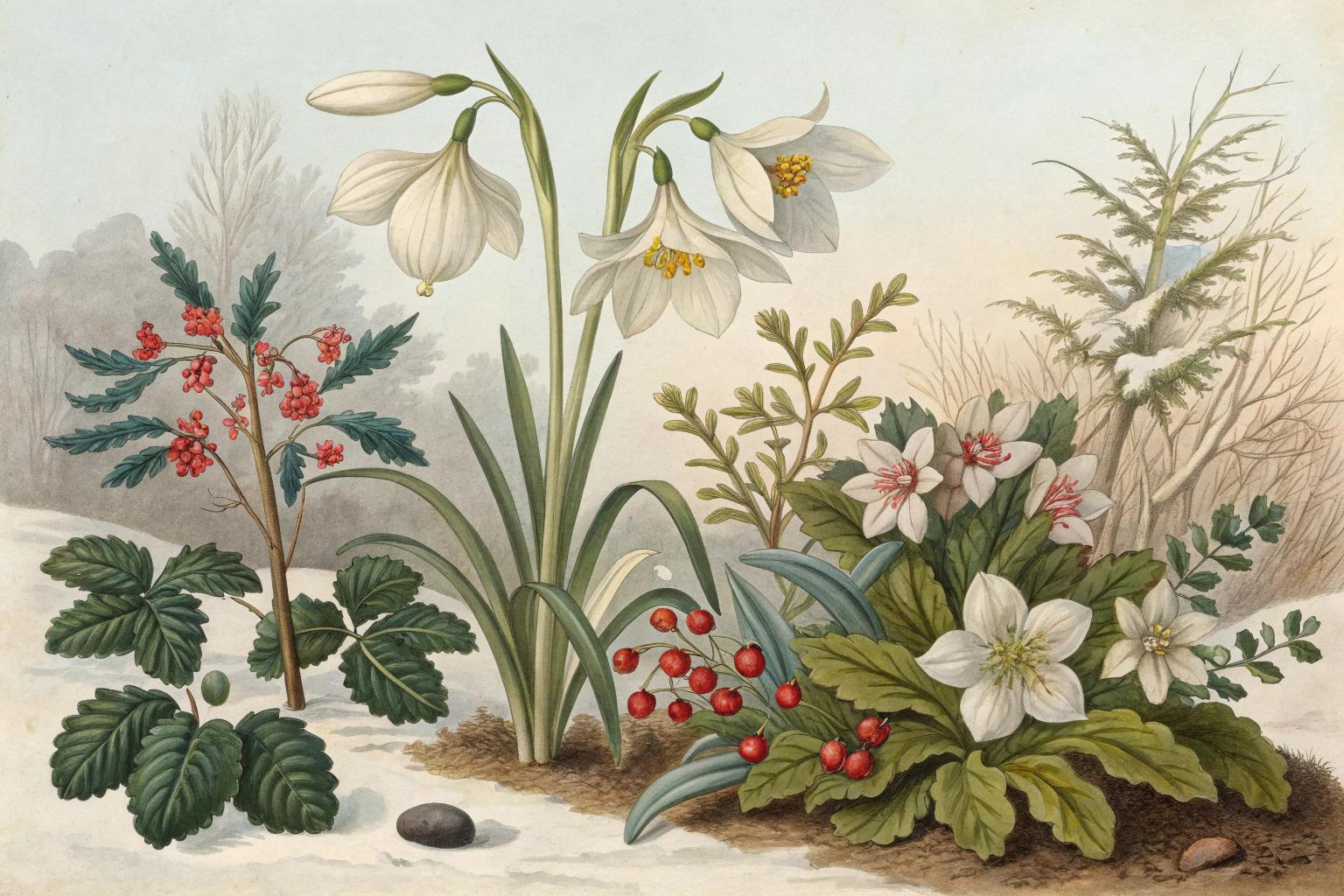
Hellebores, violas, and cyclamen carry color while the beds rest. Deer leave hellebores alone in my area, which saves my sanity.
Fruit, vines, and perennial moves
December is prime time for bare-root fruit trees, cane berries, and roses in many zones. I soak roots for 1 hour, set the flare at grade, backfill with native soil, then water slowly.
I plant asparagus crowns in mild climates now, trenches 8 inches or 20 cm deep, crowns 12 inches or 30 cm apart. Rhubarb crowns go in raised spots with drainage, then heavy mulch.
Cover crops that repair tired beds
I sow winter rye at 2 pounds per 1000 ft² or 1 kg per 100 m² in open ground that won’t see winter veg. Hairy vetch or crimson clover adds nitrogen while feeding pollinators on early thaws.
In tiny beds I use oats because they winterkill around 10 F or minus 12 C, which makes spring prep easier. I avoid rye near future carrots, since residues can slow germination.
Indoor starts for a head start
Onions from seed start in December for me, 10 to 12 weeks before transplant. Short-day types suit the South, intermediate and long-day types suit higher latitudes (USDA Zone-daylength guidance).
I start leeks now and trim tops to 2 inches or 5 cm to thicken stems. Peppers need patience, so early starts make sense under strong lights and steady heat.
For salads in a week, I cut microgreens of radish, broccoli, pea shoots, and sunflower. They want 200 to 400 PPFD at canopy and 60 to 70 F or 16 to 21 C for sweet flavor.
Winter sowing: perennials and natives the lazy-smart way
I sow milkweed, echinacea, lupine, columbine, and prairie dropseed in vented containers outdoors now. Freeze-thaw cycles cue germination in spring without my fussing.
I label with paint pen, use a gritty mix, and drill drainage holes high and low. This trick beats a fridge full of seed trays.
Potatoes, broad beans, and onions for warm winter zones
In frost-light coastal spots, I plant certified seed potatoes in December for an early spring haul. I protect foliage when nights hit 30 F or minus 1 C.
Fava beans root into cold soil and bring heft to winter beds. Short-day onion transplants like ‘Texas Early Grano’ or ‘1015Y’ go in rows 4 inches or 10 cm apart in doubles.
What to plant in December: my top 12 by climate
Zones 9 to 11: spinach, arugula, cilantro, dill, peas, carrots, beets, radishes, asian greens, garlic, shallots, fava beans. Zones 7 to 8: garlic, shallots, onion sets, peas with cover, mache, claytonia, parsley starts, bare-root fruit, hardy pansies. Zones 5 to 6: garlic if soil gives, spinach under frames, mache, winter rye, indoor onions and leeks, hellebores, tulips where workable. Zones 3 to 4: winter sow natives, indoor onions and leeks, cover crops under snow, plan bare-root orders, force amaryllis and paperwhites.
- Zones 9 to 11: spinach, arugula, cilantro, dill, peas, carrots, beets, radishes, asian greens, garlic, shallots, fava beans.
- Zones 7 to 8: garlic, shallots, onion sets, peas with cover, mache, claytonia, parsley starts, bare-root fruit, hardy pansies.
- Zones 5 to 6: garlic if soil gives, spinach under frames, mache, winter rye, indoor onions and leeks, hellebores, tulips where workable.
- Zones 3 to 4: winter sow natives, indoor onions and leeks, cover crops under snow, plan bare-root orders, force amaryllis and paperwhites.
Soil temperature and timing, translated for December
I keep a soil thermometer in my pocket. Peas prefer 40 to 75 F or 4 to 24 C, spinach 35 to 75 F or 2 to 24 C, lettuce 40 to 75 F or 4 to 24 C (Cornell and CSU Extension).
If soil smears when squeezed, I wait. Structure trumps impatience every time.
Forcing bulbs indoors for fast wins
Paperwhites need no chill, just stones and water to the base of the bulbs. They bloom in 3 to 5 weeks, and the room smells like a Sicilian bakery.
Amaryllis wants snug pots and bright light, with one deep soak, then lean watering. I rotate the pot a quarter turn every few days to keep stems straight.
Gear I actually use in December
Lightweight row cover at 0.55 oz per yd² for frost, heavier fabric for 6 to 8 F or 3 to 4 C of protection. Soil thermometer, because guessing costs seed. LED grow lights delivering 200 to 400 PPFD for greens, 14 to 16 hours daily with a timer. Seedling heat mat set at 70 to 75 F or 21 to 24 C for onions and peppers, off for lettuce and spinach. Inoculant for peas and favas, especially in beds new to legumes.
- Lightweight row cover at 0.55 oz per yd² for frost, heavier fabric for 6 to 8 F or 3 to 4 C of protection.
- Soil thermometer, because guessing costs seed.
- LED grow lights delivering 200 to 400 PPFD for greens, 14 to 16 hours daily with a timer.
- Seedling heat mat set at 70 to 75 F or 21 to 24 C for onions and peppers, off for lettuce and spinach.
- Inoculant for peas and favas, especially in beds new to legumes.
Personal notes from cold mornings and late harvests
My December spinach under double cover tastes like sugar snapped into leaf form. I cut outside leaves first and let centers idle through short days.
Garlic goes in late some years, and it still pays me back if I mulch thick and water on thaws. The trick is to label hardneck vs softneck before gloves get muddy.
Problem solving fast
Seeds sitting still: check soil temps, then bump with clear plastic over hoops for passive solar gain. Leaf burn under plastic: vent early, switch to fabric against foliage, and water at midday to avoid ice crusts. Slugs in frames: beer traps and iron phosphate pellets, plus dry mulch to scratch through. Mice in tunnels: snap traps under boxes, baited with peanut butter and oatmeal, checked daily.
- Seeds sitting still: check soil temps, then bump with clear plastic over hoops for passive solar gain.
- Leaf burn under plastic: vent early, switch to fabric against foliage, and water at midday to avoid ice crusts.
- Slugs in frames: beer traps and iron phosphate pellets, plus dry mulch to scratch through.
- Mice in tunnels: snap traps under boxes, baited with peanut butter and oatmeal, checked daily.
Related buying questions I hear every December
Short-day vs long-day onions: buy short-day for the South, intermediate for mid-latitudes, long-day for the North. Row cover weight: 0.55 oz per yd² for growth, 1.0+ for freeze events, but expect slower growth under the heavier fabric. Bulb chilling: buy pre-chilled tulips for zones 8 to 10, or chill yourself for 10 to 12 weeks at 40 F or 4 C. Seed potatoes: look for certified disease-free stock and avoid grocery spuds treated with sprout inhibitors.
- Short-day vs long-day onions: buy short-day for the South, intermediate for mid-latitudes, long-day for the North.
- Row cover weight: 0.55 oz per yd² for growth, 1.0+ for freeze events, but expect slower growth under the heavier fabric.
- Bulb chilling: buy pre-chilled tulips for zones 8 to 10, or chill yourself for 10 to 12 weeks at 40 F or 4 C.
- Seed potatoes: look for certified disease-free stock and avoid grocery spuds treated with sprout inhibitors.
Research I trust for December decisions
USDA Plant Hardiness Zone Map guides variety choice and timing. RHS winter planting guidance keeps my tree work honest.
Cornell, Colorado State University, and University of Minnesota Extension publish soil temp ranges and yield expectations that match field reality. I keep copies flagged and coffee stained.
Cheatsheet: December Planting Power Plays
Cool-Weather Edibles
Garlic: Plant cloves before heavy frost; boosts immunity
Ornamentals for Spring Color
Tulip & daffodil bulbs: Plant if ground isn’t frozen
Indoor Sowing Opportunities
Tomatoes, peppers, eggplant: Sow under lights for early spring transplants
Regions & Soil
Mild zones (USDA 8+, UK South): Direct sow hardy greens
Tools and Products You'll Need
Cold frame or cloches for frost protection
Want a more guided way to practice what to plant in december?
Frequently Asked Questions About December Planting
Which vegetables thrive best in colder weather?
Vegetables such as kale, Brussels sprouts, and spinach tolerate frost and even become sweeter as temperatures drop. Root vegetables, including carrots, parsnips, and radishes, also develop flavor and texture through colder conditions.
Can flowers successfully bloom if planted late in the year?
Yes, certain hardy flowering plants excel when planted late. Consider placing pansies, violas, and hellebore (Christmas rose), as they bloom vibrantly throughout cooler months and into early spring.
Should gardeners protect newly planted items from frost?
Providing protection enhances survival chances for newly planted items. Using cloches, fleece, or mulch layers insulates roots and reduces frost damage. Be ready to cover plants during periods where nighttime temperatures fall below 32°F (0°C).
Do fruit trees benefit from winter planting?
Winter planting offers excellent opportunities for fruit tree establishment. Dormant planting allows trees like apple, pear, plum, and cherry to establish strong root systems and prepares them for vigorous growth when warmer days return.
How often should new plantings receive water during winter?
Though colder conditions reduce water evaporation, regular watering remains necessary for freshly planted specimens. Moist soil conditions promote healthy root growth, so maintain consistent watering cycles approximately once weekly or as soil becomes dry to the touch, considering precipitation.
Are herbs suitable for cooler season planting?
Many herbs happily grow during cooler weather. Hardy herb varieties like thyme, sage, parsley, and chives withstand frost much better than tender basil or cilantro and can flourish even with shorter daylight hours.
Conclusion
What to plant in December is all about understanding your climate, your soil, and your appetite for fresh produce and color through the colder months. Cool-season greens, sturdy root crops, and a few well-chosen ornamentals all have a place. For those in mild regions, winter planting can mean a steady supply of greens and herbs; in chillier spots, it’s about prepping for early spring. Indoors, growing vegetables under lights can scratch that gardening itch. December rewards those who plan ahead, work with what they’ve got, and aren’t afraid to experiment. Keep your tools sharp, your hands dirty, and remember. Every seed sown is a bold little act of hope.


