Growing Perilla for Flavor, Color, and Culinary Versatility
Growing Perilla
Growing Perilla starts with warm, well-drained soil (65–75°F), full sun to part shade and steady moisture. Growing Perilla succeeds in loamy, slightly acidic soil (pH 5.5–6.5) and needs 10–12 inches between plants. Growing Perilla yields tender leaves in 45–60 days; pinch tips weekly to thicken and prevent early flowering. Then cook loud: wrap grilled pork, fold into noodles, and pack jars of shiso pickles—flavor, color, culinary versatility.
Table of Contents
- Growing Perilla for Flavor, Color, and Culinary Versatility
- Varieties I actually rate
- From seed to table: my reliable method
- Container culture that actually performs
- Pruning for perpetual harvest
- Season strategy
- Flavor chemistry you can taste
- Culinary moves that earn their keep
- Nutrition and oils
- Pests, diseases, and what actually matters
Cheatsheet: Grow Perilla for Kitchen & Color Impact
🌱 Varieties to Try
Perilla frutescens (shiso) comes in green, red, and bi-color forms. Green for sushi & salads, red for pickles & dye.
🗓️ Planting Timeline
- Sow indoors 4–6 weeks before last frost
- Transplant after soil reaches 65°F / 18°C
- Direct sow post-frost for successive crops
🌞 Light & Location
- Full sun (6+ hours) for bushy plants
- Partial shade slows bolting in heat
🌱 Soil & Water
- Loose, fertile, neutral pH (6–7)
- Keep soil moist, avoid soggy roots
- Mulch keeps moisture, limits weeds
✂️ Care & Harvest
- Pinch tips early for bushier plants
- Harvest leaves young for best flavor
- Regular picking extends growth
- Bolts in full summer; sow again mid-summer for fall crop
🍴 Culinary Use Ideas
Wrap sushi, stir into salads, infuse oils, add color to pickles. Rich in omega-3s, calcium, and vitamin C. Leaves and seeds both edible.
💡 Self-sufficiency & Nutrition
- Antioxidant-rich superleaf
- Grows fast, multiple harvests per season
- Attracts pollinators, supports ecosystem health
🧰 Tools and Products You'll Need
- Seeds (green, red, or frilly)
- Potting soil & compost
- Shallow trays or pots for starting
- Sharp scissors for harvest
- Watering can or gentle spray nozzle
- Mulch (organic straw or leaves)
⚡ Fast Facts
- Sprouts in 7–14 days
- 100+ leaves per plant in 2 months
- Healthy, aromatic microgreens in 12 days
Growing Perilla for Flavor, Color, and Culinary Versatility
I grow perilla for three things: aroma that slaps, color that sings, and a kitchen that never runs out of ideas. The plant pays rent in every square foot it occupies.
Plant profile, quickly
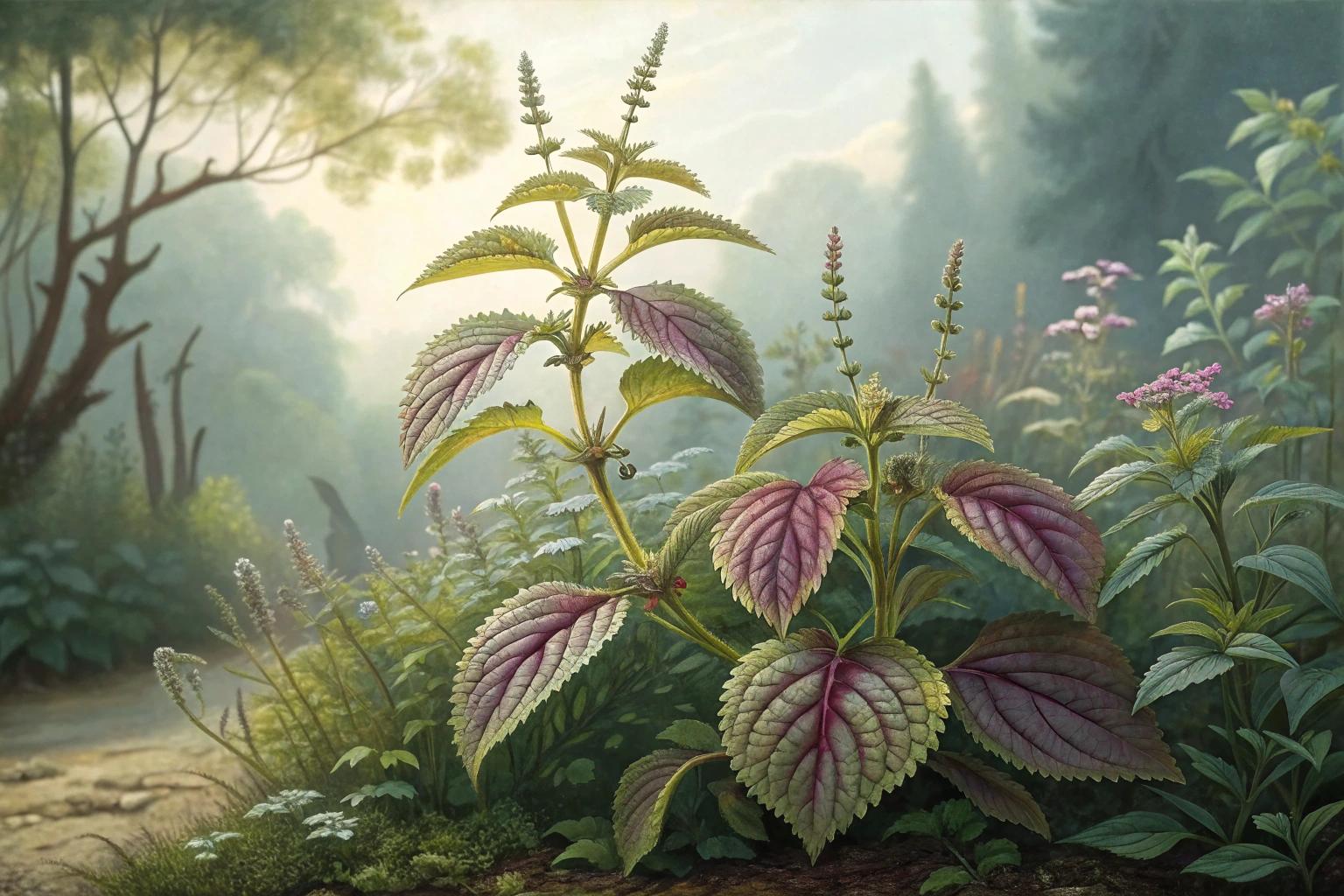
Perilla frutescens is an annual in the mint family with leaves that smell of citrus-basil and cinnamon, thanks to perillaldehyde. Green shiso, red shiso, and Korean perilla share kinship but push different flavors and uses.
It tops out at 18 to 36 inches tall and branches like a champ if you pinch early. Expect flowers late summer as days shorten, because it is a short-day plant.
Varieties I actually rate
- Green shiso, Japanese types: clean citrus-mint, best for sashimi, tempura, and salads.
- Red shiso: deep plum leaves loaded with anthocyanins for pickling and syrups, flavor leans clove and cinnamon.
- Bicolor types like ‘Britton’: show-stopper foliage, milder taste, great for salads and cocktails.
- Korean large-leaf perilla: broad, corrugated leaves for wraps and soy-garlic marinades, seed heads for spice and oil.
- Seed types (egoma/deulkkae): grown for high-oil seed, leaves are edible but seed is the prize.
Skip ornamental impostors sold as perilla that behave like coleus if you want flavor. Read the fine print on seed packets for culinary types.
From seed to table: my reliable method
Sowing
Start 4 to 6 weeks before last frost under lights at 68 to 75 F or 20 to 24 C. Perilla seeds are positively photoblastic, so press into the surface and do not bury.
I mist, then cover trays with a clear dome until germination, usually 7 to 14 days. Bottom heat speeds things without stretching if light is strong.
Transplanting and spacing
Transplant after nights hold above 55 F or 13 C and soil tops 60 F or 15.5 C. Space 10 to 12 inches or 25 to 30 cm apart for leaf yield and airflow.
Soil and feeding
Any well-drained loam works, pH 6.0 to 7.2. I side-dress with compost and go easy on nitrogen, because heavy feeding swells leaves but dilutes aroma compounds.
Light and water
Full sun gives the loudest flavor, though afternoon shade keeps red types from heat-tiring in July. Keep evenly moist, about 1 inch or 25 mm per week, and mulch to steady soil temps.
Container culture that actually performs
Use a 3 to 5 gallon or 11 to 19 L pot per plant with a peat-free, well-aerated mix. Self-watering containers prevent bitterness from drought stress.
On busy weeks, I clip a whole pot to the kitchen porch for daily harvests. It regrows fast if you leave two nodes per stem.
Pruning for perpetual harvest
Pinch the tip at 6 to 8 inches or 15 to 20 cm to force branching. Keep removing the newest two leaves each visit and you get a dense, hedge-like plant.
As flower buds appear with shortening days, strip them to extend leaf quality. If you want seed, let the top third bloom and save the rest for leaves.
Season strategy
I succession sow every 3 to 4 weeks until mid-July to outrun the late-summer bloom trigger. In hot summers, a 30 percent shade cloth over red shiso preserves pigment and tenderness.
Flavor chemistry you can taste
Red shiso color intensifies in acid, so it stains pickles a neon magenta while lending spice. Green types carry bright perillaldehyde with side notes from rosmarinic acid that reads herbal and clean.
Cool nights sharpen aroma, a trick I use in late summer by watering at dusk and easing off nitrogen. Leaves picked at first light taste bolder than those cut at noon.
Culinary moves that earn their keep
- Tempura leaves and tips: crisp, perfumed, gone in seconds.
- Quick pickles: red shiso + rice vinegar drops into cucumber, turnip, or plum brine.
- Korean-style soy marinades for wraps: garlic, soy, sesame, a whisper of chile, stack leaves like tortillas.
- Vietnamese-style herb platters: tía tô with basil, rau răm, mint around grilled pork or tofu.
- Perilla seed finishing: toast and grind seed over noodles and soups for a nutty fog of flavor.
- Syrup: steep red shiso with sugar and lemon, bottle for sodas and cocktails.
For microgreens, sow thick, cover lightly to press seed to soil, then uncover for light. Harvest at 10 to 14 days for punchy, speckled cotyledons that wake up sashimi and grain bowls.
Nutrition and oils
“Perilla seed oil is one of the richest plant sources of alpha-linolenic acid, typically around 54 to 64 percent of total fatty acids.” — Journal of Agricultural and Food Chemistry
Pressed seed oil tastes like a greener, wilder flax oil and shines as a finishing oil. Leaves carry vitamin K and polyphenols, and I use them as a fresh herb rather than a pile-on salad base.
Pests, diseases, and what actually matters
Seedlings can damp off, so give them airflow and a clean mix. In the field, flea beetles and aphids find young plants, while older leaves shrug most pressure due to strong volatiles.
Row cover the first two weeks after transplant for spotless leaves. Deer in my garden avoid perilla, and rabbits usually sample once and move on.
Invasiveness and livestock safety
“Perilla mint is highly toxic to cattle and horses, especially during late summer flowering, due to perilla ketones that cause respiratory distress.” — University of Kentucky Cooperative Extension
In parts of the United States, perilla has escaped cultivation and is listed as invasive or noxious by state agencies. I deadhead before seed set, mulch heavily, and pull volunteers promptly.
If you keep livestock, keep perilla out of pastures and fencelines. The plant is pretty in bloom but risky in grazing systems.
Soil pH, EC, and flavor linkage
I see brighter aroma at pH 6.2 to 6.8 with moderate electrical conductivity around 1.2 to 1.8 mS cm-1 in fertigated beds. Push nitrogen and you get big leaves, soft flavor, and faster bolting later in the season.
Postharvest handling for chefs and home cooks
Harvest in the cool of morning and chill fast at 34 to 38 F or 1 to 3 C with high humidity. Stems in a jar of cold water in the fridge hold for 3 to 5 days if you change the water daily.
For restaurants, I pack leaves flat in vented clamshells with a single damp paper towel. Red types bruise less if you handle by the petiole, not the blade.
Color play: acid, salt, and time
Red shiso releases pigment better after a brief salt massage before hitting vinegar. A squeeze of lemon at service turns the color vivid on the plate in seconds.
Seed saving and purity
Perilla crosses within types, so isolate by 150 feet or 45 m for cleaner seed lines in small gardens. Dry seed heads in paper bags out of the sun and thresh gently to avoid shattering losses.
Greenhouse and indoor production
Under LEDs, I run 200 to 300 µmol m-2 s-1 at 16 hours to delay flowering and push leaf mass. Keep day temps near 75 F or 24 C and nights 60 to 65 F or 16 to 18 C with steady moisture.
In winter, I grow compact green shiso in 1 gallon or 3.8 L pots and pinch weekly. Flavor concentrates indoors if you ease watering two days before harvest.
Yield benchmarks to aim for
In beds, a healthy plant gives 0.5 to 1.0 ounces or 15 to 30 g of marketable leaves per week across an 8 to 10 week window. For seed types, mature dry seed can reach several hundred grams per square meter with good fertility.
Buyer’s guide: gear and supplies that actually help
- Heat mat and dome for uniform germination without burying seed.
- Lightweight insect net or row cover for flea beetles during establishment.
- 3 to 5 gallon or 11 to 19 L fabric pots for balcony crops and quick drying between waterings.
- pH and EC pens if you fertigate, especially in recirculating systems.
- Fine-mesh herb harvest bins and vented clamshells for storage.
Comparisons: perilla vs basil vs shungiku
- Perilla vs basil: perilla tolerates cooler nights and shorter days but bolts on daylength cues, while basil bolts on heat and stress.
- Perilla vs shungiku: both bring aromatic punch and edible foliage, yet perilla prefers warmer soil and gives more leaf per square foot in midsummer.
- Perilla vs purple basil for color: red shiso pigment grabs acid and locks into pickles, while purple basil often browns in vinegar.
Field notes from my beds
Red shiso stayed brightest in a row that caught two hours of late-afternoon shade, and that row tasted spicier. Green shiso in a richer bed made hand-sized leaves that wowed at the market yet needed a squeeze of lemon to reawaken aroma.
One brutally hot week, I withheld water 24 hours pre-harvest and the leaves came off concentrated and sweet. The next week I went back to even moisture to keep plants pushing new growth.
Citations worth your time
USDA PLANTS Database and state invasive species councils provide distribution and status for Perilla frutescens. University of Kentucky Cooperative Extension and Tennessee Extension detail perilla mint toxicity risks for livestock.
Kew Science Plants of the World Online profiles Perilla taxonomy and botany. Journal of Agricultural and Food Chemistry and Food Chemistry report perilla seed oil composition and leaf polyphenols, including alpha-linolenic acid and rosmarinic acid ranges.
Frequently Asked Questions About Growing Perilla
What conditions promote healthy growth?
Perilla thrives in full sun to partial shade, preferring at least 6 hours of direct sunlight daily. It grows best in well-drained, fertile soil rich in organic matter. Ideal daytime temperatures range between 68°F to 77°F (20°C to 25°C), though plants mature comfortably at slightly higher summer temperatures.
How often should the plants be watered?
Water regularly to keep the soil evenly moist, allowing the top inch (2.5 cm) of soil to dry between watering sessions. Avoid overwatering, which can lead to root rot. Adjust watering based on rainfall and ambient humidity to maintain optimal moisture.
Can I successfully grow it in containers?
Yes, container cultivation succeeds with ample space and proper drainage. Select containers at least 12 inches (30 cm) deep and wide to accommodate healthy root development. Use high-quality potting soil and provide consistent moisture and sunlight exposure.
When and how should I harvest leaves?
Begin harvesting individual leaves as soon as plants reach around 8 inches (20 cm) in height. Snip leaves regularly from the outer sections, promoting vigorous growth and continued leaf production throughout the growing season. Generally, harvesting in the morning delivers the most flavorful leaves.
Are there common pest or disease issues to watch for?
Perilla plants rarely suffer from serious pests or diseases, though occasional aphids or spider mites may appear. Regular inspections and gentle insecticidal soaps or neem oil sprays can effectively control these minor infestations. Ensure good air circulation to prevent fungal diseases.
How can I propagate new plants?
Propagation typically occurs via seeds or stem cuttings. Seeds germinate readily indoors approximately 4-6 weeks before the last spring frost date. Stem cuttings taken from healthy plants in early summer root easily in moist soil or water. Maintain steady warmth between 70°F to 75°F (21°C to 24°C) for best rooting results.
Growing Perilla pays back in flavor and color if you keep it simple. Warm soil, full sun to light shade, sharp drainage, and steady moisture. Start a few plants, then pinch early to push branching and tender leaf flushes. Harvest often. Snip before bloom to keep the bite; let one plant flower for pollinators and seed if you want a fresh crop next year. Perilla self-sows, so deadhead to keep it tidy. Use succession sowing to stretch the season.
In the kitchen, this leaf is a workhorse. Wrap grilled meat, fold into rice, slip into noodles, or quick-pickle for a neon hit. Green reads fresh and herbal; purple plates like velvet. For a mixed herb bed that pairs with perilla, grow some oregano or marjoram. For fast salad companions, try arugula. Keep snips handy, keep tasting. Growing Perilla becomes a habit worth keeping.