Tomato Hornworm: How to Spot and Defend Your Summer Harvest
Tomato hornworm
he tomato hornworm strips leaves from tomatoes fast. Spot their bold green bodies early, and handpick them before they skeletonize your plants. Follow the trail of black droppings to catch a tomato hornworm hiding along stems or under foliage. Look for chewed holes and missing leaves as the first sign you have a tomato hornworm problem.These caterpillars feed with absolute abandon, but with quick action and sharp eyes, you can stop the feast in its tracks. Let’s untangle how to spot, manage, and even use nature to your advantage against this garden glutton.
Tomato Hornworm Defense Map
- Tomato hornworm threatspot first
- Early damage signslook for
- Finding hidden hornwormsfollow droppings
- Handpicking by hand
- Using BT bacterium
- Following frass trails
- Chewed holes and leaves
- Commercial product options
Article mapOpen the visual summary
Tomato Hornworm Defense Map
- Tomato hornworm threatspot first
- Early damage signslook for
- Finding hidden hornwormsfollow droppings
- Handpicking by hand
- Using BT bacterium
- Following frass trails
- Chewed holes and leaves
- Commercial product options
Table of Contents10 sections
- The Tomato Hornworm: A Beautiful Menace· 2 min
- Tomato hornworm (Manduca quinquemaculata)
- Tobacco hornworm (Manduca sexta)
- My Go-To Methods: Practical, Organic, Effective· 2 min
- Handpick at cooler hours
- Spray BT at dusk
- Apply neem oil carefully
- Use companion planting
- Scan with UV blacklight
- Commercial Products Worth the Money· 1 min
The Tomato Hornworm: A Beautiful Menace
Tomato hornworm (Manduca quinquemaculata)
- Eight V-shaped markings on body sides
- Menacing-looking black horn on its rear
- Often confused with its cousin, the tobacco hornworm
- Hefty, bright green body
- Godzilla of garden caterpillars, up to five inches
Tobacco hornworm (Manduca sexta)
- Seven white stripes on body sides
- Red horn on its rear
- Often confused with tomato hornworm by veteran growers
- Green body, similar large hornworm caterpillar
- Large hornworm caterpillar, similar overall size
Nothing wipes the smug smile from a gardener’s face faster than tomato hornworm frass covering prized tomato foliage overnight. I’ve walked into my garden, coffee in hand, and found my Brandywines skeletonized by these camouflage artists. The hornworm isn’t subtle; it’s a green sledgehammer.
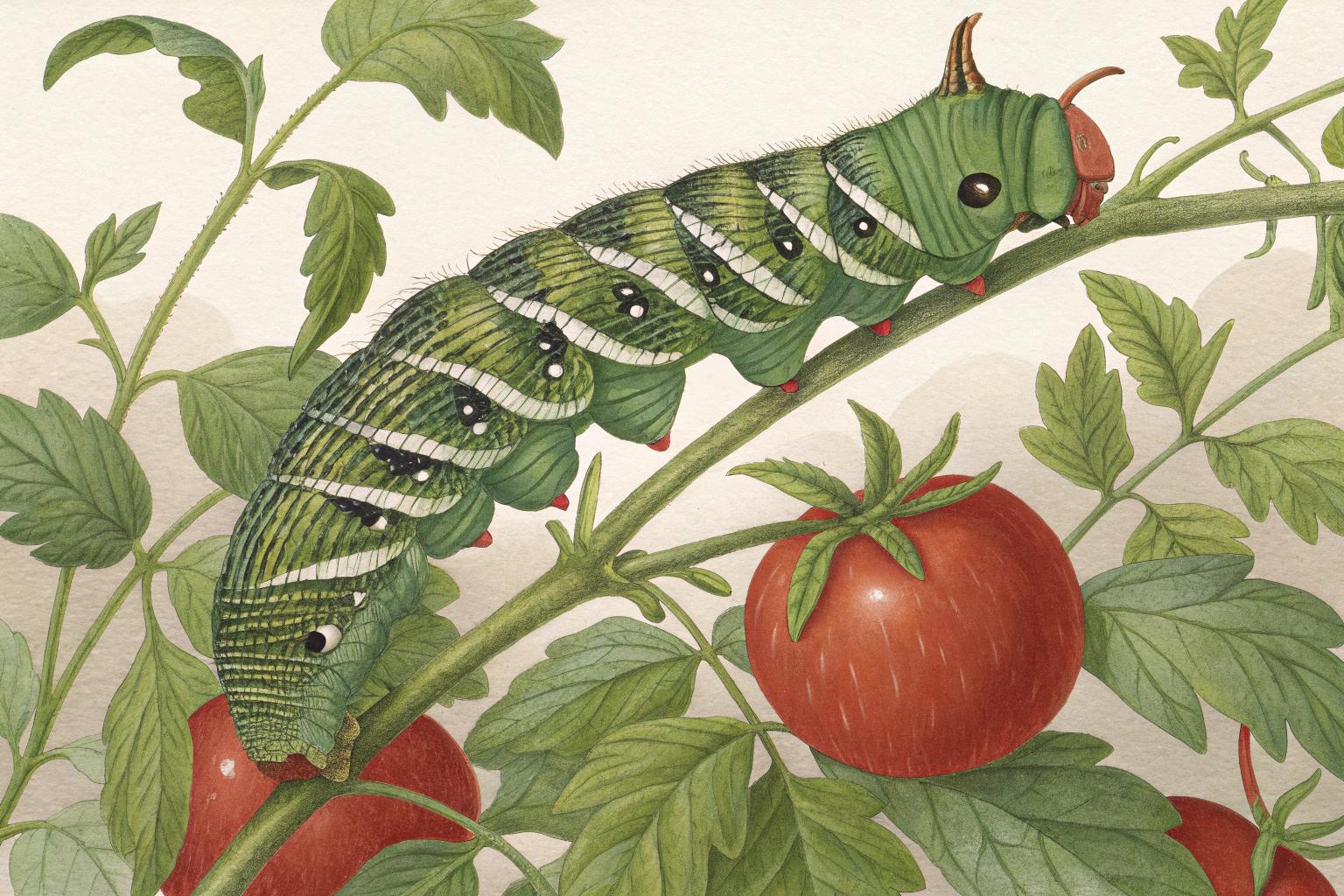
The tomato hornworm (Manduca quinquemaculata) sports a hefty, bright green body with white diagonal stripes and a menacing-looking black horn on its rear. It can stretch up to five inches (13 cm), making it the Godzilla of garden caterpillars.
Veteran growers often confuse it with its cousin, the tobacco hornworm (Manduca sexta). If you see seven white stripes and a red horn, that’s a tobacco hornworm. Tomato hornworm has eight V-shaped markings and a black horn. Trust me, after your first encounter, you’ll never forget the difference. According to the University of Minnesota Extension, hornworms can defoliate an entire tomato plant in less than 48 hours if left unchecked.
The adult stage is a large sphinx moth, sometimes called a hawk or hummingbird moth, known for dusk pollination. They lay pearly, round eggs on the undersides of leaves. Hatching larvae feed voraciously for three to four weeks before burrowing into soil to pupate.
Nature provides allies, though. Parasitic braconid wasps inject eggs into hornworms. If you see white rice-like cocoons on a hornworm, leave it; it’s a biological hit job. Birds, lacewings, and predatory stink bugs join the fight as well.
My Go-To Methods: Practical, Organic, Effective
- 1
Handpick at cooler hours
Go out early or late, when hornworms are sluggish and easier to spot and flick into soapy water.
- 2
Spray BT at dusk
Use Bacillus thuringiensis from garden centers to target caterpillars without harming bees or humans.
- 3
Apply neem oil carefully
Neem oil works as a deterrent but needs repeated application; some tomato varieties may react, so spot test.
- 4
Use companion planting
Marigolds, basil, and dill among tomatoes can reduce hornworm attraction, especially with heavy basil borders.
- 5
Scan with UV blacklight
Hornworms glow neon under a UV flashlight at night, turning control into a scavenger hunt for adults.
Handpicking: There’s real satisfaction in flicking hornworms into a bucket of soapy water. Go out early or late, when they’re sluggish and easier to spot. BT (Bacillus thuringiensis): This naturally occurring bacterium, available at garden centers, targets caterpillars without harming bees or humans. Spray at dusk for best results. Neem Oil: Works as a deterrent but needs repeated application. Some tomato varieties may react; spot test first. Companion Planting: Marigolds, basil, and dill planted among tomatoes can reduce hornworm attraction. Anecdotally, I’ve noticed fewer hornworms on beds with heavy basil borders. UV Blacklight: Hornworms glow neon under a UV flashlight at night. It’s satisfying and weirdly fun. Like a scavenger hunt for adults.Tomato Hornworm: Organic Versus Chemical Controls Organic: Handpicking, BT spray, neem oil, beneficial insects, companion planting Chemical: Carbaryl (Sevin), Spinosad. These are effective, but can harm pollinators and beneficial insects: always follow label instructions.
- Handpicking: There’s real satisfaction in flicking hornworms into a bucket of soapy water. Go out early or late, when they’re sluggish and easier to spot.
- BT (Bacillus thuringiensis): This naturally occurring bacterium, available at garden centers, targets caterpillars without harming bees or humans. Spray at dusk for best results.
- Neem Oil: Works as a deterrent but needs repeated application. Some tomato varieties may react; spot test first.
- Companion Planting: Marigolds, basil, and dill planted among tomatoes can reduce hornworm attraction. Anecdotally, I’ve noticed fewer hornworms on beds with heavy basil borders.
- UV Blacklight: Hornworms glow neon under a UV flashlight at night. It’s satisfying and weirdly fun. Like a scavenger hunt for adults.
Commercial Products Worth the Money
Every gardener squares off with tomato hornworms eventually. The battle scars are real. But with sharp eyes and a few tricks up your sleeve, you can keep your tomatoes thriving.
For personalized instructions on everything from hornworm control to soil health, Taim.io offers expert guidance tailored to your garden.
Cheatsheet: Rapid Removal and Control for Hornworms
️♂️ Signs of Infestation Large green caterpillars (up to 4 in/10 cm) Missing leaves or stems stripped bare Dark frass (droppings) on leaves and soil Peak activity: June to August Tools and products you’ll need Garden gloves Bucket with soapy water Hand pruner (for heavy infestations) Organic insecticidal spray (Bacillus thuringiensis - Bt) Flashlight (for dusk inspections) Step-by-Step Control Inspect daily in early morning or evening. Look for large larvae on leaf undersides and along stems. Handpick hornworms. Drop into soapy water bucket. Prune affected stems if leaf loss is severe. Apply Bt only if hand removal fails or infestation repeats. Check for white cocoons on worms: parasitized hornworms. Leave these as beneficial wasps are at work. Natural Controls Attract lady beetles, lacewings, parasitic wasps Plant marigolds and basil nearby for deterrence Cultivate soil in early spring to destroy overwintered pupae Nutrition & Self-Sufficiency
Unchecked hornworms can slash yield by up to 80%. Hand removal protects up to 10 lbs (4.5 kg) fruit per plant per season. Maintain supply for sauces, salads, canning.
Want a more guided way to practice tomato hornworm?
Frequently Asked Questions About Tomato Hornworm
How can I tell if these caterpillars have infested my plants?
Look for large, irregular holes in leaves, stripped stems, and droppings that resemble small, greenish-black pellets on lower foliage or soil. Sometimes you’ll spot the caterpillars themselves, blending in with the plant thanks to their green coloring and white diagonal stripes.
What are the most effective ways to control their population?
Handpicking offers immediate results for small infestations: drop culprits into soapy water. For larger outbreaks, release beneficial insects like parasitic wasps (Trichogramma) or use Bacillus thuringiensis (Bt) as a targeted, organic spray. Rotate crops yearly to reduce overwintering pupae.
Are they harmful if I accidentally touch them?
These caterpillars may startle gardeners with their size, but they do not sting or bite humans. Wear gloves if you prefer, but their horn is harmless.
How quickly can they damage my plants?
Within 24 to 48 hours, an unchecked infestation can defoliate entire plants, especially in hot weather (above 85 °F or 29 °C). Check plants every morning during peak summer to prevent serious loss.
What time of year do they cause the most problems?
Expect the most activity in late spring through mid-summer, though warm climates may experience a second cycle in late summer. Scout plants closely from May through August in the US, or late May through early September in EU regions.
Can I prevent them from coming back each season?
Tilling the soil in late fall and early spring helps expose overwintering pupae to cold temps and predators. Removing old plant debris and practicing crop rotation both reduce pupal survival rates and discourage recurrence.
Will natural predators help reduce their numbers?
Yes. Birds, lizards, and especially braconid wasps (look for white, rice-shaped cocoons attached to caterpillars) help manage populations. Refrain from removing parasitized caterpillars to allow wasp larvae to mature and continue suppressing these garden pests.
Conclusion
Tomato hornworm never shows up quietly. One day your tomatoes are lush, the next you spot chewed leaves and fat green caterpillars blending in like little outlaws. Handpick them, invite in some beneficial insects, and stay sharp. Tomato hornworm is a test of vigilance, not a crisis. If you want to keep your crops thriving and your nights calm, check your plants often and act early. For more real-world pest management tips, or to dig deeper into food gardening without losing your mind to bugs, you know where to look. Tomato hornworm will visit. Don’t let it stay for dinner.


