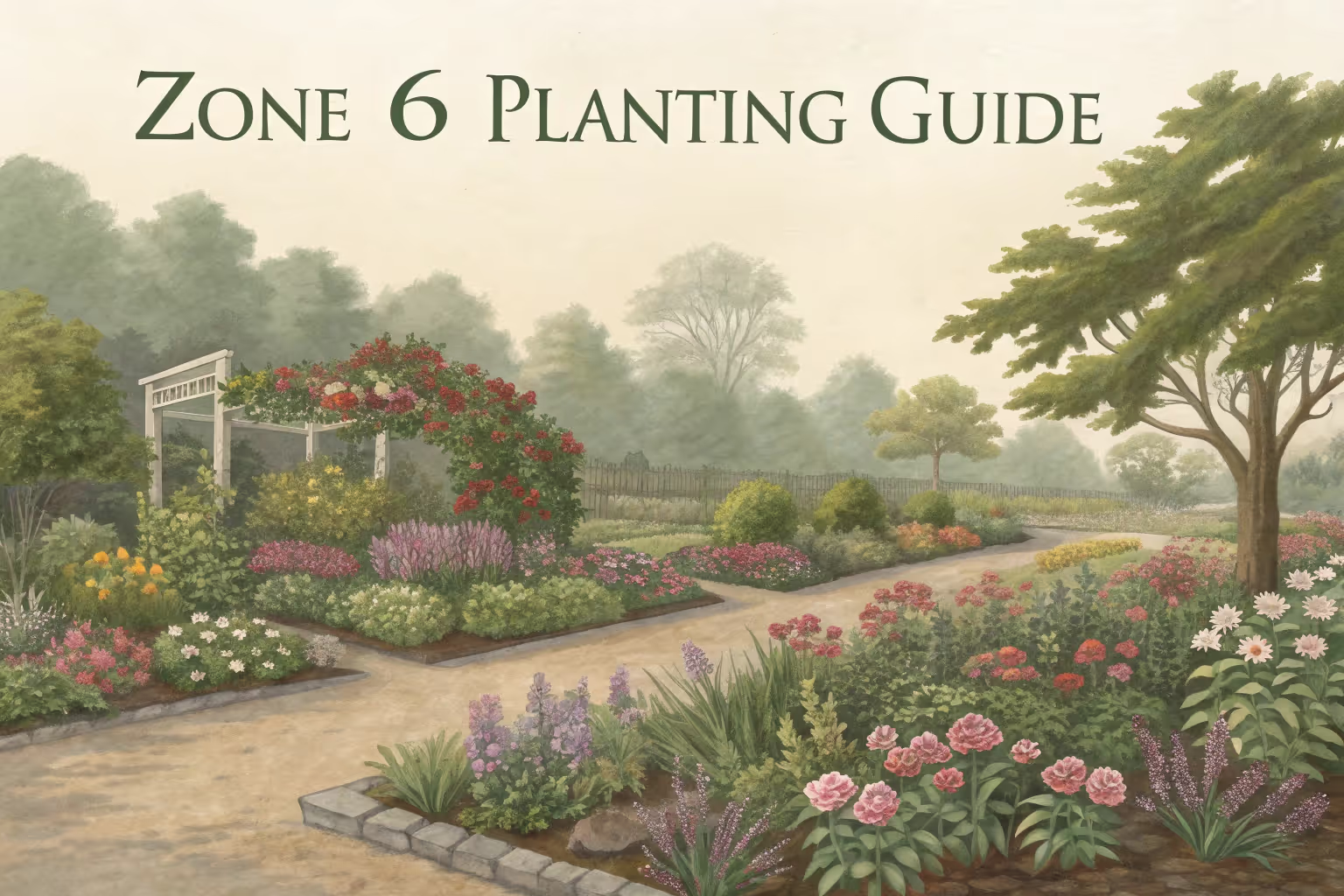
Zone 6 Planting Guide: Plants That Thrive in Your Garden
Zone 6 planting guide
his Zone 6 planting guide unlocks which plants thrive best in your garden and exactly when to plant them. Pick hardy perennials and veggies sturdy enough to brave frosty winters yet soak up balmy summers. Time planting right, and your garden flourishes season after season. Read on: your garden awaits.
Table of Contents5 sections
Section 1
I live in Zone 6, where winters bite to -10 to 0 F (-23 to -18 C) and spring flirts before committing. That rhythm shapes every choice on this Zone 6 planting guide, from seed timing to shrub selection.
The trick is to ride the shoulder seasons hard, then sprint through summer crops. I treat frost dates as probabilities, not promises.
USDA Zone 6 is defined by average annual extreme minimum temps of -10 to 0 F (-23 to -18 C). It feels generous, yet unforgiving of late frosts.
Typical last spring frost falls between April 20 and May 10, with first fall frost around October 10 to 20. That gives roughly 165 to 190 frost-free days.
"Nearly half of the country shifted to a warmer zone on the 2023 USDA map," reported the Agricultural Research Service, reflecting long-term temperature trends.
I still plan for outliers. A cheap row cover has saved my peppers more than once.
Patios, stone walls, and south-facing brick hold heat, shaving a week off cool nights. Low spots trap cold air and freeze first.
I plant tender seedlings on the warm side of a fence and tuck alpine strawberries in the breeze-kissed spots that stay cooler.
Zone 6 soils range from loam to clay, often with spring compaction. I loosen with a broadfork, not a rototiller, to preserve structure.
Target pH by crop: brassicas 6.5 to 7.0, tomatoes 6.2 to 6.8, blueberries 4.5 to 5.5. A lab soil test beats guessing and usually costs less than a flat of annuals.
University trials show organic mulches can cut evaporation by 25 to 50 percent, and they buffer soil temps during spring swings.
I anchor every decision to soil temperature. Air lies; soil tells the truth.
I rotate by family to break pest cycles. A four-bed system keeps life sane.
For tomatoes, I lean on disease codes. VFN or VFFNT means resistance to common wilts and nematodes.
Zone 6 lets me grow a lush backbone without coddling. I favor drought-tolerant once established.
Native roots probe deep, shrug off erratic rain, and feed local insects. The garden hums louder with them.
I choose varieties for cold hardiness and disease resistance, then prune hard. Fruit rewards discipline.
Perennial backbone: thyme, oregano, chives, sage. I mulch them lean and sunny.
Annual heat lovers: basil, cilantro succession, dill for swallowtail larvae, shiso for salads. Tarragon needs drainage like a rooftop.
Zone 6 winters give tulips and daffodils their chill. I plant in clumps for drama, not soldier rows.
Alliums bridge the gap to summer perennials. Camassia naturalizes well in damper spots.
I keep two weights of row cover: light 0.5 to 0.9 oz per sq yd (17 to 30 g per sq m) for insects and heavy 1.5 oz (50 g) for frost nights. Wire hoops prevent leaf abrasion.
In spring, low tunnels over brassicas cut flea beetle damage to near zero. In fall, they stretch spinach and lettuce deep into November.
Deep, infrequent watering trains roots. I aim for 1 inch per week, 25 mm, including rain.
Compost at 0.25 to 0.5 inch, 6 to 12 mm, topdressed in spring feeds soil life without overdoing nitrogen. I add slow-release organic fertilizer where tests show gaps.
Mulch tomatoes and peppers after soil warms to 65 F (18 C). Mulch too early and roots sulk.
I script the season like a restaurant line: no empty plates. Beds turn over fast.
I scout twice a week. Gloves off, eyes open, coffee in hand.
Big pots buffer temperature swings better than small ones. I use 15 to 20 gallon containers for tomatoes and peppers.
Black fabric pots warm faster in spring but overheat by July. Light mulch on top keeps roots cooler.
Soil test kit from a state lab or extension service beats guessing on lime and phosphorus. Drip irrigation with a pressure regulator and filter saves water and leaves foliage dry.
Floating row cover, insect netting, and spring clamps earn their keep every year. A soil thermometer pays for itself in one season of well-timed sowing.
Composted bark or shredded leaves by the yard cost less and perform better than many bagged mulches. Sharp hand pruners and a pull saw handle 90 percent of fruit tree cuts.
Plant in guilds: a dwarf apple with chives, yarrow, and Dutch white clover under it feeds pollinators and smothers weeds. Gravel paths warm adjacent beds and shed spring water.
Hedge with natives like serviceberry or viburnum to block wind and feed birds. Tuck in late-season nectar like asters to carry pollinators through October.
My earliest tomato every year comes from a black pot on a south wall, planted two weeks earlier than the main crop and covered on cold nights. Heat plus vigilance beats calendar rules.
The tastiest fall spinach I grow is always direct sown the last week of August, then covered lightly. It shrugs off a November freeze and sweetens up like candy.
USDA Plant Hardiness Zone Map, 2023 update, defines Zone 6 and documents recent shifts in zone boundaries.
Old Farmer’s Almanac frost date tables align with local airport data for last and first frost windows in Zone 6 cities.
University extension publications from Cornell, Penn State, and University of Minnesota guide soil temps for germination and cultivar disease resistance codes.
"Soil temperature governs germination more than air temperature," note multiple university extensions, which matches what I see in the beds every spring.
Prep soil, line up seeds by soil temp, protect early and late, and keep beds moving. The rest is taste, patience, and a little weather luck.
- February to March: Start onions, leeks, brassicas indoors. Winter-sow hardy perennials in milk jugs outside.
- Late March to mid April: Direct sow peas once soil hits 40 F (4 C). Spinach, radish, arugula, carrots go in as soon as you can rake a seedbed.
- Late April: Plant potatoes when soil reaches 45 F (7 C). Transplant brassicas under row cover to foil flea beetles.
- Early to mid May: After last frost, set out tomatoes, peppers, eggplant under protection at first. Beans and corn germinate best at 60 F soil (16 C).
- June: Sweet potatoes, basil, cucumbers, squash take off once nights stay above 55 F (13 C).
- August: Start fall crops of kale, collards, beets, and carrots. Sow spinach the last week of August for October salads.
- September to October: Plant garlic when soil cools to 50 F (10 C). Tuck spring bulbs by the first hard frost.
- Cold-season aces: Kale, collards, kohlrabi, cabbage, broccoli, Brussels sprouts, peas, fava beans, spinach, arugula, carrots, beets, radish.
- Heat-lovers: Tomatoes, peppers, eggplant, cucumbers, zucchini, winter squash, melons, okra, beans, corn, sweet potatoes.
- Cut-and-come-again workhorses: Lettuce mixes, mizuna, tatsoi, Swiss chard. I reseed every 2 weeks from April through September.
- Tomato slicer: ‘Celebrity’ and ‘Defiant’ for disease resistance. Heirloom flavor: ‘Cherokee Purple’ if late blight risk is low.
- Cherry tomato: ‘Sungold’ for candy-sweet snap. ‘Black Cherry’ for depth.
- Pepper: ‘Ace’ for early red bells, ‘Shishito’ for pan blistering, ‘Anaheim’ for mild roasts.
- Cucumber: ‘Marketmore 76’ holds under pressure, ‘Excelsior’ or ‘Vertina’ for greenhouse-style crunch.
- Squash: ‘Costata Romanesco’ zucchini resists powdery mildew longer here. Butternut types handle vine borers better than hubbards.
- Corn: Early 70 to 78 day supersweets like ‘Catalyst’ or ‘Serendipity’ fit our season without rushing.
- Melon: ‘Sugar Baby’ watermelon and ‘Hale’s Best’ cantaloupe ripen before cool nights return.
- Herbaceous perennials: Coneflower, black-eyed Susan, bee balm, asters, peonies, daylilies, catmint, salvia, baptisia, hosta for shade.
- Flowering shrubs: Hydrangea paniculata, ninebark, viburnum, shrub roses on own roots, spirea, lilac, inkberry holly.
- Deer-wary picks: Russian sage, Nepeta, hellebore, boxwood, ornamental onions, yarrow. I plant these along edges as a deterrent band.
- For sun: Little bluestem, switchgrass, purple coneflower, butterfly weed, blazing star, coreopsis, New England aster.
- For shade: Foamflower, heuchera, Solomon’s seal, woodland phlox, zigzag goldenrod.
- Trees and shrubs: Serviceberry, redbud, oak, black chokeberry, elderberry, summersweet.
- Apples: ‘Liberty’ and ‘Enterprise’ carry scab resistance and store well. Plant two for cross-pollination unless triploid.
- Pears: ‘Harrow Sweet’ laughs at fire blight compared to old standards.
- Peaches: ‘Reliance’ tolerates late frost better, though bloom still risks a cold snap.
- Berries: ‘Heritage’ fall raspberries, ‘Duke’ blueberries in acid soil, ‘Chandler’ strawberries for big berries.
- Grapes: ‘Mars’ and ‘Reliance’ seedless handle winter and disease better than wine types here.
- Late blight: Space tomatoes, prune to a single or double leader, and use drip. Choose resistant lines like ‘Mountain Magic’ in wet summers.
- Squash vine borer: Plant butternuts or tromboncino, use row cover until flowering, then hand-pollinate if needed.
- Flea beetles: Cover brassicas at transplant. A single uncovered day can scar an entire bed.
- Japanese beetles: Shake into soapy water at dawn for quick control. Trap placement far from plants reduces pressure.
- Slugs: Beer traps or iron phosphate baits after rainy weeks. Copper tape guards low trays of seedlings.
- Peony ‘Sarah Bernhardt’
- Daylily ‘Happy Returns’
- Catmint ‘Walker’s Low’
- Salvia ‘Caradonna’
- Coneflower ‘PowWow Wild Berry’
- Aster ‘October Skies’
- Baptisia ‘Solar Flare’
- Hellebore hybrid series
- Heuchera ‘Palace Purple’
- Hydrangea paniculata ‘Limelight’
- Ninebark ‘Diabolo’
- Viburnum ‘Korean Spice’
- 1
Early spring
Arugula and radish finish by late April. Follow with bush beans. - 2
Peas trellis in March
Follow with cucumbers mid May on the same netting. - 3
Garlic out by early July
Slide in fall carrots, then overwinter spinach. - 4
New potatoes in April
After harvest, seed buckwheat for a 30-day green manure, then plant September brassicas.
Cheatsheet: Fast-Track Zone 6 Garden Success
Prime Planting Windows
Last frost: April 15–May 1. Start seeds indoors 6-8 weeks prior. Direct sow after soil warms to 50°F (10°C).
Top Vegetables
Early: Lettuce, spinach, peas. Main: Tomatoes, peppers, beans. Fall: Broccoli, Swiss chard.
Best Perennials & Flowers
Perennials: Coneflower, daylily, iris. Pollinator picks: Bee balm, lavender.
Fruit for Self-Sufficiency
Apples, pears, plums: plant in early spring. Use mulch for strawberries' winter protection.
Shrubs & Trees
Ornamental: Hydrangea, lilac. Plant with root ball level, water deeply post-planting.
Tools and Products You'll Need
Spade, pruning shears, compost, organic fertilizer. Monitor rain with a gauge.
Sun & Soil Boosts
Provide 6+ hours of sun. Use loamy, well-drained soil. Annually add compost and test pH.
Action Steps
Prep beds with compost, start cool-season crops indoors, mulch to conserve moisture.
Zone 6 Snapshot
Average frost-free days: 160. Supports diverse species, 80% of US gardens in Zones 4-7.
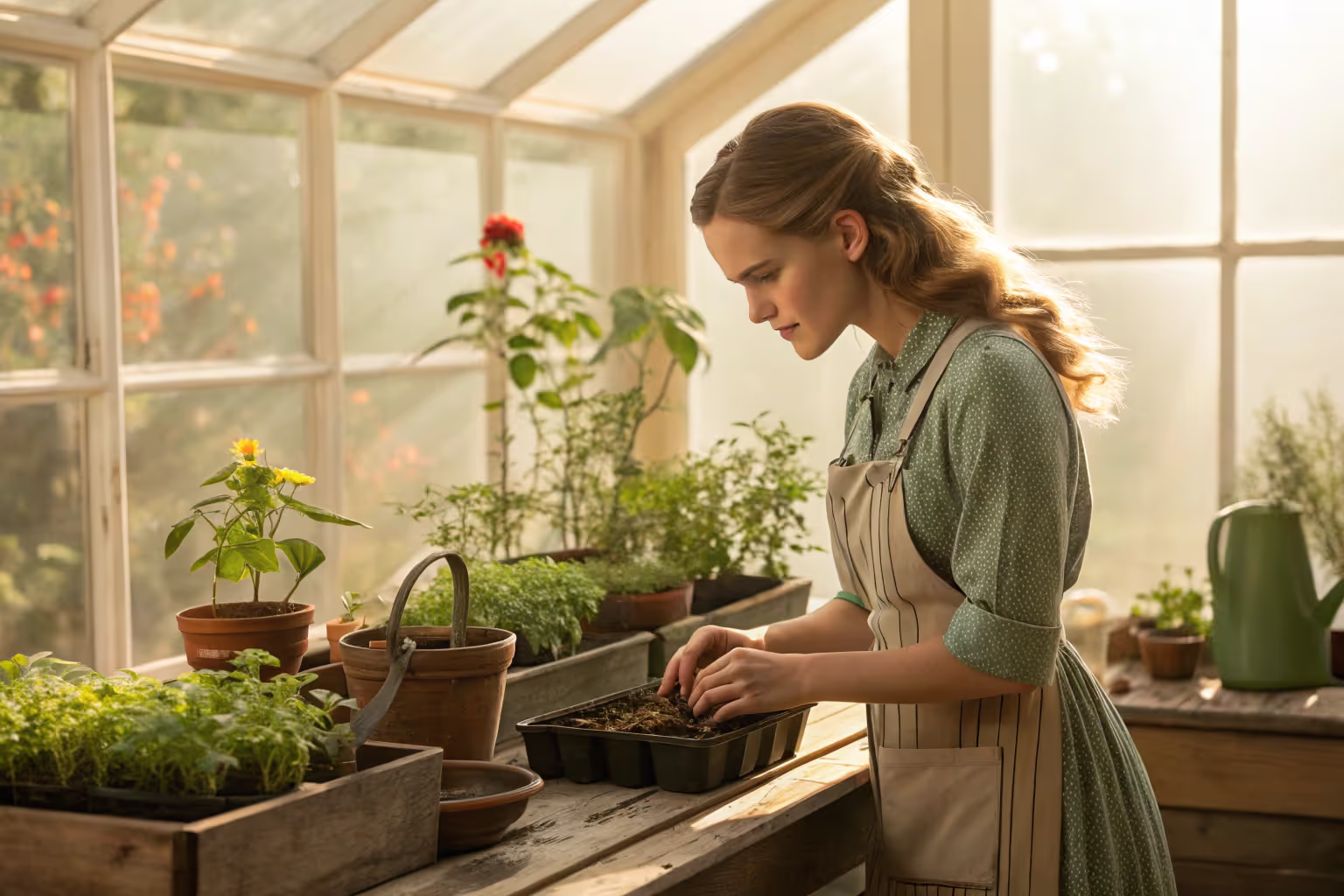
Want a more guided way to practice zone 6 planting guide?
Essential FAQs for Thriving Gardens in Zone 6
When's the prime time to plant vegetables outdoors in Zone 6?
Timing can make or break your vegetables' vitality. Typically, aim to plant hardy vegetables like spinach, lettuce, and peas just after the frost retreats, around mid to late March. Warm-season warriors such as tomatoes, peppers, and cucumbers prefer settling roots once the soil warms thoroughly, usually late May or early June.
Which fruit trees flourish best in Zone 6 conditions?
Fruit trees that savor the seasonal rhythm of Zone 6 include classics like apples, pears, cherries, and peaches. Choose varieties bred for cold-hardiness to ensure vibrant harvests. Selecting cultivars known for their resilience pays dividends season after season.
What's the story with perennials in this climate?
Perennials are the wise sages of the garden, returning year after year to paint your beds in color. Stalwarts like daylilies, hostas, coneflowers, and asters savor Zone 6's distinct seasons, thriving with minimal fuss. Proper mulching before winter's bite ensures their dependable return each spring.
How can I prolong the gardening season in Zone 6?
Extend your garden's vitality by employing simple techniques like cold frames, row covers, or hoop tunnels. With the right approach, hardy greens such as Swiss chard, kale, and root vegetables can yield abundantly well beyond typical frost dates. Experimentation rewards the adventurous gardener.
Are there ornamental trees or shrubs that particularly thrive here?
Absolutely: dogwoods, redbuds, and hydrangeas flourish spectacularly in Zone 6, bringing structure and drama. Incorporate ornamental grasses and shrubs like boxwood or viburnum to frame your garden's personality across seasons.
What herbs grow effortlessly in Zone 6 gardens?
Herbs often find their happiest home in Zone 6. Plant oregano, thyme, sage, and lavender in well-drained soils under ample sun. These aromatic savants provide culinary magic and pollinator appeal, enriching your garden beyond mere aesthetics.
Conclusion
If you’re working with a Zone 6 planting guide, you know timing and plant selection are everything. Resilient perennials, cold-hardy vegetables, and spring bulbs all have their place, but the real trick is reading your soil, watching the weather, and rolling with what nature gives you. Stagger your sowing, mix in companion planting for healthier beds, and don’t overlook nutrient-dense vegetables that pack more punch per square foot.
The best gardens in Zone 6 aren’t just about what you plant, but how you pay attention. Trust your hands, your eyes, and a little dirt under your nails. If you’re itching for more seasonal advice, check out what to plant in May or what to plant in June. With the right moves, your Zone 6 patch can thrive from the first thaw to the final frost.


