Growing Ground Cherries for a Sweet, Abundant Harvest
Growing Ground Cherries
Growing Ground Cherries: start seeds indoors 6–8 weeks before last frost; transplant 18–24 inches apart in full sun. Growing Ground Cherries calls for warm soil, pH 6.0–6.8, steady moisture, and mulch to keep husks clean. For Growing Ground Cherries, expect 70–80 days to harvest from self-pollinating plants that drop fruit when ripe.
Sweet, tropical notes—scoop up fallen husks and make jam, salsa, or eat them out of hand.
Put this guide to use
Choose a growing spot for Ground Cherries
Imagine a plant that needs six hours of direct sun. Your chosen spot gets two. Is that spot a match?
Check your thinking
The light does not match. Compare another spot before planting. For the plant in this guide, check its own requirements and your local conditions.
Continue in Taim.io. Try it without an account.
Table of Contents
- Growing Ground Cherries for a Sweet, Abundant Harvest
- Varieties that win on flavor, yield, and earliness
- Seed starting that stacks the deck
- Transplant timing, spacing, and containers
- Soil, feeding, and water for peak flavor
- Flowers, pollination, and fruit set
- Training that saves your back and the fruit
- Pests and diseases, handled early
- Harvest cues that never lie
- Storage, preserving, and kitchen use
Cheatsheet: Quick Start Guide to Homegrown Ground Cherries
🌱 Variety Selection
Aunt Molly’s and Pineapple types yield the sweetest, most reliable fruit. Each plant can produce 300+ fruit.
🔪 Tools and Products You'll Need
- Hand trowel
- Tomato cage or stake
- Quality compost or aged manure
- Mulch (straw or leaf)
- Ground cherry seeds or seedlings
- Pruning shears
- Harvest basket
☀️ Site & Soil
- Full sun (6+ hrs daily)
- Rich, well-drained loam
- pH 6.0–6.8
- Space 24–36 in (60–90 cm) apart
🌡️ Planting Steps
- Start indoors 6–8 weeks before last frost, 70–80°F (21–27°C).
- Transplant outside after danger of frost, soil 60°F (16°C)+.
- Plant deep, up to first leaves for sturdy growth.
- Mulch to retain moisture and suppress weeds.
- Stake or cage for support.
💧 Water & Feed
- Water 1 in (2.5 cm) per week
- Feed monthly with balanced organic fertilizer
🍒 Harvest & Storage
- Harvest when husks turn straw-colored and fruit drops
- Store in husk, cool and dry, 2–3 weeks
- Enjoy fresh, in jams or baked treats
🦠 Health & Nutrition
- High in vitamin C, fiber, antioxidants
- Low calorie, supports immunity and digestion
🌾 Self-Sufficiency Perk
Prolific, low-maintenance fruit extends local food season. Perfect for small spaces.
Growing Ground Cherries for a Sweet, Abundant Harvest
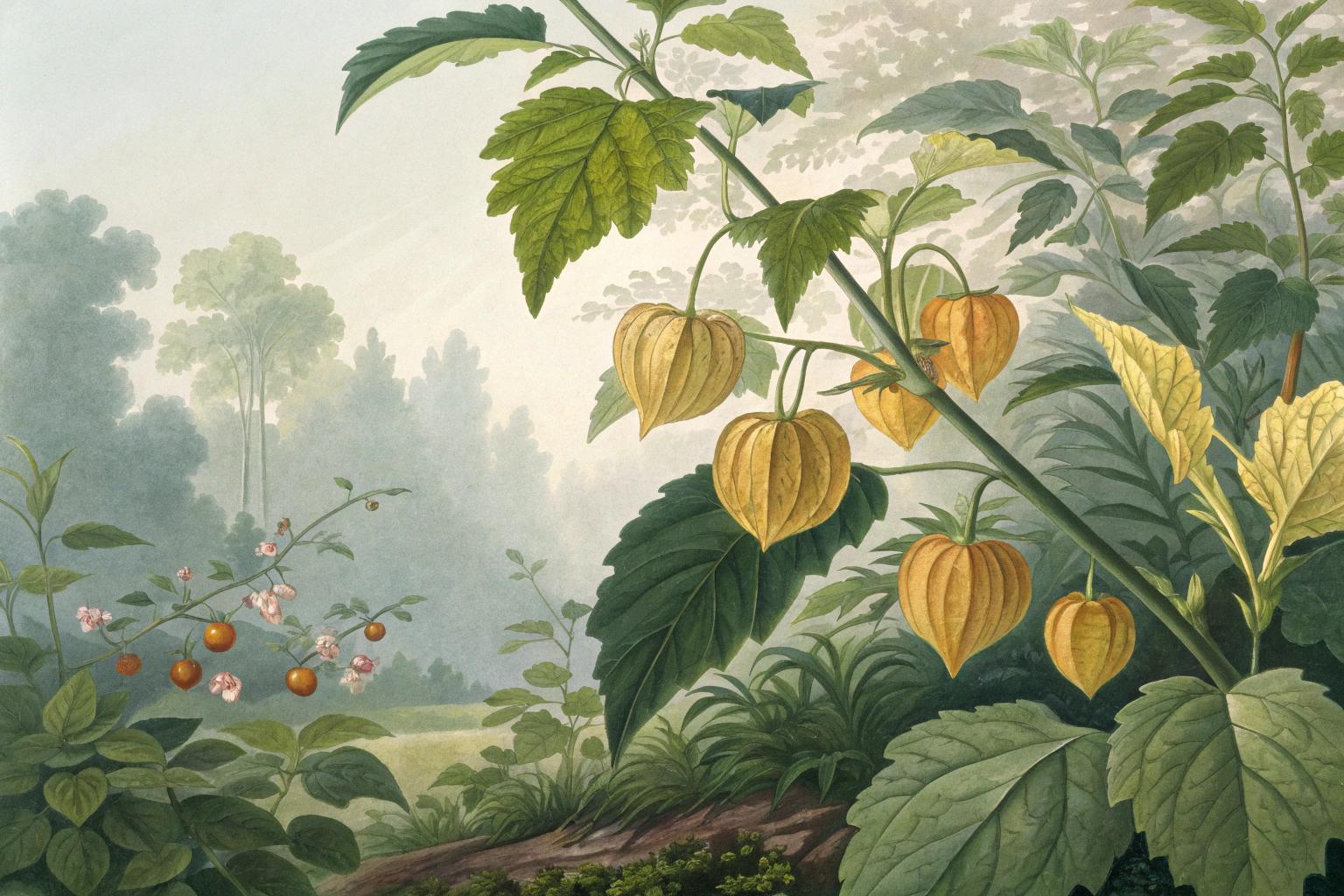
I fell for ground cherries the first time a papery lantern cracked open in my palm and a sun-warmed berry hit me with pineapple, mango, and a hint of tomato leaf. I have chased that flavor ever since, and it keeps paying out.
Most gardeners grow Physalis pruinosa for speed and yield, while P. peruviana cape gooseberry runs slower with bigger fruits and a perfumed tang. Clarify what you want at seed time and your calendar, spacing, and trellising fall into place.
Varieties that win on flavor, yield, and earliness
- Aunt Molly’s: reliable, sweet-tart, 70 to 75 days from transplant, easy to harvest.
- Cossack Pineapple: petite fruit with bright pineapple notes, prolific on compact plants.
- Goldie: larger berries, slightly later, rich jam flavor.
- Mary’s Niagara: fast set and uniform drop, good for market boxes.
- Cape gooseberry (P. peruviana): bigger lanterns and showpiece flavor, 90 to 110 days, best in long seasons or tunnels.
Seed starting that stacks the deck
Start 6 to 8 weeks before your last frost on warm benches at 75 to 85 F or 24 to 29 C. I sow shallowly, cover with vermiculite, and give 14 to 16 hours of strong light to avoid lanky stems.
Bottom heat cuts germination time to about a week for P. pruinosa and two for P. peruviana. Pot up once, then harden off for 7 days with wind and sun exposure before transplant.
On warm media at 77 F or 25 C, I record 85 to 95 percent germination in 7 to 12 days for common ground cherry lines.
Transplant timing, spacing, and containers
Move plants out after nights hold above 50 F or 10 C and soil hits 60 F or 16 C. I set 24 to 36 inches or 60 to 90 cm apart in rows 3 to 4 feet or 0.9 to 1.2 m.
For containers, 5 gallons or 19 liters per plant is my floor, 10 gallons or 38 liters if you want bulk fruit and less watering. Warm, breathable media beats heavy mixes every time.
Soil, feeding, and water for peak flavor
Aim for pH 6.0 to 6.8 with friable, well drained soil and 2 to 3 inches or 5 to 8 cm of compost worked in. High nitrogen gives huge vines and bland fruit, so I feed lightly with a balanced organic 5-5-5 and side dress once after first flowers.
Give about 1 inch or 25 mm of water weekly, more in sand and heat, and mulch to hold moisture and keep dropped fruits clean. Consistent moisture builds sugars and cuts splitting after storms.
Flowers, pollination, and fruit set
Plants are self-fertile but bees boost set and uniformity. Heat spikes above 90 F or 32 C can stall pollen, so I use 30 percent shade cloth on blazing afternoons and water mornings to keep canopies cooler.
Training that saves your back and the fruit
Ground cherries sprawl, so I corral them with low tomato cages, pea fencing, or a two-line Florida weave at 10 and 18 inches. Support lifts fruit off soil and speeds harvest by funneling drop zones.
Straw mulch or landscape fabric turns cleanup into a quick walk. I shake plants gently and sweep the alley for papery husks.
Pests and diseases, handled early
Flea beetles can pock seedlings, so I start under light row cover and remove at bloom. Tomato hornworm, cutworms, and the odd Colorado potato beetle show up, and I handpick or use Bacillus thuringiensis for hornworms.
Early blight and Septoria fade with wide spacing, drip irrigation, and a 3 to 4 year Solanaceae rotation. Leaves and unripe green fruits are nightshade relatives and should not be eaten.
Harvest cues that never lie
Ripe fruit drops on its own as husks turn buff to tan and feel papery. I gather daily, then let slightly underripe berries finish in the husk at room temperature for 3 to 7 days.
Sugar climbs post-harvest, and flavor deepens as the husk breathes. Field heat matters, so I pick early morning for best texture.
A single vigorous plant can shed hundreds of lanterns across a long summer, with peak drop beginning about 3 weeks after first blush.
Storage, preserving, and kitchen use
Keep fruits in their husks in a breathable bin in a cool, dry room for 2 to 4 weeks, or refrigerate near 40 F or 4 C to extend to a couple of months. Remove husks just before use for best snap.
I roast them for salsa, fold into hand pies, dry them into golden raisins, and cook quick jam with lime and a pinch of salt. They play well with basil, ginger, chile, and browned butter.
Scaling up and selling the story
For market beds, I run drip under fabric, set catch mulch in alleys, and harvest with shallow trays to prevent bruising. I package in 6 oz to 1 pint vented paper tills and add a short note on flavor and uses to raise repeat buys.
Sampling drives sales, and mixed pints with cherry tomatoes create a visual hook. Demand peaks in late summer when berries arrive just as berry fatigue hits shoppers.
Companions and rotation that pay dividends
I interplant with basil, scallions, or dwarf marigolds to fill light gaps and confuse pests. Alyssum or borage along the edge keeps pollinators hanging around all afternoon.
Skip beds that held tomatoes, peppers, potatoes, or eggplant last year. A clean bed gives cleaner fruit and calmer afternoons.
Seed saving for the long haul
Most lines self-pollinate, yet I isolate by at least 50 feet or 15 m to keep varietal flavor true. Ferment seeds like tomatoes for 2 days, rinse, dry on screens, and store cool and dry for up to 6 years.
Troubleshooting, fast fixes
- Leggy seedlings: add light intensity, drop temps to 65 F or 18 C nights, brush stems daily to toughen.
- Blossom drop in heat: add shade cloth and steady irrigation, harvest earlier in the day.
- Bland fruit: cut nitrogen, increase sun, and let fruit finish in husk a few days.
- Splitting after rain: mulch deeper and water evenly to buffer swings.
- Slugs and pill bugs in mulch: switch to woven fabric or use dry straw and bait traps.
- Mice or chipmunks stealing drops: raise mulch edges and harvest twice daily during peaks.
Top picks and helpful kit for Growing Ground Cherries
- Best early variety: Aunt Molly’s for short seasons and containers.
- Best for jam: Goldie for size and pectin-rich gel.
- Best market uniformity: Mary’s Niagara with clean drop and tight flavor window.
- Best flavor adventure: Cape gooseberry if you have 100 frost-free days or a tunnel.
- Gear I would buy again: heat mat with thermostat, high-output LED shop lights, 1020 trays with air-prune inserts, light row cover, insect netting, drip line with pressure regulator, soil test kit, and a small refractometer to track Brix.
Climate notes and season extension
USDA zones 4 to 10 can grow P. pruinosa by starting indoors and using warm beds. Low tunnels add 2 to 3 weeks on both ends and keep flavor sharp in shoulder seasons.
Novel crossovers from tomato craft
Treat them like low-stakes tomatoes: dry leaves before nightfall, prune only what you need for airflow, and stay ahead of weeds. Grafting onto vigorous tomato rootstocks is experimental, but in my tests it lifted yield in cool springs without hurting flavor.
What the research community and seed houses say
University of Minnesota Extension, Cornell Cooperative Extension, and North Carolina State Extension each stress full sun, warm soils, and harvest by natural drop for best quality. Johnny’s Selected Seeds and Seed Savers Exchange note that days to maturity shorten meaningfully with warm starts and black plastic or fabric.
Extension guides repeatedly state that ripe fruit is ready when it drops, and storage improves with the husk left on in a cool, dry place.
FAQs that shorten the learning curve
Can I trellis ground cherries like tomatoes? Yes, a low two-line weave or short cage keeps fruit clean and harvest fast.
Are they safe to eat green? No, wait until the berry turns golden and drops, then let it finish in the husk if slightly underripe.
Do they grow in partial shade? They set in light shade but flavor peaks in full sun, so aim for 8 hours.
How many plants per household? Two plants feed a snacking family, four plants supply jam and baking all summer.
Can I overwinter plants? Outdoors they die with frost, yet you can overwinter cuttings under lights and restart early for tunnel crops.
My field notes that changed my yields
Mulch color matters, and black woven fabric delivered earlier drop and sweeter fruit than straw on my sandy loam. A single midseason side dress with compost plus kelp tea beat all granular trials for flavor and shelf life.
Frequently Asked Questions About Cultivating This Unique Fruit
What is the ideal planting time for these unique fruits?
Start your seeds indoors approximately 6-8 weeks before the final spring frost date. Transplant seedlings outside when temperatures consistently remain above 55°F (13°C), ensuring nighttime chill has passed.
Where is the best location to plant them?
Select a sunny spot offering at least 6-8 hours of direct sunlight daily. These fruits thrive in well-drained, fertile soil rich in organic matter.
How much water do these plants require?
Provide consistent watering, giving about 1-1.5 inches (2.5-3.8 cm) of water weekly. Maintain evenly moist soil without oversaturating to prevent root issues.
Do these plants require fertilization for optimal fruit production?
Applying an organic, balanced fertilizer once plants are established encourages vigorous growth. Fertilize lightly every 4-6 weeks throughout the growing season for improved fruit formation.
How do I know when the fruits are ready to harvest?
Harvest occurs naturally as ripe fruits fall from the plant. Fruits enclosed in a papery husk turn golden-yellow and typically drop when fully ripe. Regularly collect fallen fruits to ensure peak flavor and prevent spoilage.
Are these plants susceptible to pests or diseases?
While resilient, these plants may face common tomato-family pests such as aphids, flea beetles, and whiteflies. Regularly observe plants, remove pests manually, or apply organic treatments like insecticidal soap if needed. Maintain proper spacing and airflow to minimize disease risk.
Can these fruits be safely stored after harvesting?
Once gathered, fruits store well at room temperature for up to a week, and keep refrigerated for about two to three weeks. For longer preservation, fruit can be frozen or made into jams, preserves, or sauces.
Growing Ground Cherries pays off with tropical, caramel bites and baskets of fruit. Give them full sun, well-drained soil, and warm ground. Space 2 to 3 feet, keep feed light, and lay thick mulch to cradle the drop.
Seedlings appreciate early row cover against flea beetles. Let plants sprawl; a low cage keeps the patch tidy. Ripeness is simple: husks go papery, berries turn gold, then fall. Scoop daily. Store in husks, cool and dry, for weeks. One plant goes a long way.
Want a close cousin? Try the cape gooseberry. For transferable nightshade basics, see cherry tomatoes. Keep Growing Ground Cherries simple and steady, and you will taste sunshine by the handful.