Growing Mugwort for a Fragrant, Beautiful Herb Garden
Growing Mugwort
Growing Mugwort: plant in full sun, lean soil (pH 6.0–7.0), space 18–24 inches, hardy in USDA 4–9. Growing Mugwort thrives on neglect—water sparingly after establishment, and shear in midsummer to curb spread. For Growing Mugwort in pots, use a 3–5 gallon container with gritty mix and root‑prune yearly to tame rhizomes.
Fragrant, silver foliage and late‑summer blooms—keep reading for folklore, propagation, and control tactics.
Table of Contents
- Growing Mugwort: scent, structure, and sensible control
- Know your mugworts before you plant
- Site and soil that keep the perfume high and the plant in check
- Containment that actually works
- Propagation and planting that respects its biology
- Water and feeding for fragrance over flab
- Pruning, training, and harvest that keep it beautiful
- Companions and allelopathy
- Wildlife, pests, and diseases
- Safety, allergies, and local rules
Cheatsheet: Successful Mugwort Cultivation
🌿 Overview
Hardy perennial, USDA Zones 3-9. Mature height: 3-6 ft (1-2 m). Spreads fast. Aromatic foliage deters pests and attracts pollinators.
🧰 Tools and Products You'll Need
- Seeds or root divisions
- Compost or balanced organic fertilizer
- Mulch
- Hand trowel
- Pruning shears
- Gloves
🌞 Site Selection
- Sun: Full (6+ hrs) or partial shade
- Soil: Well-drained, pH 6.0-7.0
🔄 Planting Steps
- Sow seeds in spring after frost or transplant divisions in fall/spring.
- Space 18–24 in (45–60 cm) apart.
- Cover lightly with soil (1/8 in, 3 mm deep).
- Water until established (keep moist, not soggy).
- Mulch to retain moisture and reduce weeds.
💧 Care Tips
- Low water once established (1 in/2.5 cm per week).
- Fertilize yearly with compost.
- Prune aggressively to control spreading.
✂️ Harvest & Uses
- Harvest leaves anytime; cut before flowering for best aroma.
- Use fresh or dried in teas, sachets, or as insect repellent.
- Traditional use: some cultures use for digestion, sleep, or ceremonial smudging.
☀️ Did You Know?
One plant can yield 2+ lbs (900+ g) of leaves each season. Self-sufficient growers appreciate mugwort’s medicinal and culinary versatility.
Growing Mugwort: scent, structure, and sensible control
I grow mugwort along a fence that used to be a deer highway, and the first time summer rain hit those leaves the air smelled like sage tea and crushed chrysanthemum. I learned fast that the fragrance comes with horsepower.
Know your mugworts before you plant
Artemisia is a big clan, and the common name mugwort gets thrown around for different species with different habits. I label every clump the day I plant it, because misidentification fuels disappointments and runaway thickets.
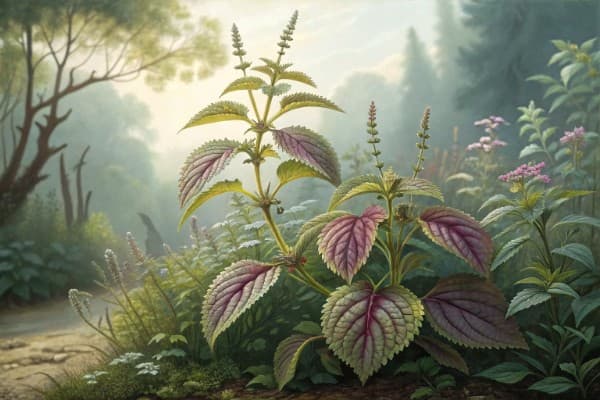
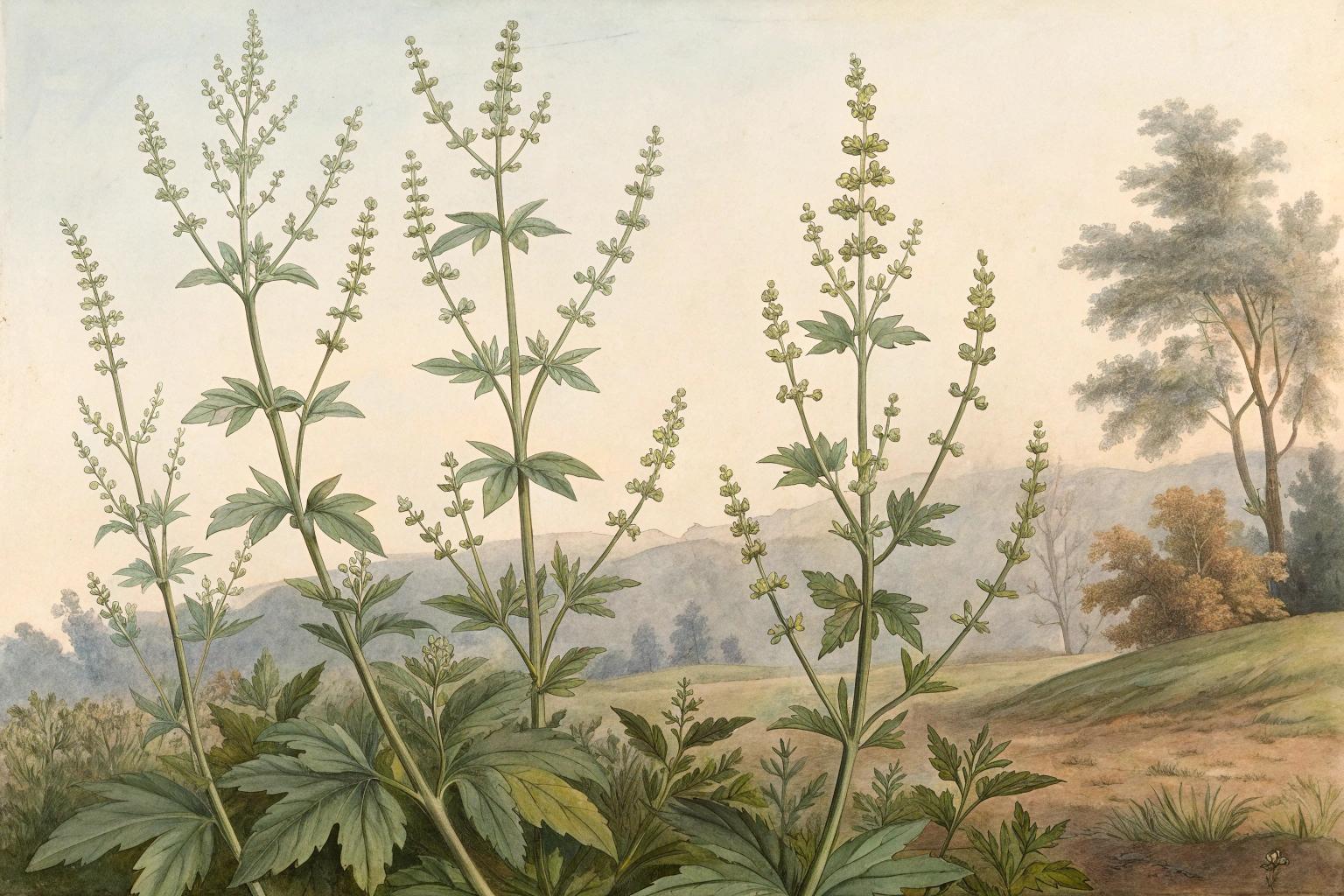
- Artemisia vulgaris European mugwort, hardy in USDA 3 to 9, upright to 3 to 6 feet tall 0.9 to 1.8 m, strongly rhizomatous and very aromatic.
- Artemisia argyi Chinese mugwort for moxa, broader leaves and a softer camphor profile, still spreading by rhizomes.
- Artemisia princeps Japanese mugwort for yomogi mochi, denser growth and tender spring tips for culinary use.
- Artemisia douglasiana western mugwort, North American native, excellent for dry gardens and wildlife corridors.
Variegated forms like A. vulgaris ‘Oriental Limelight’ carry less vigor in my beds, yet they still creep. If you want silver but tamer, look at A. ludoviciana ‘Silver Queen’ which clumps more politely.
Site and soil that keep the perfume high and the plant in check
Full sun gives the richest aroma and tightest internodes, although light shade in hot zones reduces leaf scorch. I plant mugwort in lean, well drained loam at pH 6.0 to 7.5 and skip rich compost that turns it leggy.
It tolerates clay once you open the soil with coarse sand or fine gravel at 10 to 20 percent by volume. Root competition from turf or a gravel strip on one side slows the spread.
"Mugwort is a rhizomatous perennial that spreads aggressively by underground stems." USDA NRCS Plant Guide
Containment that actually works
I set a rhizome barrier 18 to 24 inches deep 45 to 60 cm around dedicated beds with seams overlapped and screwed. In small gardens, a 10 to 15 gallon 38 to 57 L container keeps it honest while still giving you armloads of growth.
Edging monthly with a spade keeps runners out of paths. I also mow a 12 inch 30 cm strip along the outside edge in peak summer to snap tender rhizomes.
Propagation and planting that respects its biology
Seeds need light, so I press them onto the surface and mist, then germinate at 68 to 72 F 20 to 22 C for 10 to 21 days. Cold stratification for 2 weeks in the fridge speeds uneven batches.
Divisions in early spring root fast, and thumb-thick rhizome cuttings with two nodes take in 2 to 4 weeks under bright shade. I space plants 18 to 24 inches 45 to 60 cm apart for a solid hedge by year two.
Water and feeding for fragrance over flab
New plants get 1 inch 25 mm of water per week for the first month, then I taper to deep soaks every 10 to 14 days in summer. Established clumps ride out dry spells once roots hit depth.
High nitrogen blunts scent and invites flopping. I side dress lightly with leaf mold at 0.5 inch 1.2 cm in spring and stop there.
Pruning, training, and harvest that keep it beautiful
I shear to 6 to 8 inches 15 to 20 cm in late winter to restart clean foliage. A hard midseason chop in early July keeps it upright and resets height.
For tea and sachets I cut nonflowering tips just before buds swell, then dry at 95 to 105 F 35 to 40 C with a fan and store in amber glass. Stem woodiness increases after bloom and the aroma shifts from citrus and menthol to resin and hay.
Companions and allelopathy
Mugwort releases terpenes that can suppress nearby shallow-rooted vegetables. I park it away from beans, carrots, and dill, and give it a gravel moat between ornamental beds and the kitchen plot.
It pairs well with roses, lavender, thyme, and tall grasses where the gray-green sets off flower color. I tuck it behind salvias so the muted foliage frames the show.
Wildlife, pests, and diseases
Deer and rabbits rarely sample it thanks to bitter sesquiterpene lactones. I see hoverflies on the umbels and moth larvae on lower stems, which is welcome in a balanced garden.
Occasional aphids wash off with a hose, and rust shows up in humid pockets if airflow is poor. I thin interior stems and avoid overhead irrigation late in the day to prevent leaf spot.
Safety, allergies, and local rules
Mugwort sits in the Aster family, so folks sensitive to ragweed, chrysanthemums, or marigolds often react to the pollen or tea. Pregnant or breastfeeding people should avoid internal use, and the essential oil contains thujone which can be toxic at high doses, per NCCIH and EMA monographs.
In parts of North America and Europe, A. vulgaris is listed as invasive, so check state or regional guidance before planting. CABI’s Invasive Species Compendium and state weed boards describe its spread and control clearly.
"Plants commonly reach 1 to 2 meters in height in fertile soils and can form dense stands along roadsides and riparian edges." CABI Invasive Species Compendium
Uses that make the plant earn its keep
I brew a pre-hop style gruit ale once a year with a small handful of young leaves, which gives a soft balsamic finish. I also slip dried sprigs into linen closets where the clean, resinous scent outcompetes must.
Most moxa is made from A. argyi, and Japanese confections use A. princeps, so buy the right species for culinary or craft projects. Always keep internal use modest and occasional, and consult a clinician if you have conditions or take meds.
Best cultivars and smart alternatives
- A. vulgaris ‘Oriental Limelight’ variegated, striking in part sun, still needs barrier.
- A. ludoviciana ‘Silver Queen’ clumping, silver leaves, less wandering in my trials.
- A. absinthium wormwood, upright gray towers with a classic artemisia scent, great border foil.
- A. schmidtiana ‘Nana’ compact and silky, a groundcover for edges where mugwort would overrun.
For scented teas with gentler behavior, try lemon verbena or mountain mint in adjacent beds. For a native, A. douglasiana brings habitat value with similar vibe.
Shopping checklist for Growing Mugwort
- Verified plants by species or named cultivars from a reputable nursery, avoid unlabeled “mugwort” seed packs.
- Rhizome barrier 20 mil or heavier, 18 to 24 inch 45 to 60 cm depth, plus seam tape or stainless screws.
- 10 to 15 gallon 38 to 57 L nursery pots or stock tanks if container growing, drill extra drainage.
- Bypass pruners, a hori hori or half-moon edger, and breathable harvest bags.
- Low-heat dehydrator with adjustable thermostat for consistent drying at 95 to 105 F 35 to 40 C.
Seasonal calendar that keeps you ahead
- Late winter, cut back to 6 to 8 inches 15 to 20 cm and refresh barriers.
- Spring, plant or divide as soil warms to 55 F 13 C, mulch lightly with leaf mold.
- Early summer, soft-tip harvests every two weeks, edge perimeters after rain.
- Mid summer, hard shear to reset shape if stems lodge, deep water once to recover.
- Fall, selective thinning and final harvest before heavy frost, clean fallen stems to reduce self layering.
Answers to questions I get all the time
Can mugwort grow in part shade. Yes, but aroma and sturdiness improve with at least 6 hours of sun.
Will it tolerate heavy clay. Only after you amend for drainage and keep crowns above grade on a low berm.
Is it safe for pets. The plant tastes bitter and most pets avoid it, yet ingestion can upset stomachs, so plant out of reach and call a vet if a pet eats a lot.
How tall will it get. In my lean beds plants top out at 3 to 4 feet 0.9 to 1.2 m, and in rich soils neighbors report 6 feet 1.8 m or more.
Can I stop it without plastic. A double trench, each 8 inches 20 cm deep, filled with pea gravel slows runners if you patrol weekly.
Field notes from my plots
The finest aroma hit my nose on a cool morning after a thunderstorm at 62 F 17 C, which tracks with how volatile oils rise as humidity drops after rain. I also noticed that clipping in the afternoon gives slightly sweeter leaves, likely because terpenes peak after midday sun.
I brew one small batch of gruit every May, pruning the hedge at the same time so the chore tastes like a ritual. The balance of beauty, fragrance, and discipline keeps mugwort on my roster, with a spade leaning nearby like a bouncer.
Credible references worth your time
USDA NRCS Plant Guide on Artemisia vulgaris describes its rhizomatous spread and habitat preferences. RHS profiles for artemisias cover soil, pruning, and garden use in clear terms.
CABI Invasive Species Compendium summarizes height, spread, and management with regional notes. NCCIH and the European Medicines Agency provide safety guidance on artemisia preparations and thujone exposure.
Frequently Asked Questions About Growing Mugwort
What soil conditions optimize healthy growth?
Mugwort thrives vigorously in well-drained soil with a neutral to slightly alkaline pH (6.5–7.5). To enrich the soil structure, mix organic compost into your planting area, ensuring the roots develop steadily and receive adequate nutrients.
How much sunlight is best for optimal results?
This herb favors full sun to partial shade. Planting in an area that receives at least 6 hours of direct sunlight daily encourages dense foliage growth and aromatic intensity.
How often do I need to water the herb?
Provide a thorough watering approximately once weekly, adjusting according to rainfall and temperature conditions. Allow the soil to dry slightly between waterings, preventing root rot while promoting strong root development.
What's the ideal planting spacing for vigorous, healthy plants?
Space seedlings or transplants about 18–24 inches (45–60 cm) apart. This allows adequate airflow and room for rigorous expansion, minimizing disease risks and supporting plant health.
What's the ideal temperature range to encourage vigorous growth?
For optimal growth, maintain temperatures between 60–75°F (16–24°C). While the plant tolerates minor frost, prolonged cold or heat extremes may inhibit growth and reduce vitality.
When and how should pruning be conducted for healthier plants?
Prune back the plants in early spring to stimulate lush, structured growth. Remove spent flower stalks and older, woody stems, maintaining proper air circulation and encouraging vigorous new stems.
Are there common pests or diseases to watch for during cultivation?
Common pests include aphids and spider mites; regularly inspect under leaves and along stems. Fungal diseases can occur with excessive moisture or poor airflow. Control pests by applying insecticidal soap and reduce disease risk by maintaining adequate spacing and airflow between plants.
Can this herb tolerate container gardening?
Absolutely, container gardening suits this vigorous grower. Select pots at least 12 inches (30 cm) deep with sufficient drainage holes. Provide nutrient-rich potting mix, consistent watering, and ample sunlight to ensure strong growth and fragrance.
Growing Mugwort is about restraint and placement. Sun to part shade, lean, well-drained soil, and light water after establishment. Skip fertilizer. No need to baby it. Keep it out of soggy ground.
Contain creeping rhizomes with a barrier, raised bed, or pot, and clip flower heads to limit seed spread. Cut back in late winter for clean, fresh growth. Divide every few years to renew the clump. Hang stems to dry for aromatic bundles and sachets.
Let the silver foliage steady the border and set the tone for the rest of your herb patch.
Round it out with rugged partners like sage, thyme, and dill. If Growing Mugwort has you planning more, scan the full plant list in the guide.