How To Grow Saffron Crocus
Growing Saffron Crocus
Growing Saffron Crocus starts with fall planting: set corms 3–4 inches deep, 4 inches apart in full sun. Growing Saffron Crocus runs best in USDA Zones 6–9; use sandy loam, sharp drainage, and stop watering after dormancy. Growing Saffron Crocus rewards fast hands: pluck the three red stigmas at dawn and dry 20–30 minutes on low heat. Stick around for spacing tweaks, pest checks, and curing that makes threads sing.
Table of Contents
- Growing Saffron Crocus for spice, beauty, and a little mischief
- Climate, site, and soil that keep corms alive
- Planting: timing, depth, spacing
- Water and feed without coddling
- Harvest like you mean it
- Yield math without the fairy dust
- Field notes and tricks that paid off
- Calendars that work
- Common mistakes I stopped making
- Pests, disease, and clean stock
Cheatsheet: Saffron Crocus Growing Guide
🌱 Planting Time & Location
- Plant bulbs: Late summer to early fall
- Site: Full sun, well-drained soil
- Climate: USDA 6-9; dry summers, wet winters
🔪 Tools and Products You'll Need
- Trowel
- Saffron crocus bulbs (Crocus sativus)
- Gardening gloves
- Wheelbarrow or bucket
- Label stakes
- Harvesting tweezers
🧑🌾 Planting Steps
- Prep Site: Remove weeds, mix in compost.
- Plant Bulbs: 3-4 in (8-10 cm) deep, 4-6 in (10-15 cm) apart, point up.
- Water: Soak after planting. Let soil dry between waterings.
- Label Rows: Mark plantings to avoid disturbing bulbs.
🌸 Flowering & Harvest
- Blooms: 6-8 weeks after planting, usually in October-November
- Harvest early morning, use tweezers for stigmas
- Dry threads in warm, dark spot 48 hours
- Yield: ~150 flowers for 1g saffron
💡 Health & Self-Sufficiency
- Saffron: Powerful antioxidant, supports mood, boosts memory
- High value: One ounce fetches $500-5,000
- Grows in small spaces, ideal for homegrown spice
🚩 Maintenance & Tips
- No summer water—bulbs rot if wet
- Divide clumps every 4 years
- Mulch lightly in cold winters (below 15°F / -10°C)
- Watch for rodents—protect with mesh if needed
Growing Saffron Crocus for spice, beauty, and a little mischief
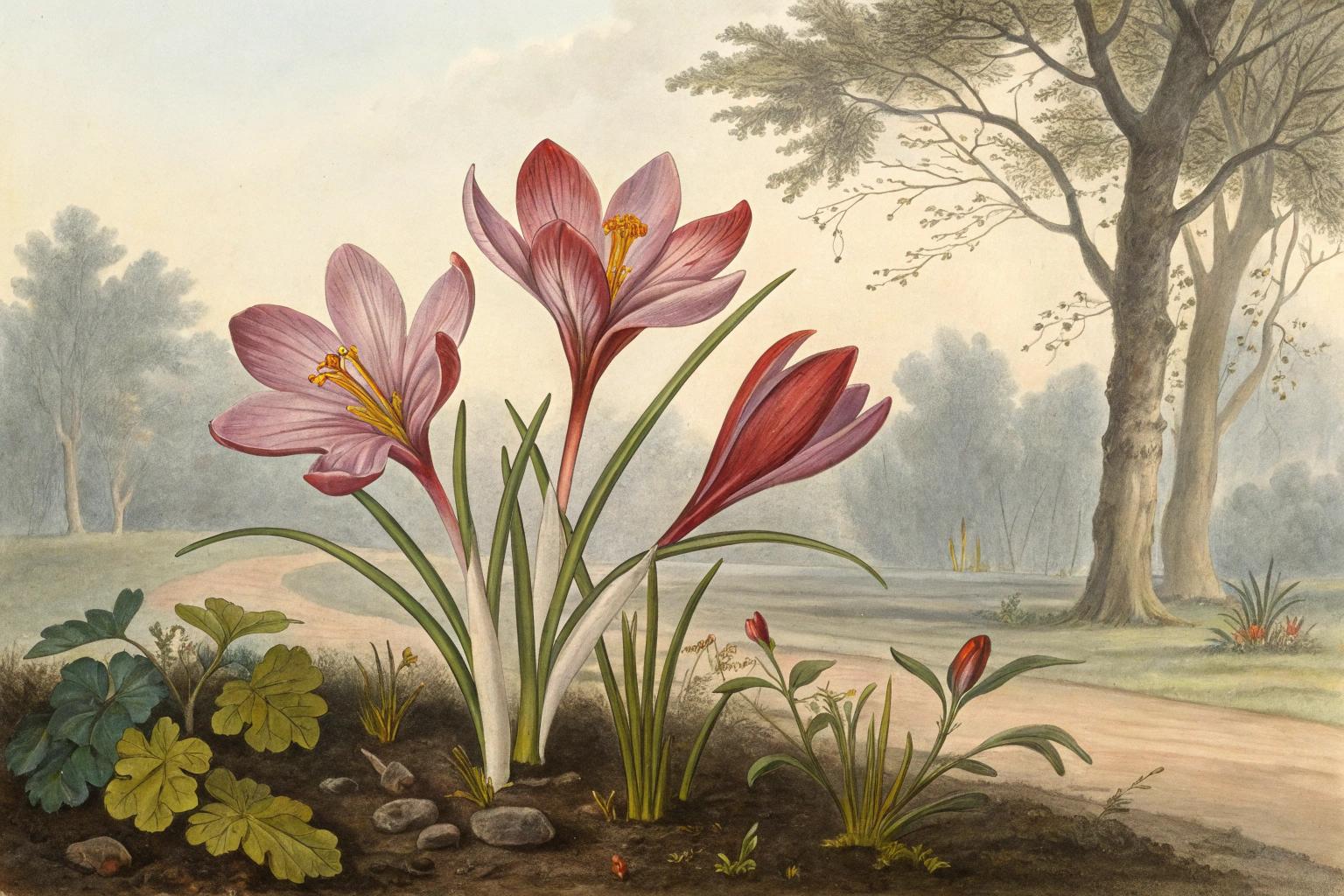
I grow Growing Saffron Crocus in places that bake in July, then breathe in October, because Crocus sativus thrives on that rhythm. It sleeps all summer, wakes with rain, and throws purple blooms with red threads that smell like honey and sun-dried hay.
The plant is a sterile triploid, propagated by corms, not seed. Each flower has exactly three stigmas, the prize we dry into saffron.
Climate, site, and soil that keep corms alive
USDA zones 6 to 9 hit the sweet spot, with zone 5 doable under mulch or a cold frame. Winters can be cold, as long as drainage is fast and crowns sit high, not soggy.
Give full sun and a lean, gritty soil at pH 6.5 to 7.8. I aim for a sandy loam amended with sharp sand and 3 to 5 millimeter horticultural grit.
Raised beds help in wet climates. In clay, I build 6 inch high ridges, then plant on the crest.
Planting: timing, depth, spacing
Plant corms in late summer to early fall, ideally 4 to 6 weeks before first frost. In my beds that lands in late August or early September.
Depth matters: 4 inches deep in mild climates, 5 to 6 inches deep where winters bite hard. Space 3 to 4 inches apart for first-year flowers, or 6 inches if you want easy division later.
Set the pointy side up. Water once to settle, then let the soil dry slightly between light irrigations.
Water and feed without coddling
Saffron hates wet feet in summer. Stop irrigation by late spring and keep the bed dry until fall rain returns.
Feed low nitrogen, higher potash. I top-dress right after bloom with 0.5 inch of compost and a light sprinkle of 5-10-10 at 1 to 2 pounds per 100 square feet, then water in.
Harvest like you mean it
Flowers pop for two to four weeks in fall, usually morning. I pick at dawn, when blooms are just open and the stigmas stand tall.
Pinch the three red threads from each flower, skipping the yellow stamens. Dry at 110 to 120 F or 43 to 49 C for 20 to 30 minutes in a dehydrator, or air dry in a warm, dark room for two days.
Store in airtight glass away from light. Flavor improves after 4 weeks and holds for 2 to 3 years.
“Up to 90 percent of global saffron comes from Iran,” Food and Agriculture Organization of the United Nations. Each kilogram takes roughly 150,000 to 200,000 flowers.
Yield math without the fairy dust
Each flower dries to about 2 milligrams of saffron. Plan on 150 to 200 flowers per gram in home conditions.
Large corms produce more first-year blooms. With 100 premium corms I see 80 to 200 flowers year one, then 250 to 500 by year three as they split into daughter corms.
Field notes and tricks that paid off
I get cleaner flowers by mulching with 0.5 inch of washed grit. Petals stay dry after rain, and slugs lose interest.
In a high tunnel, bloom started 2 weeks earlier and yields rose in my cold site. The University of Vermont Saffron Program reports similar benefits for short seasons and vole control.
A pinch of agricultural lime in acidic soils pushed stronger leaf growth for me. Aim for near neutral pH if your tea test tastes sharp.
Calendars that work
- August to September: Plant corms, water once, keep barely moist.
- October to November: Bloom and harvest daily, top-dress after flowers fade.
- December to March: Leaves photosynthesize in cool weather, water lightly if dry.
- April to May: Leaves yellow, stop watering, let plants go dormant.
- June to July: Dry rest, lift and divide every 3 to 4 years once foliage is gone.
Common mistakes I stopped making
- Overwatering after bloom, which rots corms fast.
- Shallow planting in freeze-thaw soils, which heaves corms out of the ground.
- Using rich manure, which feeds rot more than flowers.
Pests, disease, and clean stock
Voles and mice adore corms. I plant inside stainless mesh baskets where pressure runs high, and I snap traps under boards along bed edges.
Fusarium and other rots flare in warm, wet soils. Good drainage and clean, certified corms matter more than sprays.
Where trouble lingers, solarize the bed in midsummer with clear plastic for 4 to 6 weeks. Replant corms only after the cycle of heat, bloom, and dormancy is respected.
Containers and small spaces
Use a 10 to 12 inch deep clay pot with 40 percent coarse sand or grit in the mix. Plant 12 to 15 corms in a wide bowl, then park it in full sun with a roof overhang to keep summer rain off.
Bring the pot under cover once leaves die, keep it dry, and give full light again in fall.
Where to buy and what size to choose
Look for firm, disease-free corms graded by circumference. Sizes 8 to 9 or 9 to 10 centimeters give the best first-year flower count.
Prices range from about 50 cents to 2 dollars per corm depending on grade and quantity. Ask suppliers for plant health certification and the harvest year.
Safety note that saves gardens
True saffron is Crocus sativus, autumn blooming with narrow leaves and three red stigmas. Colchicum autumnale, often sold as fall crocus or naked ladies, is toxic and never used for spice.
Top uses beyond the kitchen
- Under young fruit trees in dry-farmed orchards, where summer irrigation stays low.
- In gravel gardens with thyme and dwarf iris, sharing the same spare diet and drainage.
- Pollinator support in fall, when forage runs thin for bees.
Step-by-step cheat sheet
- Prep a sunny, free-draining bed with sand and grit.
- Plant corms 4 to 6 inches deep, 3 to 4 inches apart, late summer.
- Water once, then keep slightly dry until bloom.
- Harvest stigma threads at dawn, dry to cracker-crisp, store in glass.
- Feed lightly after bloom, then stop watering by late spring.
- Lift and divide every 3 to 4 years after leaves yellow.
Saffron quality and storage
ISO 3632 grades saffron by crocin, picrocrocin, and safranal content, which relate to color, bitterness, and aroma. Homegrown threads can test high if you dry fast and keep oxygen and light away.
I age fresh saffron 4 to 6 weeks before cooking. The aroma moves from hay to honeyed vanilla with time.
Numbers and authorities I trust
The Royal Horticultural Society recommends planting 10 to 15 centimeters deep in late summer and stresses sharp drainage for Crocus sativus. That guidance tracks perfectly with my results in wet falls.
Kew Science describes saffron as a sterile triploid that persists only by corm division. That explains steady clumping and the periodic lift-and-split routine.
FAO places Iran at roughly 90 percent of world production, with Spain, India, Greece, and Morocco sharing much of the rest. ISO 3632 remains the gold standard for quality testing and fair trade.
Quick troubleshooting
- Lots of leaves, few flowers: corms too small or planted too shallow; replant deeper and upgrade corm size next season.
- Corm rot: heavy soil or summer water; add grit, raise the bed, cut irrigation earlier.
- Flowers chewed overnight: rodents; install mesh baskets and set traps at bed edges.
- Floppy flowers after rain: top mulch with grit so petals dry fast.
Alternatives and smart pairings
- Pair with fall-blooming Colchicums for spectacle, but never for spice.
- Combine with spring crocus for two-season color in the same bed, since saffron rests in summer.
- Trial Greek-style gravel beds under olives or hardy figs where summers run dry.
Personal take
Saffron rewards restraint more than fuss. Give it sun, air, and a dry summer, then get up early and harvest like a chef on a deadline.
Frequently Asked Questions about Growing Saffron Crocus
When is the best time to plant saffron bulbs?
Plant saffron bulbs, also known as corms, in late summer or early autumn, ideally between August and October, allowing them enough time to take root before winter's arrival.
What soil conditions favor healthy growth?
Plant corms in well-drained, sandy or loamy soils rich in organic matter. Maintain a slightly alkaline to neutral soil pH of around 6.0 to 8.0 for optimal growth and flowering.
How deep and how far apart should I plant the saffron bulbs?
Place bulbs at a depth of 3 to 4 inches (7.5 to 10 cm) and space them at least 3 inches (7.5 cm) apart. This spacing ensures proper air circulation and encourages thriving root development.
What watering practices should I follow?
Water consistently after planting, keeping soil moderately moist but never soggy. After flowering, gradually reduce watering during winter dormancy to prevent bulb rot and encourage healthy new growth next season.
How do I properly harvest saffron threads?
Harvest saffron by carefully hand-picking the vibrant crimson stigmas during early morning, as flowers open, typically in mid to late autumn. Gently separate the stigmas from blooms, then allow drying naturally in a cool, dark and well-ventilated place to preserve quality and flavor.
What is the ideal climate for successful saffron cultivation?
Saffron performs best in warm, sunny climates with dry summers and mild winters, tolerating temperatures ranging from 5°F to 70°F (-15°C to 21°C). Cold winters are beneficial for dormancy, while warm, dry conditions encourage flowering and healthy development.
Are there pests or diseases that commonly affect saffron bulbs?
Saffron corms can be vulnerable to rodent damage, fungal infections, and bulb rot. Implement best practices like ensuring adequate soil drainage, planting bulbs at correct depths, and regular inspection to promptly address any issues.
How many flowers are needed to produce saffron spice?
Each flower produces only three saffron threads (stigmas). Approximately 150 to 200 flowers are necessary to yield around one gram (0.035 ounces) of dried spice, highlighting the labor-intensive nature of saffron cultivation.
How should saffron bulbs be stored if not planting immediately?
Store unplanted corms in a cool, dry, and dark location with good air circulation, between 40°F and 50°F (4°C and 10°C), to maintain viability until planting season arrives.
Growing Saffron Crocus pays you back if you respect its rhythm: plant firm corms in late summer to early fall, give full sun, well-drained soil, and a dry rest after bloom.
Set corms 3 to 4 inches deep and 4 to 6 inches apart. Water once to settle, then go light. Harvest at dawn, pluck the three red stigmas, and dry them gently. Keep roots out of soggy beds with grit or raised beds. Divide clumps every few seasons after foliage yellows. In frigid zones, add a thin mulch once the ground cools.
Build a sun-loving corner with oregano or marjoram that share the same dry, gritty preference. For bulb basics, see how to grow onions. Do the work. Enjoy the saffron.